Introduction
You unroll your mat, step into warrior II, and your front foot slowly slides forward. Sound familiar? The yoga turmeric latte pro mat is built to fix that. It pairs a firm, non-slip surface with 4 to 6 mm of cushioning and a calm golden-tan color. You will get a plain look at its build, grip, daily wear, upkeep, and the type of person who should pass on it.
Table of Contents
What Is the Yoga Turmeric Latte Pro Mat?
The yoga turmeric latte pro mat is a high-end yoga mat finished in a soft golden-tan shade, with a firm, padded core made for people who roll it out several times a week.
The Color Gets Your Attention
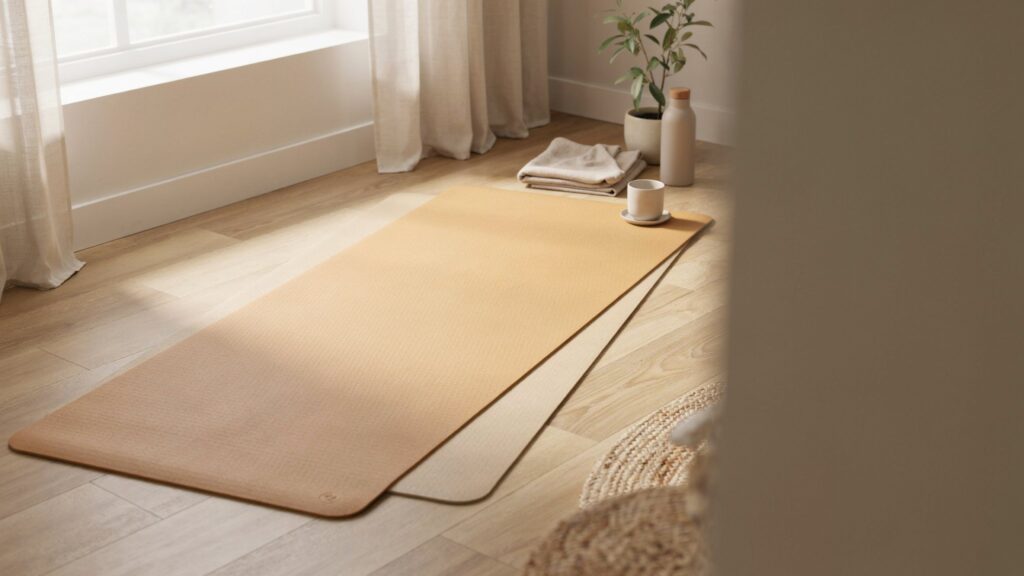
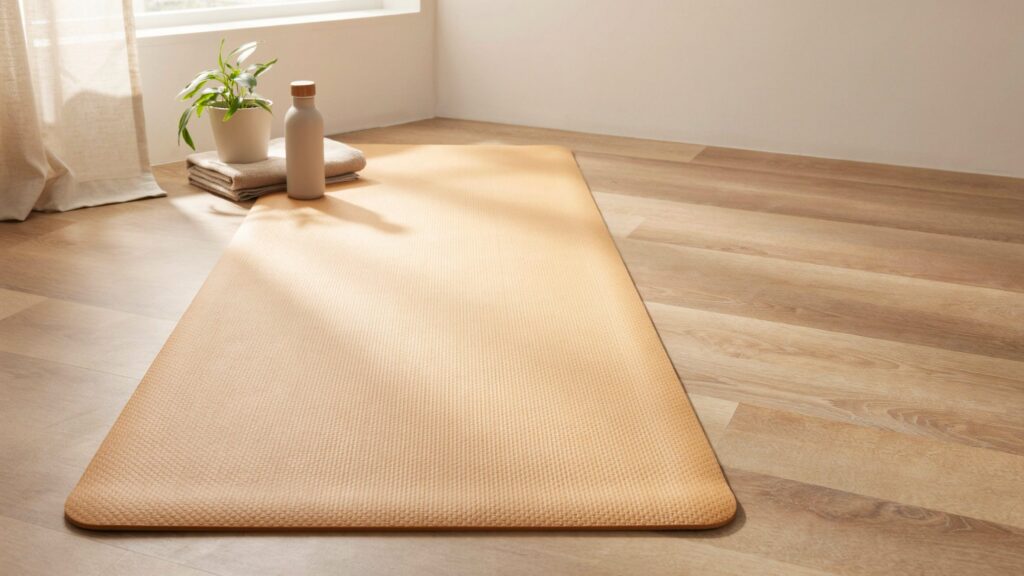
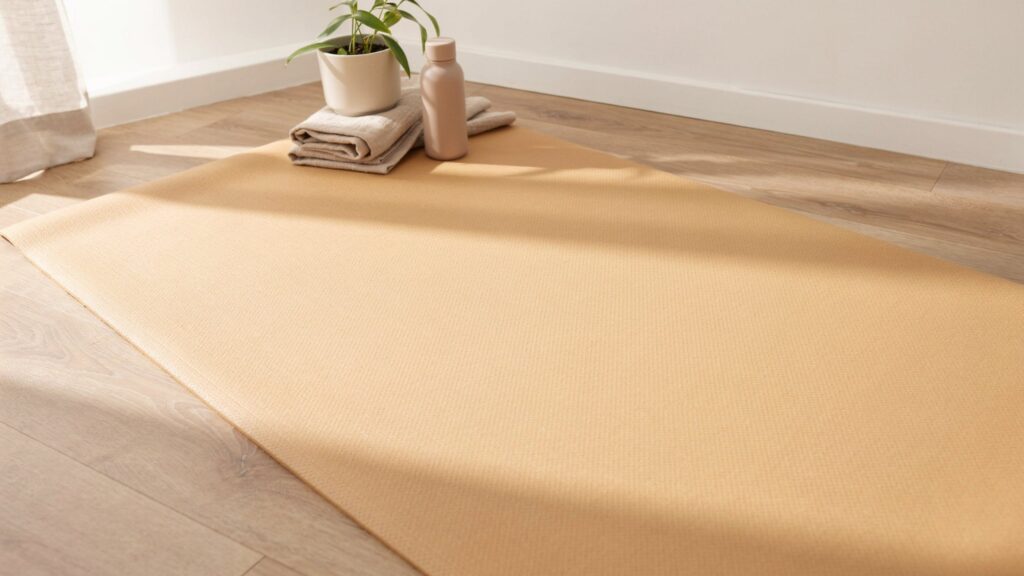
The shade lands somewhere between pale gold and warm sand. It reads as quiet and earthy rather than bold, so it sits comfortably on a bedroom floor or beside a sofa. Since most Americans practice at home, that matters more than it sounds.
The Build Keeps You on It
A pretty mat only helps if you keep using it. Here is what this one is built around:
- Dense, closed-cell surface: sweat stays on top, so cleaning takes seconds
- 4 to 6 mm of padding: protects knees, wrists, and back while keeping you steady
- Textured, non-slip top: reliable footing in standing poses and fast flows
- Full-size cut: roughly 24 to 26 inches wide and 68 to 72 inches long
Who This Mat Is For
If yoga is part of your regular week, not just an occasional try, this mat was designed with you in mind. Frequent practice puts steady pressure on the same spots, like your palms in downward dog and your knees in low lunge. A firm, padded surface handles that repeat load well, whether you roll it out at home, bring it to class, or use it in a warm room with a towel for extra traction.
How to Properly Maintain Your Yoga Mat
Keeping your yoga mat clean helps extend its lifespan and keeps your practice space fresh. While some high-density mats require simple wipe-downs, machine washing instructions vary depending on the material. If you are wondering whether your specific mat can go into the wash, you can check out this helpful guide on how to clean a yoga mat in a washing machine to avoid damaging your gear.
A Tone That Suits Everyday Rooms
Many people unroll their mat in a shared room, such as a living room or a guest bedroom. A mat around 24 by 68 inches covers a surprising amount of floor, and a loud neon or jet-black mat can take over the space. A gentle golden-tan blends in.
It pairs easily with:
- Light oak or walnut flooring
- White, gray, or beige walls
- Linen, jute, and cotton textiles
- Plants and soft lamp light
A mat that matches your space does not need to be hidden away. Leave it out where you can see it, and you will find yourself reaching for it more often.
Color and Your Mood on the Mat
Calm surroundings help a quiet mind, and warm earth tones are often linked with comfort. That fits slow flows, stretching, and breathing exercises. People react differently to color, though, so think of it as a small nudge, not a promise.
There is a practical benefit too. Pale mats show sweat marks quickly, and black ones show every speck of lint. A mid-tone like turmeric latte hides everyday dust better, which helps during daily home practice and hot yoga.
Check It Against Your Own Room
Lighting changes how a color looks. Daylight can pull this shade toward gold, while a warm bulb can make it look closer to amber. If your walls already lean strongly yellow or orange, a cooler contrast may look better.
Color is only the first filter. How the mat feels under your hands and knees matters more, and the next sections cover that.
What Is the Mat Made Of, and How Thick Is It?
Mats in this tier are typically made from a dense, closed-cell material and measure 4 to 6 mm thick. The yoga turmeric latte pro mat follows that pattern, offering a firm, cushioned feel that stands up to regular use.
Material and Surface
Material controls durability and how a mat copes with sweat. Premium mats usually come in one of three types:
- PVC: tough, easy to wipe, and slightly springy
- Natural rubber: very grippy, but heavier and unsafe for anyone with a latex allergy
- TPE blends: lighter and softer, though they tend to wear out sooner
The closed-cell feature is worth looking for. The cells are sealed, so moisture and bacteria sit on the surface rather than sinking in. That keeps odor down and helps the mat outlast open-cell versions, which soak up liquid like a sponge.
Grip starts with the surface pattern. A mat with tiny raised bumps gives your hands and feet more friction, but a smooth, glassy top loses its hold once you start to sweat. If your mat feels slippery on day one, do not worry. Most new mats carry a leftover film from production, and it wears off after a few weeks of practice and gentle cleaning. People call this the break-in period.
Thickness, Weight, and Size
Thickness decides how much cushion your joints get:
- 2 to 3 mm: very stable, but thin under knees and wrists
- 4 to 6 mm: a good middle ground for home and studio use
- Over 6 mm: soft and plush, but balance poses can feel shaky
Imagine a slow sun salutation on a bare wood floor. A very thin mat leaves your knees pressing against hard ground when you drop down, while a very thick one sinks under your feet and makes standing poses feel unsteady. The mid-range sits between the two: enough padding to protect your joints, and enough firmness to keep your balance.
Density matters just as much as thickness. Low-density foam of the same thickness compresses quickly, leaving flat spots under your hands in downward dog. A dense mat bounces back, which is why firm premium mats usually outlast soft, cheap ones.
Size and weight bring a trade-off. Premium mats generally run 24 to 26 inches wide and 68 to 72 inches long, and often weigh 5 to 8 pounds. That heft adds stability, but it makes carrying the mat a long way less pleasant. Frequent travelers may want a lighter fold-up mat as a backup.
How Does the Grip and Cushioning Feel During Practice?
The grip feels firm and grounded, while the cushioning provides solid support rather than a squishy feel. The goal is to offer a steady surface that keeps your hands and feet securely in place while padding your joints throughout a full session.
How Proper Traction Helps in Standing Yoga Poses
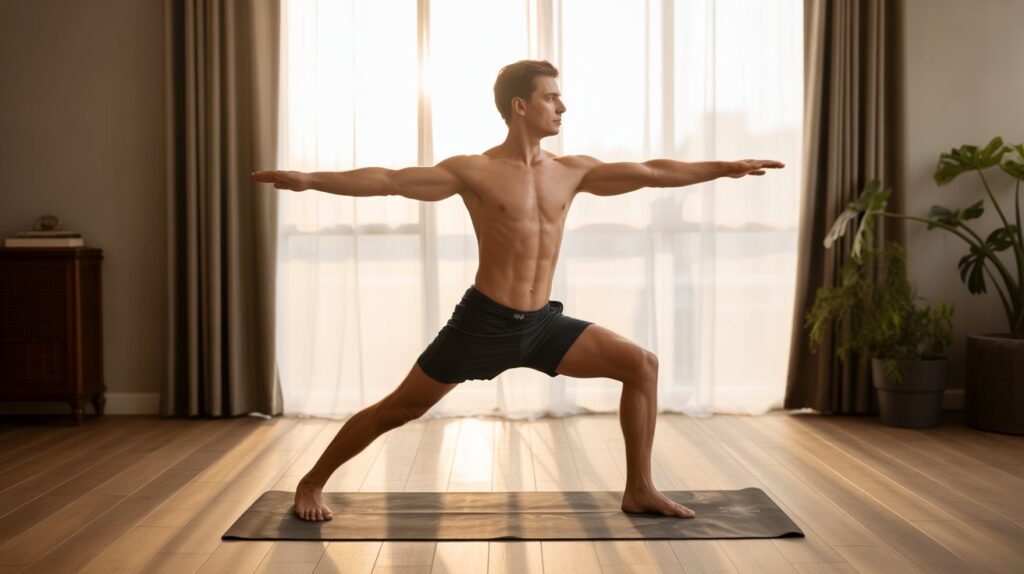
Having a solid grip under your feet makes a huge difference during standing poses. A high-quality non-slip surface offers just the right amount of hold on your skin without feeling sticky. This lets you move smoothly between positions—like transitioning from Warrior II to Triangle Pose—without your feet slipping or needing constant adjustments.
Key Factors That Impact Traction:
- Surface texture: A fine, textured pattern adds extra friction under palms and feet.
- Break-in period: Newly unboxed mats can feel slightly slick during the first few weeks.
- Moisture build-up: Excessive sweat lowers traction on almost any material.
- Studio flooring: Smooth, polished hardwood floors allow more sliding than carpeted surfaces.
Imagine taking a 75-minute vinyasa class. Midway through a wide stance, your palms get damp and your front foot starts drifting. On a dense, closed-cell surface, sweat stays on top rather than sinking in, so a quick wipe easily restores grip. Whether you are practicing at home, in a standard studio, or joining a fun group session like puppy yoga in NYC, keeping a small towel nearby is always smart—no surface stays completely non-slip once heavily soaked.
Support for Knees, Wrists, and Spine
Cushioning is about easing pressure where your body takes the most load. A 4 to 6 mm mat gives enough padding for low lunges, planks, bridge pose, and supine twists, while still letting you feel the floor for balance.
- Knees: cat-cow and camel pose press the kneecaps down, and padding softens that pressure
- Plank and Downward: Dog put a lot of pressure on your wrists. A firm, high-density yoga mat gives solid support, stopping your hands from sinking and keeping your joints safe.
- Spine: lying flat for savasana or core work feels better when each vertebra gets even support
A dense mat springs back after each pose. A soft, low-density one feels plush at first but packs down with time, leaving wrists with less support. If your knees or wrists are sensitive, fold the mat in half for kneeling poses or slip a thin pad underneath.
Grip keeps you steady and cushioning keeps you comfortable, so together they decide whether a session feels good or tiring.
How Does the Pro Mat Perform in Real-World Use?
The yoga turmeric latte pro mat works best as a reliable everyday mat. It suits home practice, handles studio classes well, and copes with hot yoga when you add a towel. Its dense core and closed-cell top are the main reasons it stays steady and easy to look after.
Home Practice and Small Apartments
In a 600 to 800 square foot apartment, you may have to slide the coffee table aside just to unroll a 68 to 72 inch mat. A mat that lies flat fast and does not creep saves effort, and less effort means you practice more often.
What home use tends to show:
- Flattening time: dense mats may curl at the edges for a few days, then settle
- Flooring: grip is better on carpet or a rug, and polished wood may call for a non-slip pad
- Storage: a rolled mat fits behind a door, in a closet, or under a console
- Looks: the golden-tan shade hides light dust better than very dark or very pale colors
Yoga mats usually wear out in specific areas, especially where your hands press during Downward Dog and where your back knee rests in lunges. Choosing a dense, closed-cell mat ensures better durability in these high-pressure spots compared to soft foam options. This long-lasting support is especially helpful when practicing active routines, such as targeting core strength or finding out which yoga is best for belly fat loss, where stability and joint comfort matter most.
Choosing the Best Yoga Mat for Studio Classes
For studio practice, you need a mat that is easy to carry, grips smooth wooden floors, and stays firmly in place during busy classes. Weighing around 5 to 8 pounds, it works great for short walks or drives, though it can feel a bit heavy during longer commutes.
During a 60-minute session of continuous Sun Salutations, a firm surface prevents your hands and feet from slipping. Its generous width also gives you plenty of space to step between poses without sliding off the edges. Since studio floors are usually polished wood, strong bottom traction is essential.
Hot Yoga and Sweaty Hands
A heated room, often 95 to 105 degrees Fahrenheit, tests any mat. Sweat builds fast. A closed-cell top keeps moisture on the surface, which helps with odor and makes wiping easier.
Still, no mat is slip-proof when wet. A few habits help:
- Lay a microfiber towel over the mat during hard sessions
- Dry your hands before moving into plank or downward dog
- Wipe the mat after class so sweat does not sit on it
- Let it dry fully before rolling it up
What Time Reveals
After a few months, the mat should keep its texture, the edges should lie flat, and the padding should bounce back. Regular cleaning and staying out of direct sun help it last for years.
Watch for these signs of wear:
- Shiny, smooth patches where grip has faded
- Dents that do not recover
- Peeling or flaking on the top layer
- An odor that stays after cleaning
Spotting these early lets you change your routine before the damage spreads.
Who Should Choose This Mat, and Who Might Skip It?
This mat suits beginners, regular practitioners, and teachers who want a durable, padded mat for one main practice spot. It is a weaker choice for frequent travelers, tight budgets, and anyone who wants a very light mat to carry all day.
The Best Home Yoga Mat for Beginners
New yoga practice requires time to build balance, while wrists and knees need extra support as they adjust to bearing weight. A 4 to 6 mm thick yoga mat with a dense, non-slip top provides essential cushioning and a stable foundation for beginner yoga poses like Warrior I, Cat-Cow, and Child’s Pose.
Investing in a quality mat early on also saves money. Many beginners start with a cheap 3 mm mat, only to find it too thin or slippery after a few weeks, forcing them to buy a replacement. Choosing a durable, supportive yoga mat from the start prevents extra expenses and improves your practice.
Regular Practitioners
If you practice three or four times a week, durability becomes the top concern. A closed-cell surface handles sweat well, and a dense core holds its shape under repeated pressure. This mat tends to fit you if you:
- Practice at home on a steady schedule
- Want a mat that wipes clean after sweaty sessions
- Like a firm, grounded feel over a soft, floaty one
- Prefer a warm neutral color in your living space
Yoga Teachers
Teachers need grip while demonstrating and a surface that stays flat on studio floors. The 24 to 26 inch width leaves room to move through a sequence. Standing demonstrations can run an hour or more, so stable footing and reliable padding ease the strain on hands and knees.
The downside is weight. Carrying a 5 to 8 pound mat to several classes a day wears on you, so many teachers keep a premium mat at home and a lighter one for the road.
Who Might Skip This Yoga Mat?
No single option works for every practitioner. You might want to explore other choices if:
- You travel frequently: A dense, heavier mat is bulky for flights, whereas a lightweight, foldable option is far easier to pack. If you are constantly on the go, checking out a dedicated lightweight travel yoga mat might be a much better fit.
- You walk or bike to class: Carrying extra weight over longer distances can quickly become tiring.
- You have a latex allergy: If a mat includes natural rubber, always verify the material specs beforehand.
- You prefer extra soft cushioning: Practitioners who focus on gentle, restorative sessions may find a firm surface less cozy.
- You are on a strict budget: A simple, budget-friendly option works fine if you are just testing out the habit.
Consider where you practice most often. A mat that stays in one spot earns its extra weight by providing solid stability, while a mat you carry around every day should be light and portable.
How Do You Clean and Care for a Premium Yoga Mat?
Wiping your mat after every session, deep cleaning it every few weeks, drying it fully, and keeping it away from direct sunlight and heat will keep it in top shape. Following this simple routine protects the closed-cell surface, keeps the grip firm, and extends its overall lifespan.
Break-In Tips for a New Yoga Mat
Newly unboxed mats can feel a bit slick due to a light protective coating left over from manufacturing. This temporary layer naturally wears off as you practice.
- Pre-wash gently: Wipe the surface with a damp cloth and a drop of mild soap before your first practice.
- Practice regularly: Use it consistently over two to three weeks to naturally break in the traction.
- Avoid heavy lotions: Keep body oils, thick hand creams, and sunscreens off your skin before stepping onto the mat.
- Flatten the edges: If the ends roll up, lay the mat flat for a day with a few books on the corners.
Most initial complaints about slippery mats come from manufacturing residue or skin products rather than a defect in the material.
Daily Wipe-Down Routine
A quick daily cleaning clears away sweat, dust, and natural skin oils before they build up. This quick step is especially vital after sweaty workouts, as maintaining a clean surface helps prevent skin irritation and bacterial growth, a point often emphasized in Johns Hopkins Medicine hygiene guidelines.
- Prepare a mild spray: Mix a few drops of gentle dish soap in a cup of water, or blend water with a splash of white vinegar in a spray bottle.
- Mist and wipe: Lightly spray the surface and wipe down with a soft microfiber towel.
- Rinse residue: Pass over the surface again using a fresh, damp cloth to clear any remaining soap.
- Air dry: Allow the mat to dry completely before rolling it up.
Deep Cleaning Guide
If you practice three to four times a week, giving your mat a deep clean every two to four weeks keeps it fresh. For hot yoga enthusiasts, more frequent deep cleans are ideal.
- Submerge gently: Fill a basin or tub with lukewarm water and a small amount of mild detergent.
- Scrub lightly: Use a soft cloth or sponge—never a stiff bristle brush—to clear build-up.
- Rinse thoroughly: Wash away all soap until the water runs clear.
- Remove excess moisture: Press out water by rolling the mat inside a dry towel without wringing or twisting it.
Lukewarm water is much safer than hot water, which can warp high-density materials. According to general health guidelines on bacteria prevention, removing moisture properly stops mold and mildew growth. Always avoid using a washing machine unless the manufacturer explicitly states it is safe.
Drying
Trapped moisture causes odor, mildew, and a sticky surface.
- Lay the mat flat or hang it over a rack or shower rod
- Choose a shaded spot with good airflow
- Allow several hours before rolling it up
- Flip it once so both sides dry evenly
Sunlight may seem like a natural disinfectant, but UV rays and heat can fade the color and make the material brittle.
Storage
Roll it loosely with the top side facing out, which helps the edges lie flat next time. Keep it upright in a closet or flat under a bed.
Avoid:
- Leaving it in a hot car, where temperatures can pass 120 degrees Fahrenheit
- Folding it tightly for long periods
- Stacking heavy items on top
- Storing it damp
In a small apartment, a wall hook or strap keeps the mat close, which makes you more likely to use it.
When to Replace It
With good care, a quality mat can last several years. Replace it when grip has faded in smooth patches, dents stay put, the top layer peels, or odor lingers after deep cleaning. Replacing it on time keeps your footing safe in standing poses.
How Does It Compare With Other Premium Yoga Mats?
This mat sits in the middle of the premium range. It offers steady grip, 4 to 6 mm of padding, and long life, but it weighs more than travel mats and costs more than basic ones. It fits people who want one dependable mat for a regular practice spot.
Quick Comparison
| Feature | Basic Budget Mat | Dense Premium Mat (like this one) | Natural Rubber Mat | Travel Mat |
| Grip | Fair, slick when wet | Firm, improves after break-in | Excellent, even when damp | Moderate |
| Thickness | 3 to 5 mm | 4 to 6 mm | 3 to 5 mm | 1 to 2 mm |
| Lifespan | 6 to 12 months | Several years with care | Several years, but sun can damage it | 1 to 2 years |
| Weight | 2 to 3 lb | 5 to 8 lb | 5 to 7 lb | Under 2 lb |
| Approx. Price (USD) | $15 to $40 | $80 to $130 | $70 to $140 | $25 to $60 |
These are general ranges. Specs and prices change by brand, so check the product page before buying.
Grip
Grip is where mats differ most. Budget mats often use open-cell or low-density foam, which feels fine on day one but gets slippery with damp palms. A dense closed-cell top keeps sweat on the surface, so a wipe brings traction back.
Natural rubber has a small edge in wet grip thanks to its natural tackiness. The costs are extra weight, a rubber smell early on, and allergy risk. Hot yoga regulars may like it. If you prefer easy upkeep, a dense closed-cell mat is simpler.
Thickness
- 1 to 3 mm: good for balance and travel, harder on joints
- 4 to 6 mm: the best all-round range for home and studio
- 7 mm and up: very soft, but unsteady in tree pose or warrior III
Restorative or gentle practice may suit a thicker mat. Fast vinyasa flows are easier on a mid-range one.
Durability and Cost Over Time
Say you buy a $30 mat and replace it yearly once it flattens. After three years, you have spent $90 on three mats. A $100 dense mat that lasts four to five years works out to about $20 to $25 a year, and it performs better throughout.
Lifespan depends on:
- Density: denser cores resist compression
- Surface type: closed-cell tops handle sweat and odor better
- Care: regular wiping and shade drying add years
A well-kept mat can outlast a pricier one left in a hot car.
Yoga Mat Price Ranges and Value Guide
Yoga mat costs vary based on material, build quality, and extra features like long warranties. Premium yoga mats typically range from $80 to $130, offering dense padding, high durability, and superior grip.
For beginners testing out a new workout routine, affordable mats under $40 are a decent starting option. However, once you transition to practicing several times a week, upgrading to a high-quality mat becomes a worthwhile investment for better support and long-term value.
How to Choose the Right Yoga Mat for Your Needs
Selecting the best yoga mat depends on your practice style and lifestyle. Choose a dense premium yoga mat if you mostly practice at home or in one studio and need long-lasting durability.
If maximum wet grip is your top priority and you do not have a latex allergy, a natural rubber yoga mat is the ideal choice. For frequent travelers and commuters, a lightweight travel yoga mat works best as a convenient secondary option.
Is the Yoga Turmeric Latte Pro Mat Worth It?
The Yoga Turmeric Latte Pro Mat is a smart choice if you practice in one place and want a durable, long-lasting surface. Its reliable grip, supportive cushioning, and soothing color make stepping onto the mat every day feel inviting.
However, it is not designed for frequent travel. If you are regularly on the move, a dedicated lightweight travel yoga mat might be a much better option. Think about your routine, because the best mat is always the one you actually use.
FAQs
What is the highest rated yoga mat?
No single mat wins every list, since ratings shift with brand, season, and practice style. Dense, closed-cell mats with 4 to 6 mm padding usually score best for grip and durability. Read recent buyer reviews that match your needs, such as hot yoga or home practice.
Q: Why are Manduka yoga mats more expensive than regular mats?
Manduka yoga mats cost more because they are built with high-density, premium materials designed for long-term durability. Unlike basic mats that flatten and wear out quickly, a Manduka mat holds its shape for years. While the upfront investment is higher, it saves money over time by eliminating the need for frequent yearly replacements.
Q: What materials should you avoid when buying a yoga mat?
Avoid cheap, low-density foam mats and open-cell designs that absorb sweat, bacteria, and unpleasant odors. You should also stay away from mats that lack a clear material label. Additionally, if you suffer from a latex allergy, avoid natural rubber yoga mats and choose synthetic, hypoallergenic alternatives instead.
What is the best thickness for a yoga mat for Pilates?
About 6 to 10 mm works well for Pilates. The extra cushion protects your spine, hips, and tailbone during floor work like rolling and leg circles. Thinner mats suit standing balance but give less joint support.
What is the 80/20 rule in Pilates?
It is not an official Pilates rule. People usually mean that about 80% of results come from daily habits like sleep, food, and movement, and 20% from the workout. Teachers use it in different ways, so treat it as a rough guide.
What is the lifespan of a yoga mat?
A basic mat often lasts 6 to 12 months of regular use. A premium mat, like the yoga turmeric latte pro mat, can last several years with care. Replace it when you see smooth grip patches, lasting dents, peeling, or odor that will not go away.
How much should I pay for a good yoga mat?
A decent beginner mat costs about $20 to $40. A durable premium mat usually runs $80 to $130. If you practice three or four times a week, the higher price often pays off in grip, comfort, and lifespan.
About the Author
Muhammad Bilal is a content writer with a strong interest in yoga gear, home fitness, and everyday wellness. He enjoys researching how products perform in real routines, not just on spec sheets. His goal is to write clear, practical guides that help readers choose with confidence. Every article is based on careful research and checked against trusted sources.