Introduction
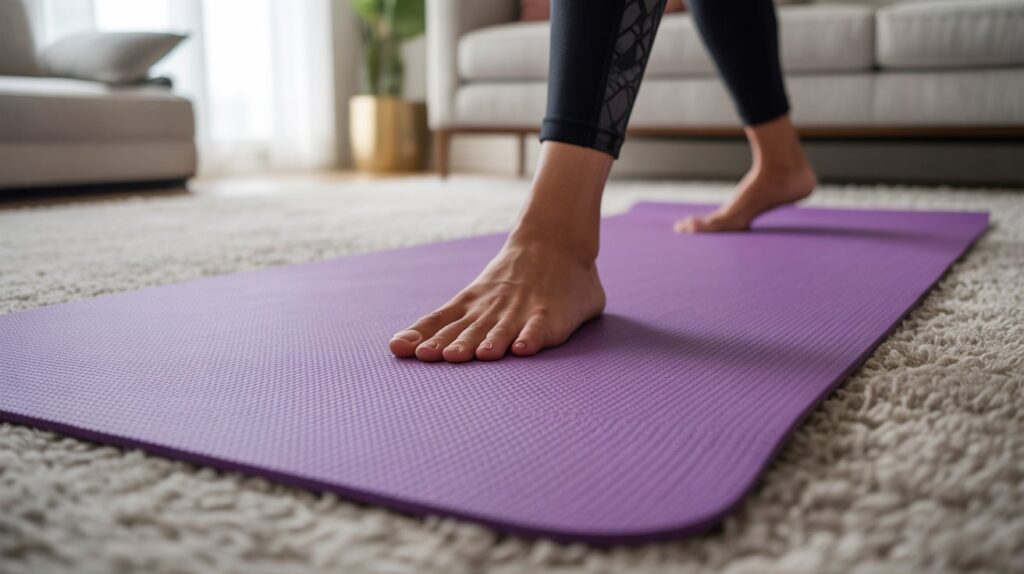
You’ve just finished a sweaty hot yoga session, and your mat smells like it needs more than a quick wipe-down. So you wonder — is there a safe way to clean your yoga mat in a washing machine, the way you’d toss in a regular towel? The truth is, how to clean a yoga mat in a washing machine really depends entirely on what your mat is made of, and getting it wrong can ruin a mat you actually like. This guide breaks down which mats can handle the wash, which ones can’t, and exactly how to do it safely if yours makes the cut.
Table of Contents
Can You Wash a Yoga Mat in the Washing Machine?
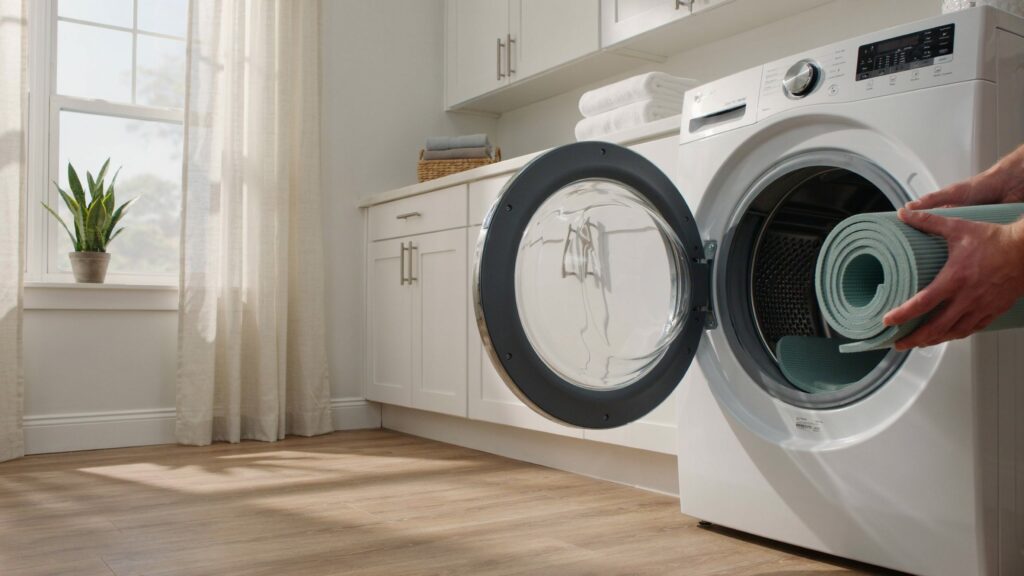
Can you wash a yoga mat in the washing machine? The honest answer is: it depends entirely on what your mat is made of. Most yoga mats should stay far away from the washer, but a smaller group of machine washable yoga mat designs are actually built to handle it.
Here’s the logic behind it. Yoga mats generally split into two categories — closed-cell and open-cell — and that difference decides everything:
- PVC / TPE mats (closed-cell): Dense and non-porous, so they don’t soak up water the way open-cell mats do. A closed-cell PVC machine wash is sometimes possible, but even a “washable” PVC mat can warp or lose texture if the cycle isn’t gentle enough.
- Natural rubber and cork mats: Prized for grip and eco-friendliness, but a single spin cycle can break down their fibers permanently. If you’ve ever pulled a rubber mat out of the wash only to find it stiff, cracked, or missing its tackiness, that’s exactly why.
- Microfiber-topped combo mats: The clear exception. These use a machine wash microfiber combo mat design — a rubber base paired with a microfiber top — built specifically to handle water exposure and gentle agitation.
So before you even think about detergent or wash settings, the real question isn’t “can you wash a yoga mat in the machine” in general — it’s “can you wash your yoga mat in the machine.” Check the care tag or the product page first. A quick way to confirm is soaking a small corner in warm water for a few minutes; if it stays firm and doesn’t shed material, that’s a decent sign it can handle more exposure. If your mat turns out to be one of the sensitive materials, check out our step-by-step deep cleaning guide for a safer hand-washing method that protects both the material and your washer.
Getting this first step right matters more than any washing technique that follows — because no amount of gentle cycle settings will save a mat that was never meant to go in the machine in the first place.
Why Mat Material Matters Before You Wash
Your mat’s material is the single biggest factor in whether it survives a wash cycle — everything else is secondary. Before you look up how to clean a yoga mat in washing machine steps, you need to know exactly what you’re working with, because the same cycle that’s perfectly safe for one mat can wreck another in under ten minutes.
Start by checking the label. Most mats sold in the U.S. come with a small tag or a sticker on the packaging that lists the material — PVC, TPE, natural rubber, cork, or a microfiber blend. If that’s long gone, there’s a simple test: press your thumbnail into the surface. If it feels dense, slightly rubbery, and springs back without absorbing any moisture, you’re likely holding a closed-cell mat. If it feels soft, slightly spongy, or has a fabric-like texture on top, it’s probably open-cell.
This distinction matters because of how each type behaves once water gets involved. Closed-cell mats don’t hold onto sweat, oils, or bacteria, which is exactly why questions like “is a yoga mat machine washable” usually point back to this category — but density alone doesn’t guarantee the washer won’t damage it. Open-cell mats work the opposite way. They’re designed to soak up moisture for better grip, which is great mid-practice but becomes a real problem in a machine, since the core can stay damp for a day or two and start smelling worse instead of better.
Here’s a scenario that plays out often: someone buys a $60 open-cell mat for hot yoga, throws it in the wash after a few sweaty sessions, and pulls out a mat that’s heavier, slightly bloated, and takes almost two full days to dry through the middle. That’s not a sign the machine wash risks yoga mat conversation is exaggerated — it’s exactly the kind of preliminary mat inspection before wash step that gets skipped too often.
If you’re also weighing whether a closed-cell or open-cell design fits your routine better, our guide to choosing a mat for hot, sweaty sessions breaks down which construction suits sweaty, high-intensity practices best. But for washing purposes, the rule is simple: know your material first, and let that decide your next move — not the other way around.
The Risks of Machine Washing
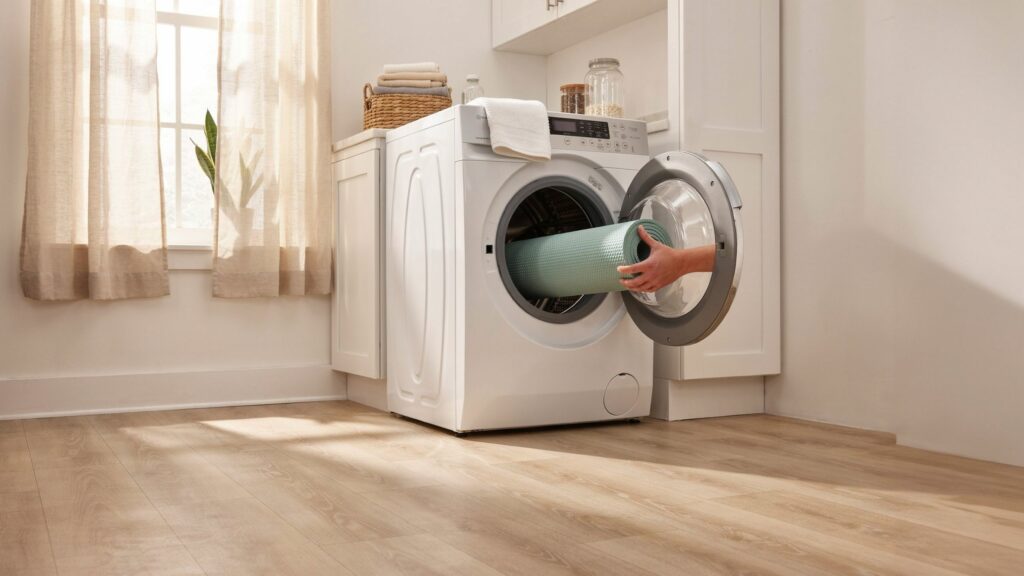
The risks of machine washing go beyond just a ruined mat — you could also end up with a slippery surface or a damaged washer. Before you commit to cleaning the yoga mat in the washing machine, it helps to know exactly what’s at stake so a routine cleaning day doesn’t turn into an expensive mistake.
Damage to the mat itself. Top-loading machines are the biggest culprit here. Most standard top-loaders use a center agitator, and top-loader agitator damage is one of the most common complaints among yoga practitioners who’ve tried this shortcut. The agitator can snag the edge of the mat, pull at the seams, or wear down the texture that gives you grip in the first place. Even in a front-loading washer yoga mat setup, which is gentler overall, the constant tumbling can cause pilling on microfiber tops or strip away the “sticky” feel over time.
Damage to the machine. This one surprises people. A soaked yoga mat is heavy — often 4 to 6 pounds once fully saturated — and that weight doesn’t distribute evenly during the spin cycle. An unbalanced spin cycle can throw the drum off-center, causing loud banging and, in some cases, motor strain that leads to a repair bill nobody planned for.
Detergent residue. This is the risk people notice last, but feel first. Too much soap gets trapped in the mat’s texture, and detergent residue on yoga mat surfaces doesn’t always rinse out completely — even after a full cycle. The next time you’re mid-practice and start to sweat, that leftover soap reactivates and turns your mat into a slip hazard right in the middle of a pose.
Here’s a simple way to think about it: if you skip the preliminary mat inspection before wash step and just toss the mat in with your gym clothes, you’re combining all three risks at once — mechanical stress, imbalance, and residue — instead of managing them one at a time. That’s exactly why the machine wash risks yoga mat conversation matters more than most people expect going in.
If your mat does end up smelling worse after a wash instead of better, our notes on trapped moisture and lingering odor cover the most common causes and how to fix them without another trip through the washer
How to Wash a Yoga Mat in a Washing Machine: Step-by-Step Guide
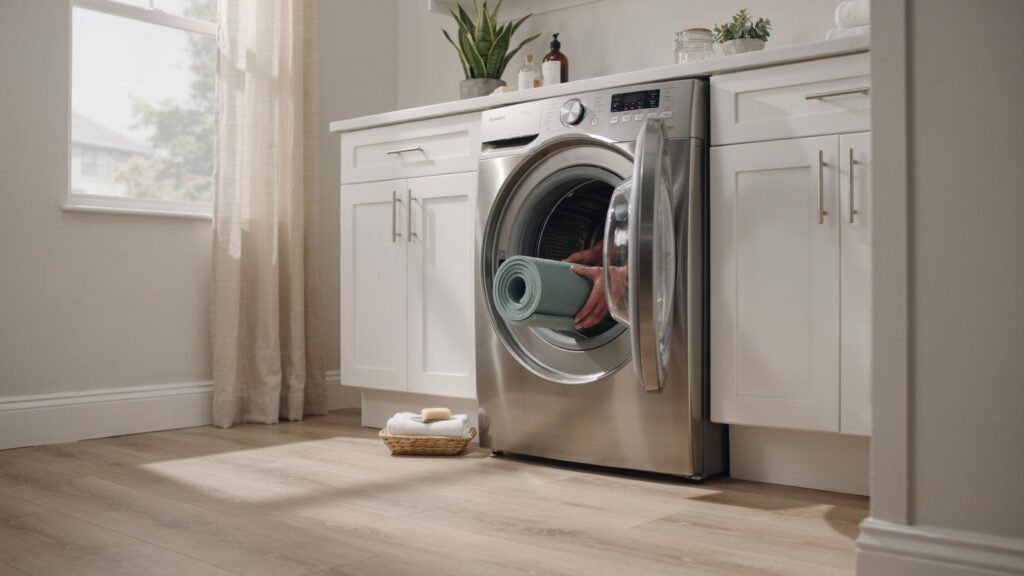
If you’ve confirmed your mat can handle it, here’s exactly how to wash a yoga mat in a washing machine without damaging it. Follow these steps in order — skipping even one, like the extra rinse, is usually where things go wrong.
- Do a preliminary mat inspection before washing. Check for existing nicks, cracks, or peeling edges. A small tear can turn into a large one once the mat starts moving around in the drum, so if you spot damage already, hand-washing is the safer route instead.
- Shake off loose debris first. Take the mat outside and shake it out, or run a lint roller over the surface. This removes hair, dust, and dirt that would otherwise just get trapped in the machine wash microfiber combo mat fibers during the cycle.
- Pick the right machine. A front-loading washer yoga mat setup is always the safer choice, since it skips the center agitator entirely. If a top-loader is all you have, check whether it’s agitator-free — if not, balance the load with two or three light towels to reduce shifting during the spin.
- Set the cycle to gentle or hand-wash. Use a cold water wash cycle only. Heat is what causes rubber to lose its tackiness and PVC to warp, so cold water isn’t optional here — it’s the one setting you shouldn’t compromise on.
- Add a small amount of mild detergent. A minimal detergent machine wash is the goal — roughly a teaspoon for a standard-size mat. Skip anything with bleach or fabric softener, since both leave a film that ruins grip.
- Skip the spin cycle if you can. If your machine lets you turn it off, do it. If not, choose the lowest spin speed available. High-speed spinning is the main reason mats come out warped or unevenly stretched.
- Run an extra rinse cycle without soap. This step-by-step machine washing guide isn’t complete without it — a rinse cycle without soap clears out any leftover detergent that regular cycles tend to miss, which directly prevents the slippery residue problem covered earlier.
- Remove the mat right away. Don’t let it sit in the drum. A damp mat left too long is exactly how mold and odor problems start, even on machine washable yoga mat designs.
Once your mat is out of the washer, drying it correctly matters just as much as the wash itself — our detailed drying steps walk through the towel-blot method that keeps moisture from settling into the core.
How to Dry Your Mat the Right Way
Drying matters just as much as the wash itself — get it wrong, and even a mat that survived the machine wash risks yoga mat conversation can still end up ruined. Most damage people blame on the washing machine actually happens in the hours right after.
The Towel Roll Method
Once your mat comes out of the wash, it’s going to be dripping. Lay it flat on a large, clean towel, then roll both together like you’re rolling up a sleeping bag. Step on the roll a few times to press out the excess water. This does the same job the spin cycle would, but without the unbalanced spin cycle mat risk that comes from letting the machine handle it. It’s a small step, but it can cut drying time down by several hours.
Air Dry Only — Never a Dryer
This one has no exceptions. Dryer heat doesn’t just dry a mat faster, it actively breaks it down. High heat can melt the rubber, warp PVC, and in some cases fuse the mat to the dryer drum. Even a mat you’ve confirmed as a machine washable yoga mat design isn’t built to handle that kind of heat exposure, so this rule applies across every material type.
Hang It the Right Way
Drape the mat over a shower rod, a drying rack, or a sturdy railing — somewhere it can hang flat without folding. Avoid clothespins or clips, since they leave permanent indents in the material. If the mat gets folded over itself while wet, moisture gets trapped in the crease, and that’s usually where the first signs of mildew show up.
Keep It Out of Direct Sunlight
A shaded, well-ventilated spot indoors works best. Direct UV exposure over time causes natural rubber and cork to fade and stiffen, even though a few minutes of sun can help kill off surface bacteria. It’s a balance — quick exposure is fine, hours of it isn’t.
How Long It Actually Takes
For most home washes, a machine wash microfiber combo mat needs somewhere between 24 and 48 hours to dry all the way through the core, not just the surface. Rolling it up too early is one of the most common mistakes — the outside feels dry, but trapped moisture inside is what actually causes that sour smell to show up a few days later. A simple way to check: press a dry paper towel against the surface. If it stays dry, the mat is ready to store.
Getting drying right protects everything you did in the wash cycle. And if odor still lingers even after a full dry-out, our breakdown of common odor triggers walks through what’s usually causing it and how to fix it for good.
When to Skip the Machine and Hand Wash Instead
Skip the machine if your mat is made of natural rubber, cork, or jute — for these materials, hand washing is almost always the safer, smarter call. Even after covering how to clean yoga mat in washing machine steps, there are real situations where the washer just isn’t worth the risk.
Here’s when to hand wash instead:
- Your mat is natural rubber or cork. These materials aren’t built to survive the machine wash risks yoga mat conversation at all. A single cycle can strip natural oils from rubber, leaving it dry, brittle, and stripped of grip within weeks instead of years.
- You’re not sure what your mat is made of. If there’s no care tag and the closed-cell PVC machine wash test from earlier wasn’t conclusive, don’t guess. A $70–$90 mat isn’t worth risking on a 50-50 chance.
- The mat already shows wear. Peeling edges, small tears, or flaking texture get worse fast once they’re exposed to an unbalanced spin cycle mat situation. Machines amplify existing damage instead of causing new problems from scratch.
- Your Washer Only Has a Top-Loading Agitator. Without a front-loading washer yoga mat option available, top-loader agitator damage becomes almost guaranteed, especially on thicker mats.
- You practice hot yoga several times a week. Frequent deep cleaning means more wear over time, and rotating between a quick hand wash and occasional machine use (if your mat allows it) extends its life far longer than relying on the washer every time.
The hand-wash process itself is simple. Fill a tub with lukewarm water and a few drops of mild dish soap, let the mat soak for 15 to 20 minutes, then use a soft cloth to scrub any noticeably dirty spots — usually right where your hands and feet land most during practice. Rinse until the water runs clear, then follow the same towel-roll drying method covered earlier.
If you’re leaning toward hand washing as your go-to method, our full guide on hand-washing a yoga mat without damaging your washer breaks down the bathtub method step by step, including how often to do it based on how frequently you practice.
Conclusion
A clean mat isn’t just about hygiene — it’s about trusting your gear every time you step onto it. Knowing your material, respecting the wash settings, and giving your mat time to dry properly are what actually separate a mat that lasts years from one you’re replacing every few months.
Next time you roll out your mat, take a second to notice its condition. And if you’re still deciding which material and grip level suits your practice best, our guide on choosing a mat built to last can help you get that foundation right from day one. A little attention now saves you from a much bigger problem later.
FAQs
Can I wash a yoga mat in the washing machine?
Only if your mat is a microfiber-topped or manufacturer-approved washable design. Most natural rubber and cork mats should never go in the machine, as agitation and water saturation break down the material fast.
What is the best way to clean a yoga mat?
For daily upkeep, a quick wipe with a damp cloth and mild soap works best. For a deeper clean, hand-washing in a tub is safer than a washing machine for most mat types.
Can I wash my yoga mat with dish soap?
Yes, a few drops of mild dish soap mixed with warm water is one of the safest cleaners for yoga mats. Avoid harsh detergents, bleach, or fabric softeners, as they leave a slippery residue.
Can I wash my mat in the washing machine?
It depends on the material. Closed-cell PVC and microfiber combo mats can sometimes handle a gentle, cold cycle, while rubber, cork, and jute mats should be hand-washed instead.
What cleans rubber without damaging it?
A mix of warm water and a small amount of mild dish soap, applied with a soft cloth, cleans rubber yoga mats effectively without stripping the natural oils that keep the surface grippy.