
Introduction
Ever finished a stressful week and noticed your stomach feels tighter than usual, even without eating differently? That’s not a coincidence, and it’s a big part of why people keep asking which yoga is best for belly fat loss. The real answer involves more than one pose. In this guide, you’ll find the yoga styles, core asanas, breathing practices, and stress-related factors that actually make a difference over time.
Table of Contents
How Does Yoga Help Reduce Belly Fat?
Yoga helps reduce belly fat by working on four connected systems at once: your core muscles, your digestion, your stress hormones, and your metabolism. That’s really the answer to which yoga is best for belly fat loss — it’s not one magic pose, it’s the combined effect of movement, breath, and calm.
Start with the core. Poses that engage your abdominal muscles, like a slow Vinyasa Flow or a Power Yoga session, activate the transverse abdominis, the deep muscle layer that acts like a natural corset around your midsection. As this muscle strengthens, your posture improves and your stomach naturally sits flatter, even before any real fat loss shows up on the scale.
Digestion is the next piece. If you’ve ever felt bloated after a heavy meal or a stressful week at work, that’s often trapped gas or slow digestion, not actual fat. Twisting poses and gentle backbends physically massage the digestive organs, helping food move through your system more efficiently. Better digestion means less bloating, and a less bloated belly often looks noticeably smaller within just a few weeks of regular practice.
Then there’s stress, which is where yoga has a real edge over other workouts. Cortisol, the hormone released when you’re stressed, is directly linked to fat storage around the belly. A busy professional working 50-hour weeks with barely any downtime is a common example of someone dealing with elevated cortisol without even realizing it. Yoga’s breathing techniques calm the nervous system, lower cortisol, and make it easier for the body to release stored fat instead of holding onto it. If you want to go deeper into how stress specifically drives belly fat, that’s worth exploring as its own topic.
Finally, metabolism ties everything together. Active styles like Ashtanga Yoga or a fast-paced Vinyasa raise your heart rate enough to burn real calories, contributing to the caloric deficit your body needs for fat loss. Combine that with consistent core engagement, and you get a routine that’s working on strength, stress, and calorie burn all in the same session — which is exactly why yoga keeps showing up as one of the most sustainable approaches to belly fat.
If you’re practicing these poses regularly at home, picking the right mat also makes a difference for grip and comfort during longer sessions.
How Does Yoga Help Reduce Belly Fat?
Yoga helps reduce belly fat by working on four connected systems at once: core strengthening, digestion, stress management, and metabolism. That’s really the answer to which yoga is best for belly fat loss — it’s not one magic pose, it’s the combined effect of core engagement, breathwork, and consistent practice.
Core strengthening: Poses that build core strength, like a slow Vinyasa Flow or a Power Yoga session, activate the transverse abdominis and other abdominal muscles that act like a natural support belt around your midsection. As core engagement improves, your posture straightens out and your stomach naturally sits flatter, even before visible fat loss shows up on the scale. This is also where toning the abdominal area really starts.
Digestion and metabolism: If you’ve ever felt bloated after a heavy meal or a stressful week at work, that’s often trapped gas or slow digestion, not actual fat. Twisting poses like Ardha Matsyendrasana and gentle backbends physically massage the digestive organs, supporting digestion and metabolism together. Better digestion means less bloating, and a less bloated belly often looks noticeably smaller within just a few weeks of regular practice. This process is closely tied to what many yoga traditions call digestive fire, or Agni.
Stress and cortisol: This is where yoga has a real edge over other workouts. Cortisol levels rise when you’re stressed, and elevated cortisol is directly linked to what’s often called cortisol belly, or stubborn fat storage around the midsection. A busy professional working 50-hour weeks with barely any downtime is a common example of someone dealing with high cortisol without even realizing it. Deep breathing and Pranayama calm the nervous system, support stress reduction, and make it easier for the body to release stored fat instead of holding onto visceral fat. If you want to go deeper into how stress specifically drives belly fat, that’s worth exploring as its own topic.
Calorie burn: Active styles like Ashtanga Yoga or a fast-paced Vinyasa raise your heart rate enough to support a real caloric deficit. A few things worth keeping in mind as these systems work together:
- Core strengthening improves posture and starts flattening the tummy from the inside out
- Better digestion reduces bloating, which affects how flat your stomach looks day to day
- Lower cortisol levels make it easier for the body to burn fat instead of storing it
- Higher-intensity styles add the calorie burn needed for actual weight loss, not just toning
Put together, this is exactly why yoga keeps showing up as one of the most sustainable, whole-body approaches to belly fat, rather than just another quick-fix workout trend.
Best Yoga Poses and Styles for Belly Fat Loss
The best yoga poses and styles for belly fat loss are core-focused asanas like Boat Pose and Plank Pose, combined with dynamic styles like Vinyasa Flow, Power Yoga, and Ashtanga Yoga. Together, these two categories cover both strength and calorie burn, which is exactly what a stubborn belly needs to respond to.
Think of it this way: static poses build the muscle, and flowing styles keep your heart rate up long enough to burn through the fat sitting on top of that muscle. A 45-minute Power Yoga class three times a week, for example, does more for your midsection than 45 minutes of slow stretching, simply because your core stays engaged through nearly every transition.
Dynamic Yoga Styles for Fat Burning
These styles focus less on holding still and more on constant movement, which raises your heart rate and supports a real caloric deficit.
- Vinyasa Flow – Movement is synced with breath, so your core stays active through every transition, creating a light cardio effect alongside strength work.
- Power Yoga – A faster, fitness-driven version of Vinyasa built for building stamina and toning muscle, popular in gyms and studios across the USA.
- Ashtanga Yoga – A set, physically demanding sequence with continuous “vinyasas” between poses that build serious core strength and internal heat.
- Hatha Yoga – Slower-paced but still effective for beginners building foundational strength before moving into faster styles.
- Sun Salutations (Surya Namaskar) – A simple flowing sequence that stretches and compresses the abdomen repeatedly; even 10–12 rounds a day adds up over a month.
- Hot Yoga – Practiced in a heated room, which increases sweat and heart rate, though the toning still comes from the core work itself.
Core-Focused Asanas for Belly Fat
These poses directly target the abdominal muscles and are worth adding to any routine, regardless of which style you follow.
- Bhujangasana (Cobra Pose) – Strengthens the lower back and gently engages the abdominal muscles while improving posture.
- Dhanurasana (Bow Pose) – Stretches the front body while toning the core and improving overall flexibility.
- Chaturanga / Kumbhakasana (Plank Pose) – Builds full-body strength while keeping the core tight and constantly engaged.
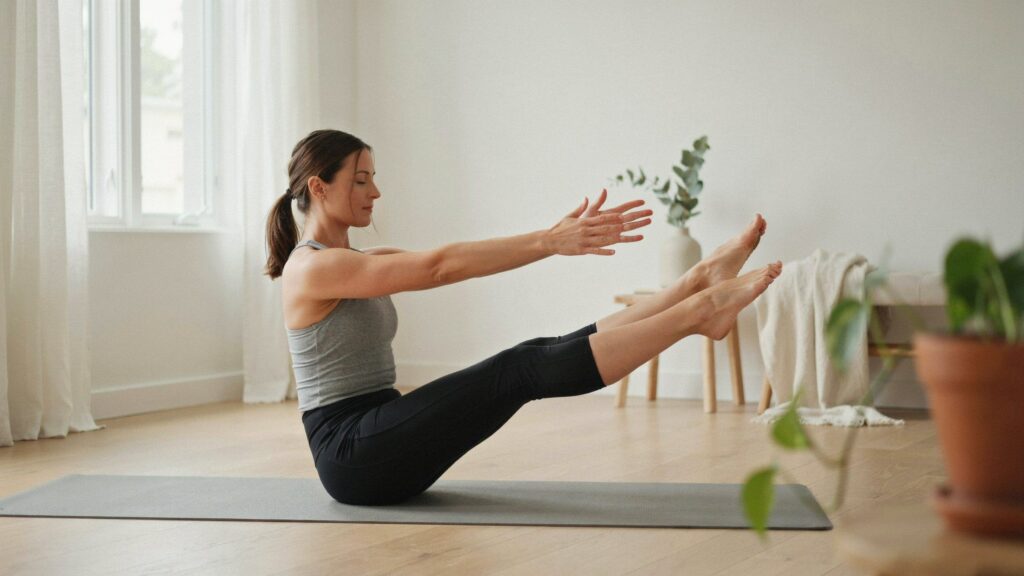
- Naukasana / Navasana (Boat Pose) – Widely considered the top pose for core strengthening, since it forces the abs to hold your full body weight.
- Ustrasana (Camel Pose) – A backbend that opens the chest and activates deep core muscles.
- Pavanamuktasana (Wind-Relieving Pose) – Helps with bloating reduction by gently massaging the digestive organs.
- Uttanpadasana (Leg Raise Pose) – Directly targets the lower belly, an area many people struggle to tone through other poses.
For anyone new to yoga asanas for belly fat, starting with three sessions a week, mixing one dynamic style with a handful of these core poses, is a realistic and sustainable place to begin. If you’re unsure how to build a full routine around this, that’s a natural next topic worth reading up on separately, especially for anyone just starting a beginner yoga class.
Breathing and Cleansing Practices for Belly Fat Loss
Breathing and cleansing practices like Kapalbhati Pranayama and Agni Sar support belly fat loss by directly stimulating digestion and activating the deep core muscles from the inside out. Unlike poses, these techniques work almost entirely through controlled breath, which makes them one of the most overlooked pieces of a belly fat loss routine.
Here’s a simple way to picture it: after a heavy weekend meal, most people feel that tight, bloated stomach by Monday morning. That bloating isn’t fat, but it makes the belly look and feel larger than it actually is. A few minutes of focused breathwork can reduce that puffiness within the same day, which is why these practices are worth adding right after your regular yoga poses, not instead of them.
Kapalbhati Pranayama
Kapalbhati, sometimes called Skull-Shining Breath, is a rapid breathing technique where you exhale forcefully through the nose while pulling the belly in, then let the inhale happen on its own.
- Activates the abdominal muscles with every forceful exhale
- Improves circulation and oxygen flow throughout the body
- Supports digestion and helps with bloating reduction
- Builds core engagement without any physical movement
- Best practiced for 3–5 minutes on an empty stomach, ideally in the morning
Agni Sar
Agni Sar, which translates roughly to “fire of the belly,” is a more advanced practice that involves pulling the belly in and out with controlled breathing to stimulate what yogic tradition calls the digestive fire, or Agni.
- Stimulates digestion and metabolism through repeated abdominal movement
- Supports detoxification and helps with toxins release
- Strengthens the same deep core muscles used in poses like Boat Pose
- Works closely with Bandhas, particularly Uddiyana Bandha, for added core activation
- Recommended to learn under a qualified instructor before practicing solo, since the technique takes some getting used to
Why These Practices Matter for Belly Fat
Both practices tie back to two things that regular yoga poses can’t fully address on their own: digestion and deep core activation through breath alone. For someone asking which yoga is best for belly fat loss, adding just 5–10 minutes of Pranayama and deep breathing after a Vinyasa or Power Yoga session rounds out the routine nicely, covering movement, strength, and internal digestion all in the same practice window.
If bloating has been a bigger issue for you than actual weight, this is often the missing piece, and it connects closely with how stress and cortisol levels affect digestion, which is worth exploring as its own topic.
The Role of Stress and Cortisol in Belly Fat
Stress directly affects belly fat because it raises cortisol, and cortisol specifically signals your body to store fat around the midsection rather than anywhere else. This is one of the most overlooked pieces when people search for which yoga is best for belly fat loss, since most advice focuses only on poses and skips the hormone side of the equation.
A well-known Yale study looked at pre-menopausal women and found that those with stronger cortisol responses to stress carried more abdominal fat, even when they weren’t overweight overall. Cortisol affects fat distribution by causing fat to be stored centrally around the organs, and women who were more vulnerable to stress showed both higher cortisol levels and more excess abdominal fat. The same research noted that women with greater abdominal fat also reported more negative moods and higher life stress, which matches what many people notice on their own: stress doesn’t just feel bad, it visibly settles around the waistline.
There’s a clear biological reason belly fat responds to stress more than fat stored elsewhere on the body. Visceral fat cells carry more cortisol receptors than the fat just under your skin, which is part of why stress tends to hit the stomach first and hardest. When cortisol spikes from something like a tight work deadline or a stressful commute, the body releases glucose for quick energy. If that energy isn’t burned off, the insulin response ends up storing it as fat, with the abdomen being the body’s preferred storage spot.
This plays out as a common scenario for a lot of people across the USA juggling long work hours with little time to unwind: eating reasonably well, staying active a few times a week, and still not seeing much change around the belly. In cases like this, unmanaged stress is often the missing factor, since diet and cardio alone don’t fully address elevated cortisol levels or visceral fat.
How yoga helps break this cycle:
- Slow, controlled breathing activates the parasympathetic nervous system, which naturally brings cortisol levels down
- Pranayama and deep breathing reduce the body’s stress response without demanding intense physical effort
- A few minutes of meditation or Yoga Nidra at the end of a session helps prevent cortisol from staying elevated through the day
- Improved sleep, which regular yoga supports, matters too, since poor sleep is another major driver of high cortisol
This connection between stress management and abdominal fat also links closely to sleep quality and its effect on hormones, which is worth covering separately in its own article. For now, the key point stands: strong core poses and active yoga styles handle the muscle and calorie-burning side of belly fat, while breathwork and stress reduction are what actually address the cortisol behind a lot of that stubborn weight in the first place.

Tips for Best Results (and Common Mistakes to Avoid)
Getting real results from yoga comes down to consistency, correct technique, and pairing your practice with a few healthy habits outside the mat. It’s less about finding one perfect routine and more about avoiding the small mistakes that quietly slow down progress week after week.
For anyone still figuring out which yoga is best for belly fat loss, the honest answer is that even the best style won’t work if it’s practiced inconsistently or with poor form. A common scenario: someone commits to yoga for two weeks, doesn’t see a flatter stomach, and quits right before results would typically start showing, usually around the four-week mark.
Tips for Best Results
- Practice regularly. Three to five sessions a week builds far more consistency than one long weekend class, and consistency is what drives real core strengthening over time.
- Mix your approach. Combine an active style like Vinyasa Flow or Power Yoga with core-focused asanas and a few minutes of Pranayama for a well-rounded routine that covers strength, calorie burn, and stress reduction together.
- Support it with healthy eating habits. Yoga can tone the abdominal muscles, but it can’t undo a diet high in processed sugar. Whole foods and proper hydration make a noticeable difference in how fast you see a flatter stomach.
- Prioritize sleep. Poor sleep raises cortisol levels, which works directly against the fat loss your practice is trying to support.
- Start with a beginner yoga class if you’re new. Learning proper alignment early prevents bad habits that limit core engagement later on. Online yoga classes are also a solid option if a local studio isn’t convenient.
- Be patient with the timeline. Most people notice improved muscle tone within four weeks and more visible fat loss within eight to twelve weeks of consistent practice.
Common Mistakes to Avoid
- Holding your breath during core poses. This reduces core engagement and makes poses like Boat Pose or Plank far less effective.
- Expecting spot reduction. No amount of ab-focused practice burns fat from just the belly; fat loss happens across the whole body as part of an overall caloric deficit.
- Skipping breathing and cleansing practices. Focusing only on poses while ignoring Kapalbhati or Agni Sar misses half of what makes yoga effective for digestion and bloating reduction.
- Practicing inconsistently. Sporadic sessions make it hard for the body to build the muscle tone or hormonal balance needed for lasting change.
- Forcing advanced poses too early. Pushing into deep backbends or intense core work without proper alignment often leads to injury instead of progress, especially for anyone skipping the fundamentals.
Getting these basics right matters more than chasing the “perfect” style. If you’re also dealing with ongoing bloating alongside belly fat, that’s worth reading about separately, since digestion issues often need a slightly different approach than fat loss alone.
Conclusion
Belly fat rarely responds to one quick fix, and yoga works because it doesn’t pretend otherwise. It quietly rebuilds strength, calms your stress response, and supports digestion, all at once, until the changes just show up on their own.
So take a moment to think: is it really the workout that’s missing, or the consistency? Sometimes the simplest practice, done daily, outperforms the perfect plan you never start.
FAQs
Which yoga burns belly fat?
Dynamic styles like Vinyasa Flow, Power Yoga, and Ashtanga Yoga burn the most calories, while core poses like Boat Pose and Plank build the muscle underneath.
Can yoga flatten your belly?
Yes, over time. Core strengthening plus reduced bloating from better digestion makes the stomach look and feel flatter, though it takes consistent practice, not one session.
How to reduce tummy in 7 days?
Visible fat loss in 7 days isn’t realistic, but daily Kapalbhati breathing, core poses, and cutting processed sugar can reduce bloating and make your stomach feel noticeably tighter within a week.
Does 30 minutes of yoga burn fat?
Yes, especially with an active style like Power Yoga or Vinyasa. A 30-minute session raises your heart rate enough to support a caloric deficit, which is what drives fat loss.
How many days a week should I do yoga to lose weight?
Three to five sessions a week is the sweet spot. Consistency matters more than long, occasional sessions.
What burns more calories, walking or yoga?
Walking usually burns more calories minute-for-minute, but a fast-paced yoga style like Ashtanga or Power Yoga comes close, while also building core strength walking doesn’t.
Is it safe to do yoga every day?
Yes, for most people, especially with a mix of active and gentle sessions. Just avoid forcing intense core work or deep backbends daily without proper rest and alignment.