Introduction
Does yoga build muscle? Yes — while yoga differs from traditional weightlifting, it is an effective way to develop true functional fitness. Through bodyweight resistance, isometric holds, and controlled movements, a consistent yoga practice engages multiple muscle groups simultaneously. This approach helps you build lean muscle mass, core endurance, and balance — all without needing heavy gym weights or machines.

Table of Contents
2. How Yoga Builds Muscle: The Science Explained
While yoga does not rely on heavy barbells or gym machines, it challenges your physique in ways that naturally promote strength and muscle definition. The science behind how yoga builds muscle comes down to how your body responds to bodyweight resistance, isometric holds, and controlled movement patterns rather than external weights.
1. Time Under Tension (TUT)
Many yoga postures require holding your bodyweight in challenging positions for extended periods. This sustained muscular effort forces fibers to work continuously, creating the microscopic stress needed for repair and growth — a process very similar to traditional resistance training.
2. Eccentric and Concentric Muscle Contractions
Transitions between asanas — such as lowering smoothly into Chaturanga or rising up into Chair Pose (Utkatasana) — engage both the lengthening (eccentric) and shortening (concentric) phases of muscle action. These slow, deliberate transitions recruit multiple muscle fibers to improve overall muscular endurance.
3. Full-Body Muscle Engagement
Unlike conventional gym workouts that often isolate single muscle groups, a dynamic yoga practice integrates several groups at once. For instance, holding a high plank or side plank engages your core, shoulders, chest, glutes, and legs simultaneously, building balanced, functional strength.
4. Progressive Overload Through Advanced Variations
As your flexibility and core stability improve, basic poses feel easier. This allows you to deepen stretches, hold poses longer, or transition into advanced arm balances and inversions. This natural progression increases physical demand, mirroring the principle of progressive overload.
5. Activation of Deep Stabilizer Muscles
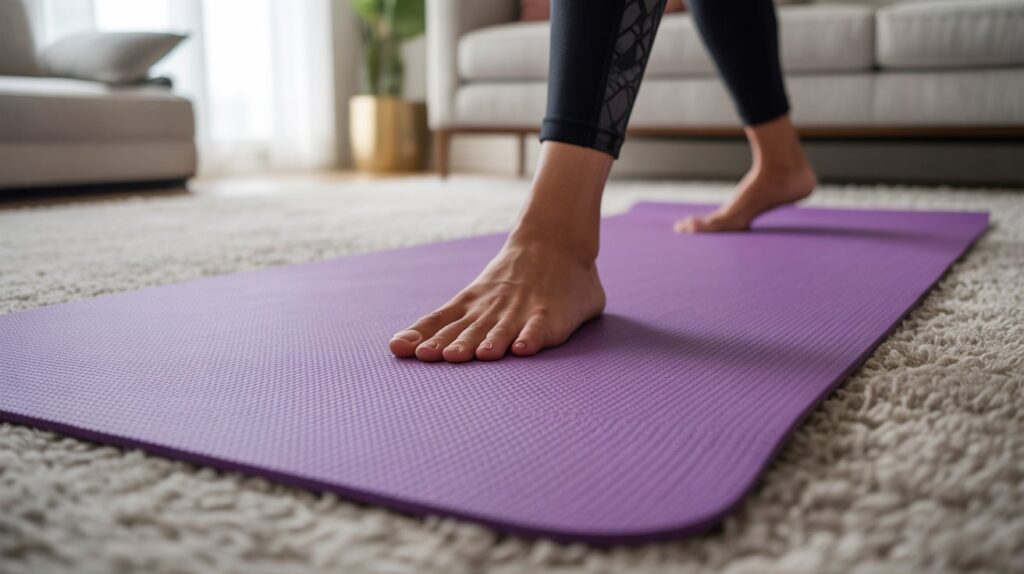
Balancing postures recruit deep stabilizing muscles that traditional weightlifting routines often miss. Strengthening these smaller joint-stabilizing groups enhances overall posture and functional movement. To stay safe and stable during these balances, practicing on a high-traction non-slip yoga mat helps maintain proper body alignment and grip.

3. Types of Muscle Built Through Yoga
Yoga strengthens the body in a comprehensive, well-rounded manner by targeting both large muscle groups and critical stabilizing networks. Rather than focusing solely on bodybuilding bulk, yoga develops physical resilience that enhances overall mobility, joint health, and functional movement.
1. Slow-Twitch Muscle Fibers (Endurance Strength)
Many yoga styles require holding physical postures for prolonged durations. This continuous load activates slow-twitch muscle fibers, which are primarily responsible for stamina and fatigue resistance. Over time, this conditioning builds high-level muscular endurance.
2. Fast-Twitch Muscle Fibers (Power and Agility)
Dynamic styles such as Vinyasa or Power Yoga incorporate rapid flows and controlled bursts of effort. These movements stimulate fast-twitch fibers, which help develop functional strength, agility, and dynamic stability.
3. Deep Core and Abdominal Strength
Virtually every yoga asana requires core engagement, particularly postures like planks, boat pose (Navasana), and balancing sequences. Yoga conditions not just surface abs, but deep stabilizing units like the transverse abdominis and pelvic floor.
4. Upper Body Muscle Tone
Postures involving upper-body weight-bearing — such as Chaturanga Dandasana, Downward-Facing Dog, and Crow Pose (Bakasana) — build strength across the shoulders, triceps, chest, and upper back. Protecting your joints during these transitions is crucial; practicing on a supportive option, such as an extra-long yoga mat, helps cushion wrists and hands safely.
5. Lower Body Strength and Stability
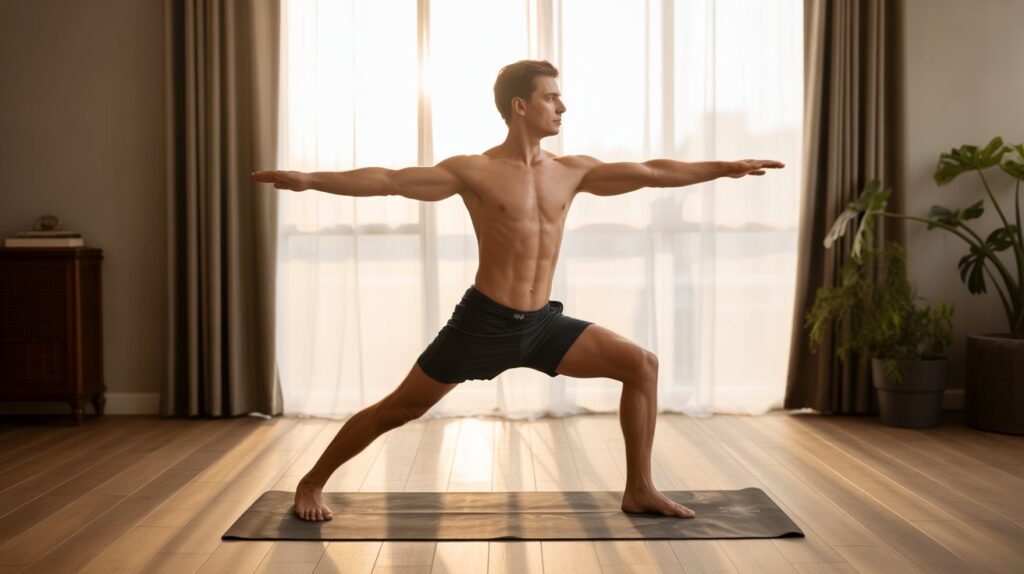
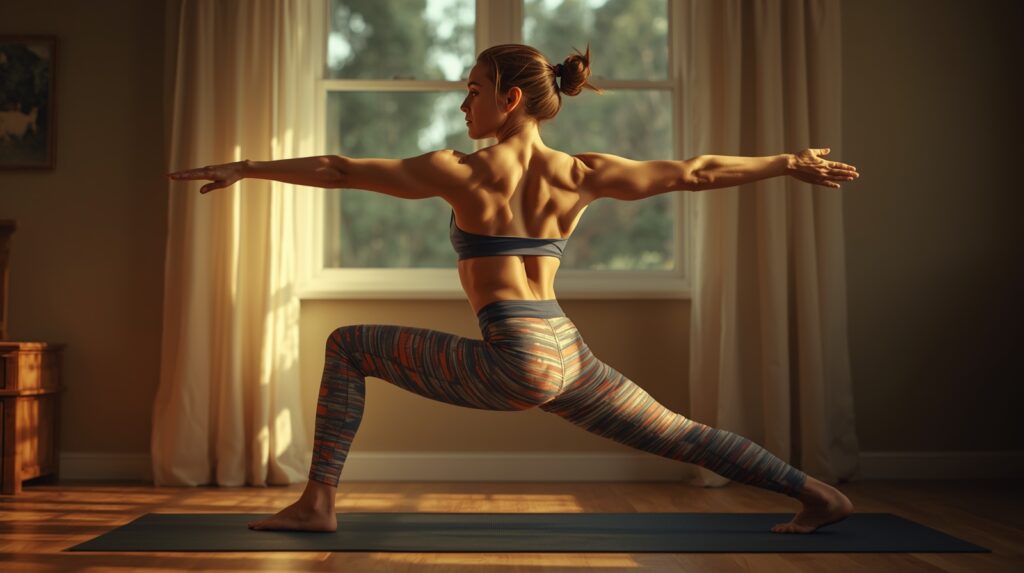
Standing poses like Warrior I, Warrior II, and Chair Pose actively target the quadriceps, hamstrings, glutes, and calves. These bodyweight movements build strong, well-defined legs while minimizing high-impact stress on the joints.
6. Stabilizer and Postural Muscles
Balancing postures force minor stabilizing networks around the ankles, knees, hips, and spine to activate constantly. These stabilizers improve posture, enhance body awareness, and prevent joint injuries. For optimal traction during these stability workouts, maintaining a reliable surface is key, as detailed in our guide on choosing a non-toxic exercise mat.
4. Yoga vs. Traditional Strength Training
Both yoga and traditional weightlifting improve muscular fitness, but they utilize completely different mechanics and deliver distinct physiological benefits. Understanding how these modalities compare helps you decide whether to focus on bodyweight conditioning or external loading to meet your personal health goals.
1. Source of Resistance
- Yoga: Relies entirely on bodyweight and gravity. Every posture requires you to lift, balance, and stabilize your own mass against the floor.
- Traditional Strength Training: Utilizes external loads such as dumbbells, barbells, kettlebells, and pulley machines, allowing for precise control over the amount of resistance applied.
2. Muscle Activation and Isolation
- Yoga: Naturally promotes compound, multi-joint movements. A single pose like a forearm plank engages the core, shoulders, quads, and glutes simultaneously.
- Strength Training: Excels at isolation. Exercises like bicep curls, leg extensions, or chest flyes allow you to target and stress a single muscle group with high precision.
3. Methods of Progressive Overload
- Yoga: Increases physical difficulty through extended time under tension, deeper structural alignment, slower eccentric lowering phases, or transitioning into advanced balance variations.
- Strength Training: Follows linear progression by incrementally adding weight plates, increasing repetition ranges, or adjusting movement tempos.
4. Nature of Functional Strength Gained
- Yoga: Prioritizes relative strength, neuromuscular control, dynamic balance, and endurance. As outlined in a detailed analysis by the American Council on Exercise, bodyweight routines enhance overall body awareness and spatial stability.
- Strength Training: Focuses heavily on absolute strength production, rapid force development, and hypertrophy (muscle fiber cross-sectional growth).
5. Impact on Joint Mobility and Flexibility
- Yoga: Seamlessly blends active resistance with deep stretching, building strength throughout a wide range of motion to protect joint health.
- Strength Training: Can build functional mobility if performed through full ranges, but often requires supplemental stretching or foam rolling to counter muscular tightness.
6. Joint Impact and Accessibility
Strength Training: Places higher axial loads on the skeletal structure, which is exceptional for building bone mineral density but demands strict movement mechanics to minimize injury risk.
Yoga: Offers a low-impact, closed-chain environment that is generally gentle on cartilage and tendons, making it sustainable for long-term joint health.

5. Yoga Styles That Are Best for Muscle Building
Not all forms of yoga offer the same level of strength development. Some styles focus more on relaxation and breathing, while others challenge your muscles through dynamic movement and sustained holds. Here are the styles most effective for improving strength and definition.
1. Power Yoga
This is one of the most strength-focused styles. Power Yoga includes fast-paced, athletic sequences that demand endurance, stability, and full-body engagement. It’s excellent for building upper body and core strength.
2. Ashtanga Yoga
Known for its structured series of poses, Ashtanga combines strength, flexibility, and breath control. The repetitive nature of this practice creates natural progression, helping you gradually develop stronger arms, legs, and core.
3. Vinyasa Flow
Vinyasa involves continuous movement, where poses flow together in a smooth sequence. The frequent transitions work both fast-twitch and slow-twitch muscle fibers, enhancing strength, balance, and muscular endurance.
4. Bikram or Hot Yoga
Practiced in a heated room, this style challenges your muscles through a fixed sequence of poses. Holding each posture for specific durations increases time under tension, boosts stamina, and helps build lean muscle.
5. Hatha Yoga (Strength-Focused Sessions)
Although generally slower paced, many Hatha classes emphasize long holds and deep engagement. This style is ideal for beginners looking to develop foundational strength before moving to more advanced practices.
6. Iyengar Yoga
This style focuses on alignment and precision. Using props like blocks and straps allows you to activate muscles more intentionally. Over time, holding poses correctly builds significant strength in stabilizing and postural muscles.
For more on the general health effects and safety of different yoga styles, the National Center for Complementary and Integrative Health (NIH) offers science-backed, non-commercial information worth reviewing.

6. Key Yoga Poses That Build Muscle Fast
Certain asanas stand out for developing strength because they demand continuous stability, balance, and the recruitment of multiple muscle groups at once. Practicing these movements consistently helps build lean mass, functional power, and definition without requiring any external equipment.
1. Plank Pose (Phalakasana)
- Muscles Worked: Core, shoulders, arms, upper back, quads, and glutes.
- Why It Works: A foundational full-body isometric movement. Maintaining a rigid, straight line from heels to crown forces the abdominal wall and shoulder girdle to sustain high tension, building deep endurance.
2. Chaturanga Dandasana (Low Plank / Four-Limbed Staff Pose)
- Muscles Worked: Triceps, chest, anterior deltoids, and core.
- Why It Works: Acting like a modified yoga push-up, lowering slowly into Chaturanga emphasizes eccentric muscle contractions, maximizing fiber breakdown and upper-body strength.
3. Chair Pose (Utkatasana)
- Muscles Worked: Quadriceps, glutes, calves, and lower back.
- Why It Works: Often called “awkward chair,” this deep squat variation keeps continuous load on the lower extremities while firing up the spinal erectors to maintain an upright chest.
4. Warrior II (Virabhadrasana II)
- Muscles Worked: Quads, inner thighs (adductors), shoulders, and glutes.
- Why It Works: Holding a wide stance with extended arms builds isometric endurance in the front leg while requiring upper-body postural stamina to keep the arms parallel to the floor.
5. Warrior III (Virabhadrasana III)
- Muscles Worked: Hamstrings, glutes, core, and ankle stabilizers.
- Why It Works: Balancing on a single leg while keeping the torso and raised leg parallel to the floor demands intense posterior chain activation and micro-adjustments from foot stabilizers.
6. Boat Pose (Navasana)
- Muscles Worked: Rectus abdominis, transverse abdominis, hip flexors, and spine.
- Why It Works: Balancing on the sit-bones in a V-shape forces the deep core to lock in, preventing lower back rounding and building powerful core control.
7. Crow Pose (Bakasana)
- Muscles Worked: Wrists, forearms, chest, shoulders, and core.
- Why It Works: As an introductory arm balance, it requires total-body compression, demanding that the upper body support the entire weight of the torso while the core stays hyper-engaged.
8. Bridge Pose (Setu Bandhasana)
- Muscles Worked: Gluteus maximus, hamstrings, and lower back.
- Why It Works: Elevating the hips targets the posterior chain, making it an effective bodyweight movement for counteracting the postural imbalances caused by prolonged sitting.
9. Dolphin Pose
- Muscles Worked: Deltoids, rotator cuffs, upper back, and core.
- Why It Works: Similar to Downward Dog but resting on the forearms, this posture places heavy demands on the shoulder complex, preparing the upper body for advanced inversions.
10. Side Plank (Vasisthasana)
Why It Works: A unilateral holding pattern that strengthens the lateral line of the body, improving oblique definition and lateral spine stability.
Muscles Worked: Obliques, lateral hip stabilizers, and shoulders.
7. How Long It Takes to Build Muscle from Yoga
The timeline for seeing strength gains from yoga varies from person to person, but most people notice visible and measurable improvements within a few weeks of consistent practice. How quickly you progress depends on several factors, including the yoga style you practice, session frequency, and your overall fitness level.
1. Initial Strength Improvements (2–4 Weeks)
In the first month, you may not see major changes on the outside, but your body will start adapting internally. Your muscles become more efficient, your balance improves, and poses feel easier as your neuromuscular system strengthens.
2. Noticeable Muscle Definition (6–12 Weeks)
With regular practice — about three to five sessions per week — you can expect clear improvements in muscle tone and endurance. Poses like Plank, Chair, and Warrior sequences start to sculpt the arms, legs, and core.
3. Significant Strength and Structural Changes (3–6 Months)
Over time, your muscles grow stronger through repeated time under tension and controlled movement. People who stick to a consistent routine often experience better posture, increased stability, and visible definition, especially in the core and lower body.
4. Factors That Affect Your Timeline
Several elements can speed up or slow down results, including:
- Yoga style (Power Yoga and Vinyasa produce faster changes)
- Session duration and difficulty level
- How long you hold poses
- Your nutrition and recovery habits
- Your starting strength level
5. Consistency Is Key
Yoga builds strength gradually, but the results are long-lasting. Unlike quick-fix routines, this practice develops functional muscles that support mobility, balance, and joint health. Practicing on the right surface also matters — a stable, properly sized mat like an extra-long yoga mat helps maintain consistent form during longer holds.
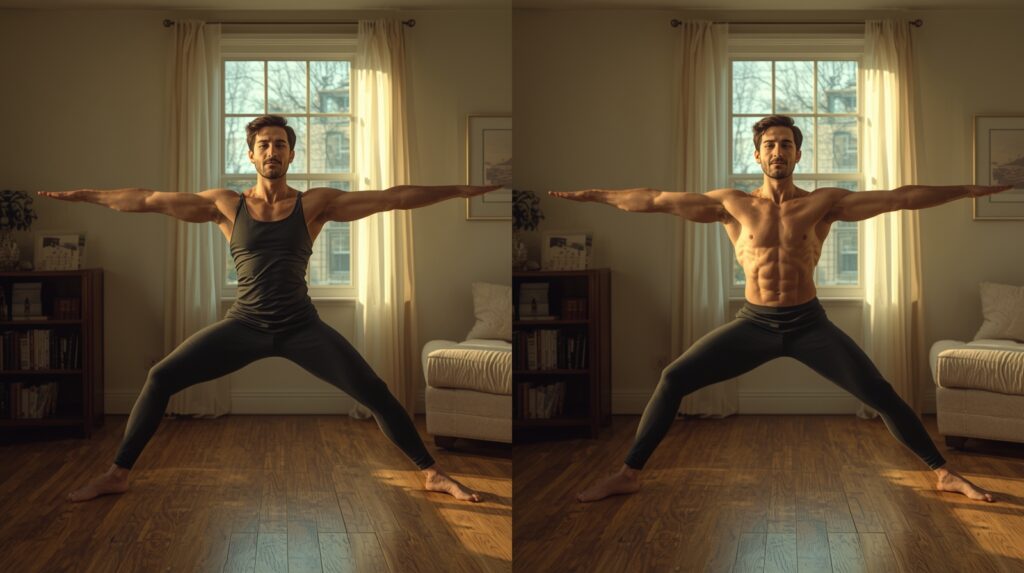
8. Can Yoga Replace Weightlifting for Muscle Growth?
Yoga can significantly enhance strength, muscle tone, and balance, but whether it can fully replace weightlifting depends entirely on your personal fitness objectives. Both training styles build muscular strength, yet they use distinct mechanisms and yield very different physical outcomes.
1. Maximum Strength Potential
- Yoga: Develops functional and relative strength using bodyweight resistance, isometric holds, and controlled motion, improving joint stability and total body control.
- Weightlifting: Facilitates continuous external load increases, making it vastly more efficient for generating maximum force output and raw strength gains.
2. Type of Muscle Growth and Hypertrophy
- Yoga: Focuses on muscular endurance and lean muscle development while strengthening deep stabilizing networks.
- Weightlifting: Drives myofibrillar hypertrophy, which results in greater cross-sectional muscle fiber growth, size, and bulk.
3. Progression and Overload Systems
- Yoga: Relies on structural progression—such as deeper ranges of motion, extended time under tension, or advancing into complex balance poses.
- Weightlifting: Uses precise linear progression, allowing you to add specific weight plates or micro-loads as your capacity increases.
4. Impact on Joint Health and Mobility
- Yoga: Simultaneously builds active strength and dynamic flexibility throughout an extensive range of motion.
- Weightlifting: Builds structural integrity and bone density, though it often requires complementary stretching to preserve full flexibility.
5. Alignment With Fitness Goals
- General Fitness: If your primary focus is functional strength, flexibility, stamina, and joint longevity, a dedicated yoga practice can completely satisfy your needs.
- Hypertrophy and Power: If your main goal is substantial muscle mass, explosive power, or bodybuilding aesthetics, traditional resistance training yields faster, more pronounced results.
6. Why Combining Both Creates Optimal Results
Maximum Growth: Weightlifting supplies the heavy mechanical tension necessary for accelerated muscle mass expansion.
Synergy: Many athletes and practitioners achieve peak results by integrating both modalities.
Injury Prevention: Yoga improves mobility, counteracts tight joints, and strengthens stabilizers.

9. Benefits of Building Muscle Through Yoga
Strengthening your body with yoga offers more than just toned muscles. This practice enhances physical performance, mental well-being, and overall functionality in daily life. Here are the key benefits:
1. Improved Functional Strength
Yoga develops strength that supports everyday movements, from lifting objects to maintaining posture. Unlike isolated workouts, it engages multiple muscle groups simultaneously, improving coordination and stability.
2. Enhanced Flexibility and Mobility
Muscles built through yoga remain flexible and long, reducing stiffness and increasing your range of motion. This combination of strength and mobility helps prevent injuries and improves overall performance.
3. Balanced Muscle Development
Yoga works both major and stabilizing muscles. This balanced engagement strengthens areas often neglected in traditional workouts, promoting better posture and reducing the risk of imbalances.
4. Core Strength and Stability
Many poses target the deep core muscles, improving trunk stability, spinal support, and overall body control. A strong core also supports better balance and reduces the risk of lower back pain.
5. Joint Health and Low-Impact Strengthening
Yoga provides resistance without heavy impact on joints. This makes it ideal for building muscle safely, especially for beginners, older adults, or people recovering from injury.
6. Mental and Physical Resilience
Holding challenging poses and progressing through sequences builds mental focus, discipline, and patience. The mind-body connection enhances awareness and helps maintain consistent practice.
7. Long-Term Health Benefits
Strong muscles improve metabolism, support bone health, and aid in maintaining a healthy weight. Combined with yoga’s stress-reducing effects, this contributes to overall long-term wellness.
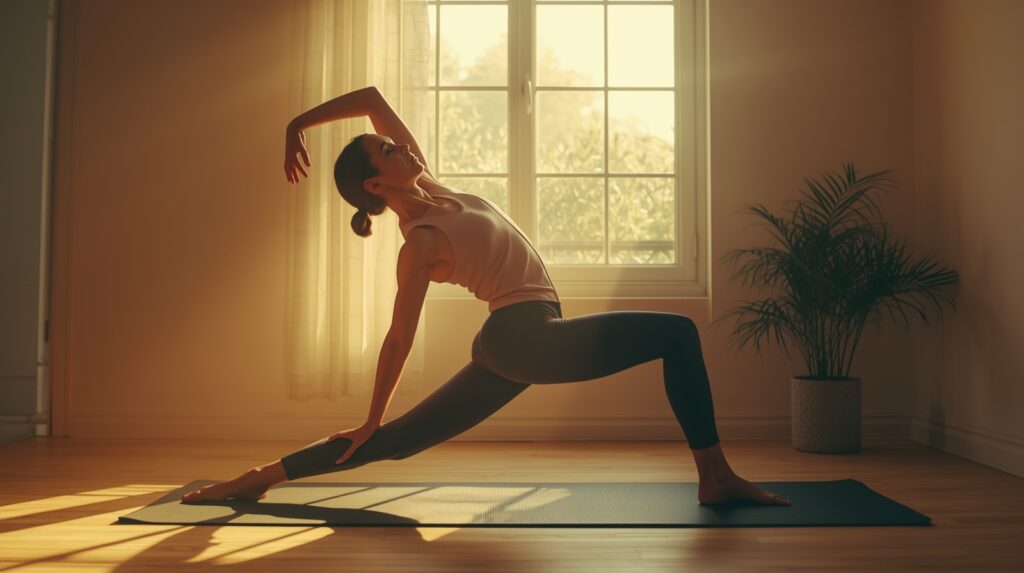
10. How to Increase Muscle-Building Results With Yoga
Maximizing strength gains from yoga requires more than simply going through the motions. By incorporating specific strategies, you can challenge your muscles more effectively and accelerate your results.
1. Focus on Time Under Tension
Hold poses longer to increase muscle activation. Extending the duration of positions like Plank, Chair, or Warrior III forces your muscles to work harder and adapt to sustained resistance.
2. Use Advanced Variations
Once standard poses feel easy, progress to more challenging versions. For example, move from a regular Plank to Side Plank, or from Chair Pose to Twisted Chair. Advanced variations engage more muscle groups and increase overall intensity.
3. Increase Repetitions and Flow Sequences
Repeating sequences or transitioning quickly between poses adds a cardiovascular component while keeping muscles under constant engagement, promoting both strength and endurance.
4. Incorporate Props and Resistance Tools
Blocks, straps, resistance bands, or yoga wheels can add extra load or help maintain alignment for deeper muscle engagement. These tools enhance stability and target smaller stabilizing muscles.
5. Practice Power and Vinyasa Styles
Dynamic yoga styles that involve flowing sequences, standing balances, and arm balances provide greater muscle activation than slower, restorative styles. Consistent practice challenges both upper and lower body strength.
6. Maintain Proper Form and Alignment
Ensuring correct alignment maximizes muscle recruitment and prevents injury. Focus on engaging the core, activating stabilizers, and distributing weight evenly in each pose.
7. Combine Yoga With Complementary Strength Work
Adding light weights, resistance training, or bodyweight exercises alongside yoga can further accelerate muscle growth while maintaining flexibility and balance.
8. Prioritize Recovery and Nutrition
Muscles need time to repair and grow. Adequate sleep, proper nutrition, and hydration are essential to support strength gains from your yoga practice.
11. Common Myths About Yoga and Muscle Building
Despite yoga’s widespread popularity, several persistent misconceptions surround its capability to develop strength and muscle mass. Dispelling these myths helps you approach your mat with realistic expectations, proper technique, and confidence.
1. Myth: Yoga Is Merely Stretching and Flexibility Work
- The Reality: While flexibility is a natural byproduct, yoga is deeply rooted in active resistance. Holding challenging postures recruits continuous muscular effort, challenging your stabilization networks and building true functional strength.
2. Myth: Yoga Is Too Gentle to Trigger Muscle Growth
- The Reality: Yoga substitutes external iron with bodyweight resistance, gravity, and extended isometric contractions. Postures like Plank, Chaturanga, and Chair Pose demand massive muscular output, effectively fatiguing fibers to stimulate strength adaptation.
3. Myth: You Need Long, Hours-Long Sessions to See Results
- The Reality: Physical adaptation relies on frequency, intensity, and focus rather than prolonged marathon classes. Consistent, short, and intentional sessions yield far better progress than occasional, unfocused practice.
4. Myth: Only High-Intensity Styles Like Power Yoga Build Strength
- The Reality: While Vinyasa and Power Yoga accelerate heart rates through fast flows, slower disciplines like Hatha or Iyengar build tremendous isometric strength when postures are held deliberately under deep tension and precise alignment.
5. Myth: Yoga Can Entirely Replace Heavy Weightlifting
- The Reality: Yoga builds lean, agile, and functional strength, but it cannot match heavy barbells for rapid myofibrillar hypertrophy. A hybrid routine that blends yoga with traditional resistance training delivers the ultimate balance of mobility and muscle growth.
6. Myth: Yoga Is Not Suited for Men or Heavy Athletes
The Reality: Yoga is universally beneficial. Joint stability, core endurance, rotational power, and spatial awareness are critical assets for male athletes, lifters, and runners looking to bulletproof their bodies against injury.

12. Best Practices for Beginners Wanting to Build Muscle With Yoga
Beginning a yoga regimen for strength development can feel both exciting and challenging. By sticking to proven training guidelines, beginners can safely build lean mass, enhance muscle tone, and avoid early plateauing or injury.
1. Begin With a Beginner-Friendly Style
- Action: Start with foundational styles like Hatha or beginner-level Vinyasa.
- Why It Matters: These styles focus heavily on proper structural alignment and basic biomechanics, building the raw foundation needed before attempting advanced, high-tension asanas.
2. Prioritize Strict Form Over Depth
- Action: Master the execution of basic postures before trying to push deeper into stretches.
- Why It Matters: Clean execution ensures you are actually loading the target muscle fibers rather than dumping pressure into passive joints or ligaments.
3. Maximize Time Under Tension (TUT)
- Action: Hold static postures for 20 to 60 seconds (or longer as your endurance builds).
- Why It Matters: Sustained muscular contraction is what triggers the micro-stress necessary for muscle fiber adaptation and strength gains.
4. Maintain a Consistent Practice Frequency
- Action: Aim for 3 to 4 dedicated sessions per week.
- Why It Matters: Regular mechanical stimulus is essential; sporadic sessions will slow down neuromuscular adaptation and delay visible tone changes.
5. Implement Progressive Overload
- Action: Gradually advance your practice by taking on harder variations, lengthening holds, or flowing through more demanding sequences.
- Why It Matters: Just like traditional lifting, your body adapts to baseline demands. Continuously introducing new challenges forces muscles to keep growing.
6. Actively Engage Core and Stabilizer Networks
- Action: Focus on locking in deep stabilizing units—including the transverse abdominis, glute medius, and spinal erectors.
- Why It Matters: Engaging these networks protects your spine, improves load distribution, and ensures balanced physical conditioning.
7. Blend Yoga With Complementary Training (Optional)
- Action: Pair your mat sessions with recovery work, light cardio, or a structured routine using a reliable non-toxic exercise mat to protect your joints during cross-training.
- Why It Matters: A hybrid approach helps accelerate overall fitness development and keeps your training well-rounded.
8. Prioritize Nutrition and Structural Recovery
Why It Matters: Strength is built during recovery when damaged fibers repair and adapt, not while you are actively holding the poses.
Action: Support your active muscle repair by consuming adequate dietary protein, staying hydrated, and getting quality sleep.
FAQs
Can beginners build muscle with yoga, or is it only for flexible people?
Absolutely. You do not need to be flexible to start practicing yoga for muscle growth. Flexibility and strength develop concurrently over time. Beginners can easily build foundational muscle tone by consistently practicing accessible bodyweight postures like Plank, Chair Pose, and Warrior.
Does yoga build muscle faster than standard calisthenics like push-ups and squats?
Yoga and traditional bodyweight exercises (calisthenics) build muscle at a very comparable pace. However, yoga incorporates prolonged isometric holds and dynamic balance challenges. This combination actively recruits deep stabilizing muscle networks that conventional push-ups and squats often overlook, creating more complete functional strength.
Is it normal to feel sore after a yoga session?
Yes, experiencing mild delayed onset muscle soreness (DOMS) after a challenging yoga session is entirely normal. This sensation simply indicates that your muscle fibers have undergone microscopic repair and are adapting to the time under tension—just like they would after standard strength training.
How many weekly yoga sessions are required to see noticeable muscle growth?
Most practitioners begin noticing visible improvements in muscle tone and definition within 6 to 12 weeks when committing to 3 to 5 sessions per week. Consistent, intentional practice yields much faster physical adaptation than sporadic, long workouts.
Can older adults and people with joint issues safely build muscle with yoga?
Yes. Because yoga relies strictly on bodyweight resistance and low-impact, closed-chain movements rather than heavy external loads, it is exceptionally safe for older adults or individuals managing joint sensitivities. It strengthens surrounding musculature without placing excessive axial pressure on cartilage or tendons.
Conclusion
While yoga differs from conventional weightlifting, it is a highly effective, well-rounded approach for developing functional strength, muscular endurance, and deep physical stability. By leveraging bodyweight resistance, time under tension, and full-body engagement, a regular practice delivers unique benefits that traditional gym workouts often miss—such as enhanced joint mobility, core control, and posture.
With consistency, the right training mindset, and supportive gear like a reliable non-toxic exercise mat, anyone can achieve noticeable muscle tone. Whether your goal is lean functional strength or long-term physical longevity, yoga offers a powerful, sustainable path to feeling and moving better.
About the Author
Muhammad Bilal
Muhammad Bilal is a fitness enthusiast and long-time yoga practitioner dedicated to exploring the intersection of bodyweight training, functional strength, and holistic wellness. With a focus on science-backed movement mechanics and practical gear choices, he helps readers build sustainable, injury-free fitness routines they can maintain at home.