Is PVC safe for yoga mats? For most people who practice a few times a week, a well-made PVC mat is unlikely to cause harm, but the answer depends on how the mat was made. Your hands, feet, and face spend hours pressed against it, so the material deserves a closer look. This guide covers what PVC contains, where the real risks sit, and how to choose a mat you feel good about.
Table of Contents
Is PVC Safe for Yoga Mats? The Short Answer
Often yes, with conditions. A PVC mat from a brand that tests for harmful additives is considered low risk for normal use. A mat with no label, no testing, and a sharp chemical smell is a different case.
PVC itself is a stable plastic. The concern is what gets added to it: plasticizers to make it soft, stabilizers to stop it breaking down, and colorants. Those additives are what researchers and regulators focus on, not the plastic alone.
So PVC is not automatically dangerous, but it is the material where checking the label matters most. If a brand cannot tell you what is in its mat, treat that as your answer.
What Is PVC and Why Do Yoga Mats Use It?
PVC, short for polyvinyl chloride, is a synthetic plastic that manufacturers soften with plasticizers and shape into the cushioned sheet most gyms and studios use. It became the default yoga mat material because it is cheap to produce, tough, and easy to keep clean.
How PVC Becomes a Soft Yoga Mat
Raw PVC is rigid, closer to a water pipe than a mat. To make it flexible, manufacturers mix in plasticizers, then add stabilizers so the material does not crack or fade. The mixture is heated, rolled into sheets, and finished with a textured surface.
This is where the safety discussion starts. The plastic itself is stable, but the additives are what decide whether a mat is a low-risk or a questionable product.
Why Brands Still Choose PVC
Several practical reasons keep PVC in production:
- Reliable grip. The textured surface holds on hardwood, tile, and carpet, which helps in poses like downward dog where hands slide forward.
- Closed-cell surface. It does not absorb sweat or bacteria the way open-cell foam does, so a quick wipe is enough after class.
- Long life. A PVC mat can handle years of daily use without thinning out or losing shape.
- Flat edges. It rests flat on the floor without curling, which matters when you move between standing poses and floor work.
Why Durability Raises the Safety Question
A mat that lasts for years stays against your hands, feet, and face for years. A single yoga session does not worry most people, but hundreds of hours of contact on one surface is the reason material choice is worth checking. That is also why the chemicals in a PVC mat matter more than they would in a product you use once or twice.
Which Chemicals in PVC Mats Raise Concern
Three groups of additives get most of the attention: phthalates, heavy-metal stabilizers, and volatile organic compounds.
- Phthalates. These plasticizers keep PVC flexible. Some types, such as DEHP, have been linked in studies to hormone disruption, which is why the U.S. Consumer Product Safety Commission restricts several phthalates in children’s toys and childcare items. Yoga mats fall outside that rule, so safety depends on the brand’s own standards.
- Heavy-metal stabilizers. Lead and cadmium were once common in PVC. Reputable manufacturers have moved to other compounds, but untested, unbranded imports can still be a gamble.
- VOCs and off-gassing. New mats often smell sharp for the first few days. That smell comes from volatile organic compounds leaving the material. Levels drop with airing, but a strong, lingering odor is a warning sign.
To keep this in proportion: there is no strong evidence that practicing on a well-made PVC mat makes people sick. The worry is long-term, low-level exposure, and research on yoga mats specifically is limited. That gap is the main reason many people avoid PVC.
What Exposure Looks Like During a Real Practice
Exposure comes through skin contact and the air close to the mat. Picture a normal session: palms in downward dog, feet in warrior pose, and a forearm or cheek touching the surface in cobra or child’s pose.
Heat changes things. In hot yoga, warm air and sweat can increase how much a mat releases, and you breathe deeper. A brand-new PVC mat in a closed, heated studio is a very different situation from an older, aired-out mat in a living room.
Here is a simple way to size it up. Someone who practices four times a week for an hour spends about 200 hours a year on the surface. Most of that is hands and feet, which are thick-skinned areas, yet the sheer amount of contact is why material choice deserves a few minutes of thought. Pregnant women and young children are commonly advised to limit phthalate exposure, so they are the people with the strongest reason to pick a PVC-free mat.
PVC vs TPE, Natural Rubber, and Cork
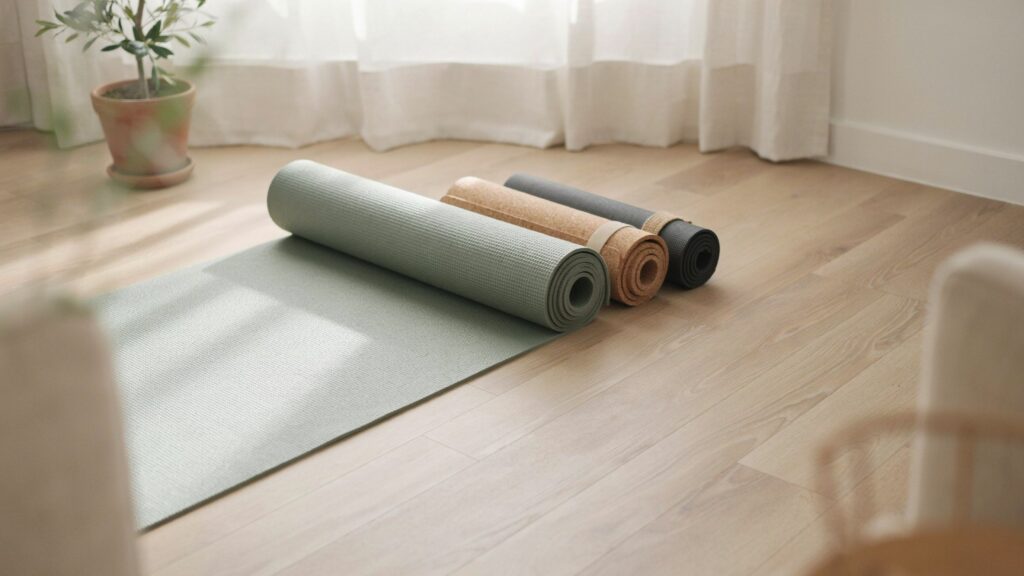
PVC is the most durable and often the grippiest option, while TPE, natural rubber, and cork trade some of that for a cleaner material profile.
| Material | Grip | Durability | Main drawback |
| PVC | Strong | Very high | Additives, not biodegradable |
| TPE | Good | Moderate | Wears faster, softer feel |
| Natural rubber | Excellent | High | Strong smell at first, latex allergy risk |
| Cork | Improves with moisture | Moderate | Firmer feel, needs gentle cleaning |
TPE is a blend of plastic and rubber-like polymers that does not rely on chlorine. Natural rubber is heavy, which matters if you carry your mat to class. If you have a latex allergy, skip rubber and look at cork or TPE. For a closer look at one cork option, read our guide to the Pond of Harmony Aura cork yoga mat.
How to Check Whether a PVC Mat Is Safer
Look for third-party testing, not marketing words.
- OEKO-TEX Standard 100. This label means the finished product was tested for harmful substances, including certain phthalates and heavy metals. You can read what it covers on the OEKO-TEX website.
- Clear claims. “Phthalate-free” and “lead-free” should appear in the product details along with a mention of testing.
- A transparent brand. Good sellers state where the mat is made and answer questions about materials.
- California Prop 65 notices. A warning means the mat may contain a listed chemical. Its absence is not proof of safety, but a warning tells you something.
- The smell test. A mild odor that fades within days is normal. A harsh smell that stays is not.
Be careful with words like “eco-friendly” and “non-toxic.” On a product page they often have no standard meaning unless a certificate backs them up.
How to Use a PVC Mat More Safely
If you already own a PVC mat, a few habits lower your exposure:
- Air out a new mat for 24 to 48 hours in a ventilated room, away from direct sunlight.
- Clean it with mild soap and water. Harsh solvents can break down the surface.
- Wipe it after sweaty sessions and let it dry flat.
- Never leave it in a hot car, since heat speeds up chemical release.
- Replace it when the surface cracks, flakes, or sheds small pieces.
Our review of the Yoga Turmeric Latte Pro mat covers grip, thickness, and care in more detail.
When the mat reaches the end of its life, remember that PVC is rarely recycled. Check your local waste rules, and never burn it, because burning PVC can release dioxins.
Who Should Choose a PVC-Free Mat Instead
Some people have good reason to skip PVC:
- Pregnant women and anyone actively limiting phthalate exposure
- Parents buying a mat for a child
- Hot yoga practitioners, where heat and deep breathing raise exposure
- People with sensitive skin or chemical sensitivities
- Anyone who wants a smaller environmental footprint, since PVC does not biodegrade
If none of these fit you, a tested PVC mat from a transparent brand can still be a reasonable choice.
FAQs
Are PVC yoga mats toxic?
Not in the sense of causing immediate harm. The concern is the additives, mainly phthalates and stabilizers. Mats with third-party testing carry far less risk than unlabeled ones.
Do PVC yoga mats off-gas?
Yes, especially when new. The smell comes from volatile organic compounds. Airing the mat for a day or two usually reduces it noticeably.
Is a PVC mat safe for hot yoga?
It can be used, but heat and sweat increase how much a mat releases. For frequent hot sessions, natural rubber, cork, or TPE is a more cautious choice.
What is the safest yoga mat material?
No single material wins for everyone. Cork and natural rubber are widely seen as cleaner options, while TPE suits people with latex allergies. Certification matters more than the material name.
Conclusion
A PVC mat is not a hazard by default, but it is the material where the label matters most. Look for third-party testing, air out a new mat, and replace it once the surface wears down. If you are pregnant, practice hot yoga, or want fewer unknowns, a cork, rubber, or TPE mat is an easy switch. Choose the mat you will trust enough to use every day.
Author Box:
Muhammad Bilal
Muhammad Bilal writes about yoga mats at Pure Yoga Mats, with a focus on materials, grip, thickness, and safety labels. Before writing about any mat, he checks the manufacturer’s material details, certifications such as OEKO-TEX, and what real buyers say about wear and comfort. His goal is simple: help you pick a mat that suits your body and your practice, without guesswork.