Introduction
Ever had your hands slide out from under you halfway through a hot yoga class? That is the exact problem the celestial combo yoga mat is built to fix. It pairs a microfiber towel top with a natural rubber base in one mat. In this guide, we cover what “combo” really means, how it feels, how it performs, who should buy it, and how to care for it.
Table of Contents
What Does “Combo” Mean in a Celestial Combo Yoga Mat?
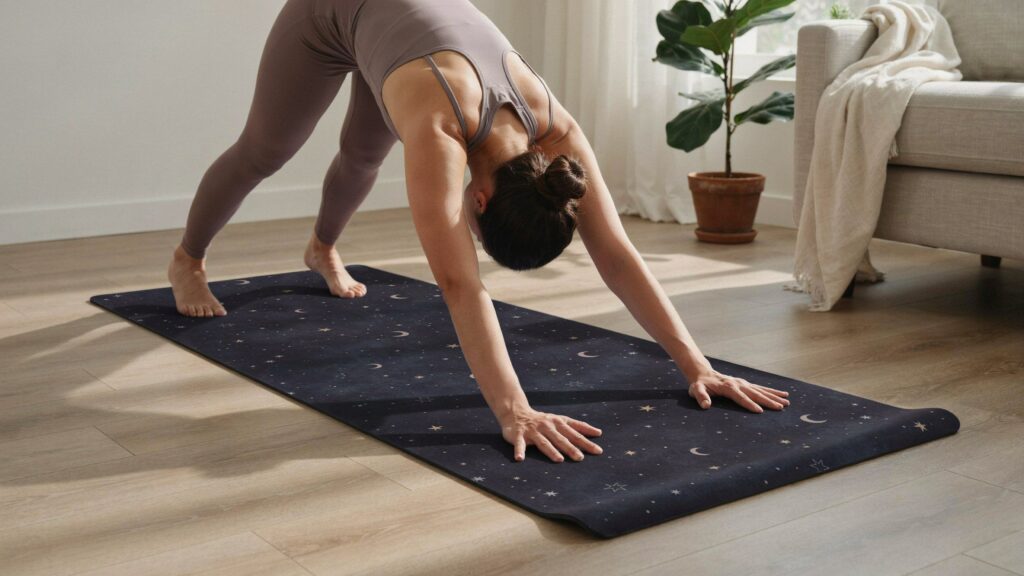
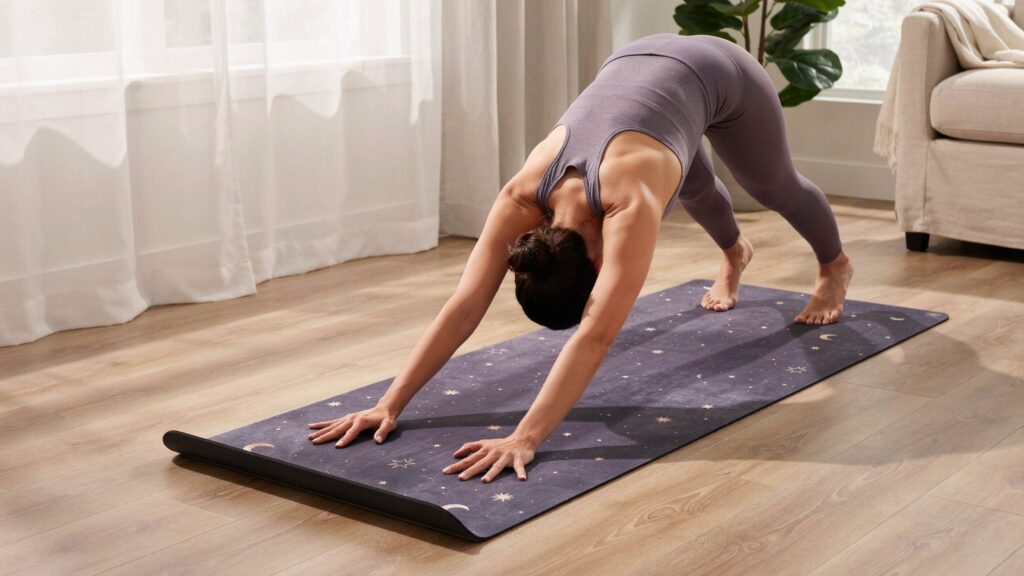
The celestial combo yoga mat is a two-in-one mat, not a boxed set. It joins a soft microfiber towel top to a natural rubber base, so you get a non-slip surface without carrying a separate yoga towel. The “celestial” name comes from the star and galaxy print on top.
The Rubber Base: Grip on the Floor
The bottom layer is natural tree rubber. Its job is to stay put on hardwood, tile, or studio flooring while you move. The standard mat is listed at 3.5mm thick, which is fairly thin. That works well for standing and balance poses like tree pose or warrior III, because you feel the floor under you. If you have sensitive knees, you may want to fold a blanket under them during low lunges or long holds. If you are still working out what thickness and material suit you, our guide to good yoga mats for beginners breaks it down.
The Microfiber Top: Grip for Your Hands and Feet
The top layer is a suede-style microfiber made from recycled plastic bottles. It acts like a yoga towel that never bunches up or slides around. The grip gets better when the surface is damp, so a light spritz of water before class helps, and sweat does the rest.
A simple example: picture a 75-minute hot vinyasa class in a studio kept near 95°F. On a regular dry mat, your hands start to slip by the fifth or sixth chaturanga. On a combo mat, sweat soaks into the microfiber and your palms hold their place. Towel-topped hybrids like this also show up in our roundup of the most expensive yoga mats, if you want to see how premium options compare.
Sizes and Versions
The same design comes in a few formats, so it helps to know which one you are looking at:
- Standard combo mat: the everyday size with the 3.5mm base.
- XL combo mat: 78 inches long, 34 inches wide, and about 8.4 lbs. A good fit for taller yogis and wide-legged poses.
- Travel combo mat: folds up like a towel and includes a carry strap, which makes it easy to pack for a gym bag or a flight.
- Kids combo mat: 60 by 24 inches, sized for smaller bodies.
The only accessory you actually get with the mat is the carry strap on the travel version. Everything else that makes it a “combo” is built into the mat itself, which is the main reason people choose it over a standard mat plus towel setup.
What Is the Celestial Combo Yoga Mat Made Of, and How Does It Feel?
The celestial combo yoga mat is made from a natural rubber base topped with a recycled microfiber surface, and it feels like a thin, firm mat with a soft, suede-like top. It is built for grip and floor contact more than for deep cushioning.
Materials
The base layer is natural tree rubber, and the top is a microfiber made from recycled plastic bottles. The design is printed with water-based inks, and the brand says the mat is free of silicone, toxic glue, and phthalates. That makes it a reasonable pick if you care about what your hands and feet touch for an hour at a time.
One thing worth checking if you have a latex allergy: natural rubber can be a trigger for some people. Since retailer listings are not always consistent on this point, it is smart to confirm with the brand before you buy.
Thickness and Cushioning
The standard combo mat is 3.5mm thick. Many everyday yoga mats run around 4 to 6mm, so this one sits on the thinner side. In practice, that means you feel the floor more. Standing poses, balance work, and fast flows benefit from that stable feel. Long kneeling holds, like a low lunge or a supported fish pose, can be tougher on the knees and spine, so a folded blanket or a knee pad is a simple fix.
Texture and Surface Feel
The top layer feels soft and slightly velvety, closer to a yoga towel than to the tacky feel of PVC or the rubbery feel of a plain natural rubber mat. Dry, it has a light grip. Damp, it grips much better, because the microfiber absorbs moisture and holds onto your hands and feet. A quick spritz of water before class is enough to wake up the surface.
Size and Weight
The everyday size covers most practices, but the range of sizes matters if you are tall or like room to move. Here is how the main options compare:
- XL combo mat: 78 inches long by 34 inches wide, and about 8.4 lbs. At 6’6″ of length, a 6-foot yogi can lie flat with room to spare.
- Travel combo mat: lighter and made to fold, with a carry strap.
- Kids combo mat: 60 by 24 inches.
The XL is noticeably heavier, so if you are carrying your mat to class on foot or on a train, that weight adds up by the end of the walk.
How Well Does the Celestial Combo Yoga Mat Handle Grip, Cushioning, and Support?
The celestial combo yoga mat grips very well once it is damp, supports balance poses with a firm, stable base, and offers only light cushioning. It suits sweaty, fast-moving practice better than slow, floor-heavy sessions.
Grip for Sweaty Hands and Feet
Grip is the main reason people buy this mat. The microfiber top is moisture-activated, so it holds better as it gets wet, while the natural rubber base keeps the whole mat from sliding on the floor. That two-layer setup gives you traction on top and stability underneath. If you want to see how texture and material change traction on other mats, our guide to good yoga mats for beginners covers the basics.
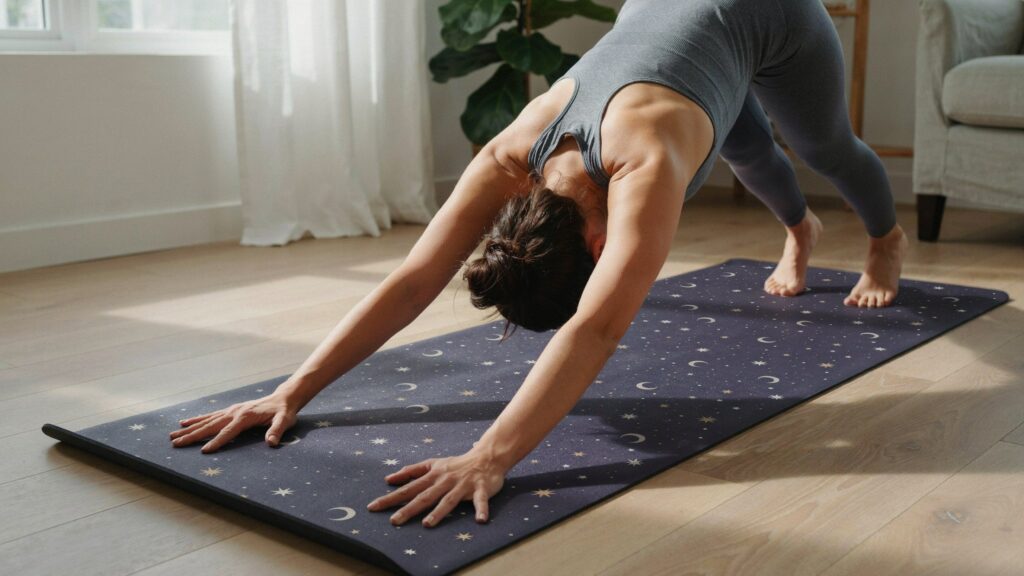
Picture a 60-minute hot vinyasa class where you move through around 20 downward dogs. On a dry PVC mat, the palms often start to slip by the middle of class. On this mat, sweat gets absorbed into the surface, so your hands stay planted. If you are practicing in a cool room and barely sweat, spritz the top lightly with water before you begin, since a completely dry surface has only mild grip.
Cushioning for Knees and Joints
With a 3.5mm thickness, this is a low-profile mat, and the padding is modest. It works well for standing sequences and flows, but pressure points show up in longer holds like low lunge, cat-cow, or child’s pose. If your knees are sensitive, fold the mat in half under them or add a small knee pad or blanket. Restorative and yin practice, where you stay down for several minutes at a time, is where the thinness is most noticeable. If you would rather have more padding, thicker, larger mats are worth a look.
Wrist Support in Planks and Downward Dog
Wrists take a lot of load in plank, chaturanga, and downward dog. A thin mat gives less shock absorption there, so it helps to spread your fingers wide, press through the whole palm, and avoid dumping weight into the heel of your hand. If you already deal with wrist soreness, a thicker mat or a folded towel under the heels of the hands can take some of the strain off. Our breakdown of how thickness and cushioning affect your joints can help you decide how much padding you need.
Balance Poses and Stability
A thinner base is an advantage for balance poses. Because there is less squish under your feet, tree pose, warrior III, and eagle pose feel more stable, and your ankles do not wobble on a soft surface. The rubber base also resists sliding, which matters when you are holding a pose on one leg for 30 seconds or more.
Keeping the Grip Strong Over Time
Sweat, oils, and skin cells build up in microfiber, and a dirty surface grips worse. Regular cleaning keeps traction consistent, and we cover the simple routine later in this guide.
How Does the Celestial Combo Yoga Mat Work in Real Practice?
The celestial combo yoga mat works best in sweaty, fast-moving classes and on hard floors at home, and it is easy to pack for travel. It is less ideal for long, floor-heavy sessions where you need thick padding.
Home Practice on Hard Floors
On hardwood, tile, or laminate, the natural rubber base stays put, so the mat does not creep while you move from one pose to the next. That matters more than it sounds. A mat that shifts 2 or 3 inches during a flow pulls your focus away from your breath. The 3.5mm thickness is enough for a living room routine, but on thick carpet the mat can feel a little unstable, since the soft floor underneath sinks under your weight. If you practice on carpet, a firmer spot or a thicker mat gives better balance.
Studio Classes and Hot Yoga
This is where the mat earns its keep. In a heated room, sweat collects fast, and a dry mat turns slick. The moisture-activated microfiber top absorbs it, and your hands and feet hold their position in poses like downward dog and warrior II. Many people skip the extra towel because the mat already does that job. For a 75-minute class, that means one less thing to carry and rearrange on the floor.
One practical point for shared studios: the XL version is 78 inches long and 34 inches wide, which takes up more floor than a standard mat, so it is worth checking the spacing in a crowded class.
Travel and Gym Bags
The travel version folds like a towel and comes with a carry strap, so it fits in a suitcase or gym bag without the awkward roll. That makes it a good hotel room mat when you want a clean, grippy surface on a hard floor or a thin carpet. The standard and XL mats are heavier, so if you are walking or riding a train to class, the weight is worth thinking about. For more on portable options, this topic connects naturally to a guide on the best yoga mats for travel.
Stretching, Pilates, and Floor Work
For stretching and general mobility, the mat is comfortable and grippy, and the soft microfiber feels good under bare skin. For mat Pilates, it depends on the exercise. Moves like leg circles or planks work fine. Movements that put pressure on the spine, such as rolling like a ball, can feel a bit hard on a 3.5mm mat, so many people add a small pad or fold the mat in half. Restorative and yin poses have the same issue, since you stay in one spot for several minutes.
Care After Use
Because the top layer soaks up sweat, it needs a quick routine after each session. The brand recommends hand-washing, and rolling the mat with the printed side facing out helps prevent creasing. A clean surface keeps the grip consistent, and we cover the full routine later in this guide.
Who Should Buy the Celestial Combo Yoga Mat, and Who Should Skip It?
The celestial combo yoga mat is a good fit for people who sweat, practice hot yoga, or want one mat that replaces a mat-and-towel setup. It is a weaker choice if you need thick cushioning, have a latex allergy, or want the lowest possible price.
Who Should Buy It
Hot yoga and vinyasa regulars. If you go to heated classes two or three times a week, you already know how fast a dry mat gets slippery. The moisture-activated microfiber top solves that without a separate towel.
Beginners who tend to slip. New practitioners often grip too hard because they are afraid of sliding in downward dog. A mat that holds better when damp lets you relax your hands and focus on alignment.
Frequent travelers and gym-goers. The travel version folds like a towel and includes a carry strap, so it fits in a bag without the bulk of a rolled mat.
Tall practitioners. The XL version measures 78 by 34 inches, which gives extra room for wide stances and long limbs.
People who care about materials. The base is natural rubber, the top is recycled microfiber, and the brand says it is printed with water-based inks and made without silicone or phthalates.
Who Should Skip It
- People with a latex allergy. The base is natural rubber. Confirm with the brand before buying, since some listings describe it differently.
- Anyone who needs heavy padding. At 3.5mm, the mat is thin. If your knees, wrists, or spine need a lot of support, a thicker mat will be more comfortable.
- Mostly restorative or yin practitioners. Long holds on the floor put pressure on joints, and a thin mat makes that more noticeable.
- Budget-focused shoppers. Combo mats usually cost more than basic PVC or foam mats. Retail prices often start around $95 and go up by size and seller, so check current pricing before you decide.
- Casual users who practice once in a while. If you stretch at home a couple of times a month on a soft surface, a simple mat may be enough.
A Quick Way to Decide
Ask yourself how often you sweat during practice. If it is most sessions, and you are tired of packing a towel, this mat makes sense. If you mostly do slow, floor-based sessions in a cool room, you may prefer something thicker. For a wider look at how it stacks up against other options, our guide to good yoga mats for beginners covers what to look for in a first mat.
How Do You Clean and Care for the Celestial Combo Yoga Mat?
The best way to clean a celestial combo yoga mat is to hand-wash it with mild soap and water, then hang it to dry away from direct sunlight. The brand also says a gentle machine cycle is possible, but hand-washing helps the mat last longer.
A Simple Cleaning Routine
The microfiber top soaks up sweat, so it needs more attention than a plain PVC mat that you can just wipe down. You also don’t need harsh cleaners for a personal mat: according to a Cleveland Clinic doctor, soap and water is enough to remove the microbes you would meet at home, unless you have a skin infection, and Cleveland Clinic’s yoga mat guide adds that shared mats at a gym are a different story and call for a disinfectant. A routine that works for most people looks like this: Cleveland Clinic
- After each sweaty session: Rinse or wipe the surface with a damp cloth and let the mat air out before rolling it.
- Every few weeks, or when it smells: Hand-wash the whole mat in a tub or shower using a small amount of mild soap.
- Rinse well: Leftover soap can leave a film that makes the surface feel slick, which defeats the point of a grippy mat.
- Hang to dry: Drape it over a shower rod or a drying rack until it is completely dry.
Here is a common situation. You finish a 75-minute hot class, roll the damp mat, and toss it in your gym bag. By the next morning it smells sour, because moisture trapped in the microfiber is the perfect place for bacteria. Letting it dry flat or hanging it for even an hour after class avoids most of that.
What About the Washing Machine?
The brand says the mat can go in the washing machine on a gentle cycle, but only in a machine without a center agitator, since that part can damage the surface. Use mild soap here too. If you are not sure what kind of washer you have, hand-washing is the safer choice.
What to Avoid
- Direct sunlight while drying. It can fade the print and damage the material.
- Harsh soaps and strong chemicals. Stick to mild soap. Bleach and heavy-duty cleaners are more likely to break down the rubber and microfiber over time.
- Machines with a center agitator. They can tear or distort the mat.
- The dryer. The brand recommends hanging the mat to dry, so a hot dryer is a risk for the rubber base.
- Fabric softener. It can coat the fibers and reduce grip.
The last two points come from general fabric and rubber care rather than the brand’s own instructions, so treat them as sensible precautions.
How to Roll and Store It
Roll the mat with the patterned side facing out. This keeps the surface from creasing and helps the mat lie flat when you unroll it. Store it in a cool, dry spot, away from heaters and windows, so the rubber base does not dry out or warp. For the travel version, folding it like a towel works fine, but let it dry first so you are not packing moisture.
If you want a broader look at mat hygiene, including deep-cleaning methods that apply to other materials, this topic connects naturally to a full guide on how to clean a yoga mat.
How Does the Celestial Combo Yoga Mat Compare With Other Yoga Mat Sets?
The celestial combo yoga mat costs more than a basic mat but replaces the mat-and-towel setup, so it is closer to a two-in-one purchase than a bundle of accessories. It stands out for grip and built-in sweat control, while typical yoga mat sets usually win on the number of included items and on price.
Against a Regular Mat Plus a Yoga Towel
This is the most useful comparison, because it is the setup this mat is built to replace.
- Price: Retail listings for the celestial combo mat often start around $95, and the final price depends on size and seller. A basic PVC or foam mat with a separate towel usually costs less up front.
- Grip: A towel on top of a mat can bunch up or slide during a flow. The combo mat has the microfiber bonded to the rubber base, so the two layers stay together.
- Convenience: One item to carry, wash, and store instead of two.
- Cushioning: At 3.5mm, it is thinner than many everyday mats, so it may feel firmer.
A common scenario: you practice hot yoga three times a week and currently pack a mat, a towel, and sometimes a strap. Switching to a combo mat cuts that down to one item, and you stop straightening the towel between poses.
Against Yoga Mat Sets and Bundles
Many yoga mat sets include a mat, a carry bag, a strap, and sometimes blocks or a towel. The celestial combo mat is different, because the “combo” is the mat’s own construction rather than a box of extras.
- Included items: A typical bundle gives you more pieces. The celestial combo mat gives you fewer, and only the travel version comes with a carry strap.
- Value: A bundle can feel like better value if you need blocks, a bag, and a strap anyway. If you already own those, you are paying for extras you do not need.
- Focus: Bundles spread the budget across several items. A combo mat puts more of it into the mat’s surface and materials.
Against Other Combo Mats and Premium Mats
Other brands also make rubber-and-microfiber mats, and some premium mats use natural rubber or cork blends. Since specs and prices vary widely, compare these points side by side before you buy:
- Thickness: Check the millimeter number, since it changes how the mat feels under your knees and wrists.
- Materials: Look at the base (natural rubber, PVC, TPE) and the top surface.
- Weight and size: Especially if you carry your mat to class.
- Care instructions: Hand-wash only versus machine-washable.
- Warranty and returns: Useful if you are unsure about the feel of the surface.
Durability: What to Expect
Durability depends heavily on care. Natural rubber holds up well with regular use, but the brand recommends hand-washing and hanging the mat to dry away from direct sunlight, since sun and heat can wear down the material and fade the print. A microfiber top also wears differently than a solid rubber or PVC surface, so how often you wash it and how you store it matters more than the mat’s label.
The Bottom Line on Value
If you sweat heavily, practice hot yoga, or travel with your mat, the extra cost pays off in grip and fewer things to carry. If you mostly do slow, cool-room sessions or you want a full kit with blocks and a bag, a standard yoga mat set may fit your budget and your routine better. For a wider look at higher-end options, this topic connects naturally to a guide on the most expensive yoga mats.
Is the Celestial Combo Yoga Mat Worth It?
Yes, the celestial combo yoga mat is worth it if you sweat during practice, take hot yoga or vinyasa classes, or want one mat that replaces a mat-and-towel setup. It is not the best pick if you need thick padding, have a latex allergy, or want the lowest price.
What You Get for the Money
The celestial combo yoga mat pairs a natural rubber base for stability with a recycled microfiber top that grips better as it gets damp. Retail listings often start around $95, so it costs more than a basic PVC mat or a budget pick like the one in our 5 Below yoga mat review. What you are paying for is non-slip grip, built-in sweat control, and one less item to carry and wash.
The version you choose changes the value too. The travel combo mat adds a carry strap and folds like a towel, which fits the portable options in our guide to the best yoga mat for travel. The XL version gives tall practitioners 78 by 34 inches of room, and you can compare it with other extra-large yoga mats if space is your main concern.
A simple way to judge the value: if you practice hot yoga three times a week and already pack a towel every time, this mat removes that step from every session. Over a few months, that convenience adds up.
Where It Falls Short
No mat fits everyone, and this one has clear trade-offs:
- Thin cushioning: At 3.5mm, it is firm. Sensitive knees and wrists may need a blanket or pad.
- Natural rubber base: If you have a latex allergy, confirm with the brand first.
- Care needs: Hand-washing and hang-drying take a little more effort than wiping down a plain mat.
- Price: It is an investment compared with entry-level mats.
The Quick Takeaway
Choose it if:
- You sweat a lot or practice in heated rooms.
- You are tired of a towel sliding around on top of your mat.
- You travel or carry your mat to class and want something compact.
- You care about materials like natural rubber and recycled microfiber.
Skip it if:
- You mostly do slow, floor-based sessions that need heavy cushioning.
- You are on a tight budget or practice only once in a while.
- You need a full kit with blocks and a bag in one box.
If you are still comparing options, start with what your practice actually looks like. Match the mat to how you move, how much you sweat, and where you practice, and the choice usually becomes clear. For readers who want to explore more mats before deciding, this topic connects naturally to a roundup of the best yoga mats for beginners or a guide on how to pick a mat by material and thickness.
Conclusion
The celestial combo yoga mat isn’t magic, but it solves a real problem: slipping when you sweat. Its firm feel and grippy microfiber suit fast, heated practice better than slow, floor-heavy sessions. The best mat is the one that matches how you actually move. So before you buy, ask yourself: what does my practice really need from the ground beneath me?
FAQs
What is the highest rated yoga mat?
There is no single winner, because ratings change with practice style. Natural rubber mats usually score highest for grip, and dense PVC mats score high for durability. For sweaty or hot yoga, combo mats like the celestial combo yoga mat get strong marks because the microfiber top grips better when damp.
Which yoga mat brand was featured on Shark Tank?
Stakt, a foldable exercise mat that can double as a step, appeared on Shark Tank in 2022. It is a 12mm-thick mat that folds to work as a block. It is a very different product from the thinner, towel-topped celestial combo mat.
What yoga mat does Meghan Markle use?
Meghan Markle has been linked to the B Yoga B Mat, and she was first seen carrying it in Toronto in 2016. It is made of rubber and known for grip and durability.
Which brand of yoga mat is considered the best?
No brand is best for everyone. Manduka, Lululemon, Liforme, and Yoga Design Lab all have loyal fans for different reasons. Pick by your needs: dense cushioning, natural rubber grip, or a towel-topped combo mat for heavy sweat. Yoga Design Lab makes the celestial combo mat.
How much thickness of yoga mat is best?
Most people do well with 4 to 6mm, which balances cushioning and stability. Thinner mats, around 3 to 3.5mm like the celestial combo mat, feel firmer and help with balance poses. Thicker mats, 7mm and up, are easier on sensitive knees and spine.
Which yoga mat is better, Manduka or Lululemon?
It depends on what you value. Manduka mats are known for density and long-term durability, while Lululemon mats are often praised for grip and a wide range of styles. Compare thickness, weight, and care needs before buying.
Why is Manduka mat so expensive?
Manduka’s higher-end mats use dense, heavier materials built for daily use, and some models come with long warranties. You are paying for durability and cushioning that can last for years. Exact pricing and warranty terms vary by model.
How often should you replace your yoga mat?
Most mats last one to three years with regular use, depending on material and care. Replace yours when it flattens, peels, tears, or loses grip even after cleaning. Hand-washing a combo mat and drying it away from direct sunlight can extend its life.