Introduction
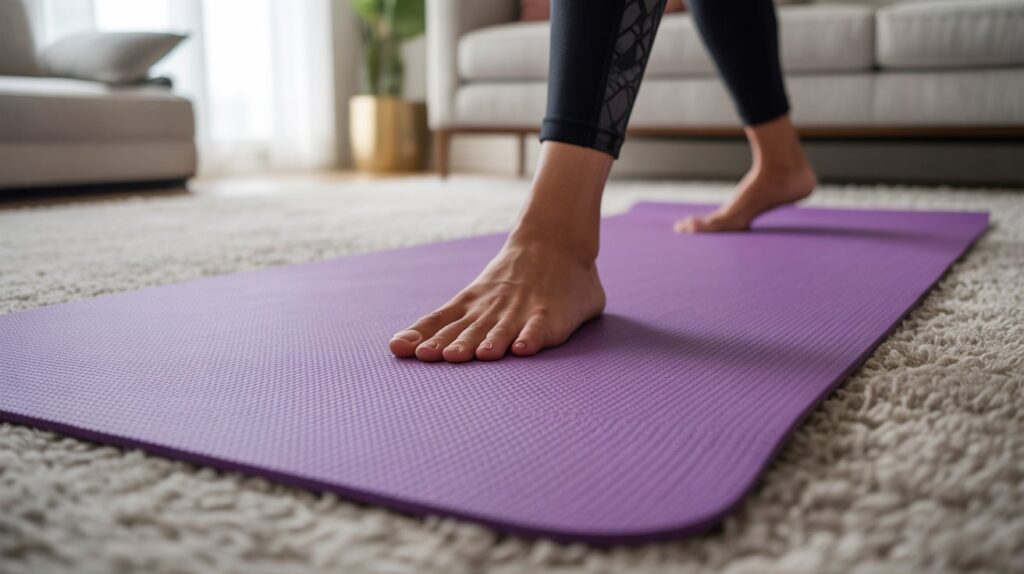
Standard yoga mat dimensions can vary more than many people expect. While many mats fall within a common size range, differences in length, width, and thickness can affect comfort, stability, grip, and how much space you have during different poses.
Yoga brands may use the term “standard” differently, so checking the actual measurements is more useful than relying on the label alone. This guide explains the typical yoga mat dimensions, how standard sizes compare with longer and wider options, and how to measure a mat accurately at home.
Whether you’re checking the size of a mat you already own or comparing dimensions before choosing one, this guide provides a clear reference for understanding standard yoga mat dimensions and finding a size that suits your practice.
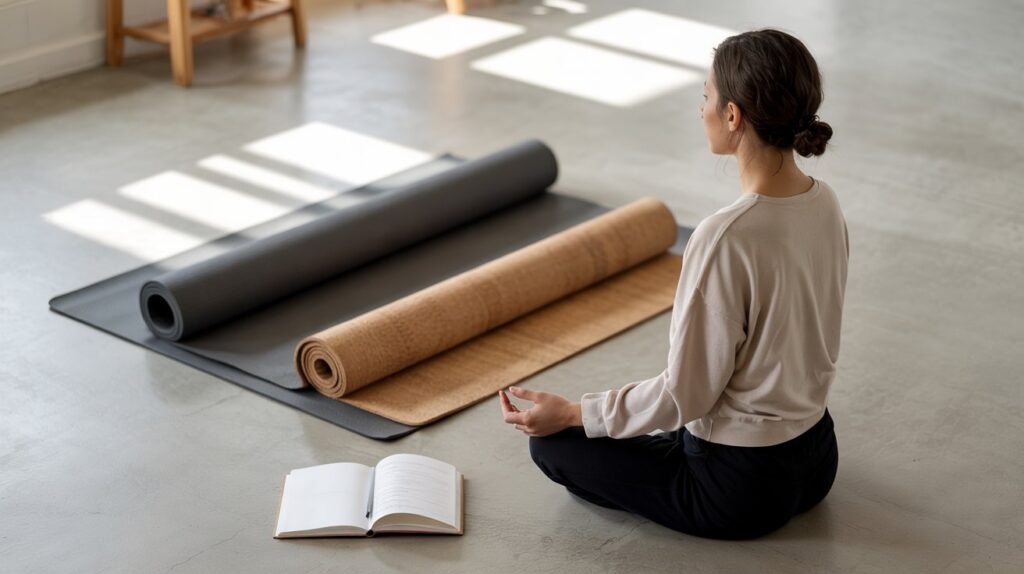
Table of Contents
1. What Are Standard Yoga Mat Dimensions? (Core Definition)
Standard yoga mat dimensions refer to the exact length, width, and thickness measurements most manufacturers default to when producing a general-use mat. The typical length is 68 inches (173 cm), and the width usually measures 24 inches (61 cm) — a footprint calibrated to fit the average adult height comfortably across most poses and transitions.
Thickness is the third core measurement, and it’s often the one buyers overlook. The most common range is 4–6 mm, which balances cushioning against ground stability. Thinner mats (below 4mm) are typically built for travel or advanced balance work where a firmer connection to the floor matters more, while thicker mats (above 6mm) prioritize joint comfort over stability — a trade-off worth understanding before you buy.
2. Why Standard Dimensions Matter for Your Practice
Consistent sizing isn’t just a manufacturing convention — it directly affects alignment, balance, and how predictably your body moves through a sequence. When your mat has reliable length and width, it’s easier to maintain proper form during transitions, especially moving from standing to seated or lying positions. You always know exactly how much space you’re working with, which removes the guesswork from every pose.
A correctly dimensioned mat also supports stability. When your hands and feet stay securely within the mat’s surface, you’re less likely to slip or lose balance — a factor that matters even more in fast-paced flows or weight-bearing poses where a single inch of miscalculation can throw off your form. If you’re unsure whether your current mat’s dimensions are actually helping or hurting your practice, our guide to choosing the right yoga mat size walks through how to match dimensions to your body and practice style.
For beginners, uniform measurements remove the guesswork entirely, letting you focus on learning technique rather than adjusting to unfamiliar space. For experienced practitioners, consistent sizing means your routine feels natural and uninterrupted, session after session.
3. Comparison of Standard vs. Non-Standard Yoga Mat Sizes
When choosing a yoga mat, it helps to understand exactly how common measurements differ from alternative options — the numbers matter more than they might seem. Traditional mats offer a familiar footprint suited for most users, but non-standard versions are engineered to solve specific fit problems that standard sizing doesn’t address.
Long mats typically range from 72 to 85 inches. These are built for taller individuals whose head or feet extend beyond the edges of a regular-length surface — a real concern given that average adult height in the U.S. has been steadily increasing over recent decades, making longer mats an increasingly relevant option rather than a niche one. The extra length makes stretching and lying poses noticeably more comfortable.
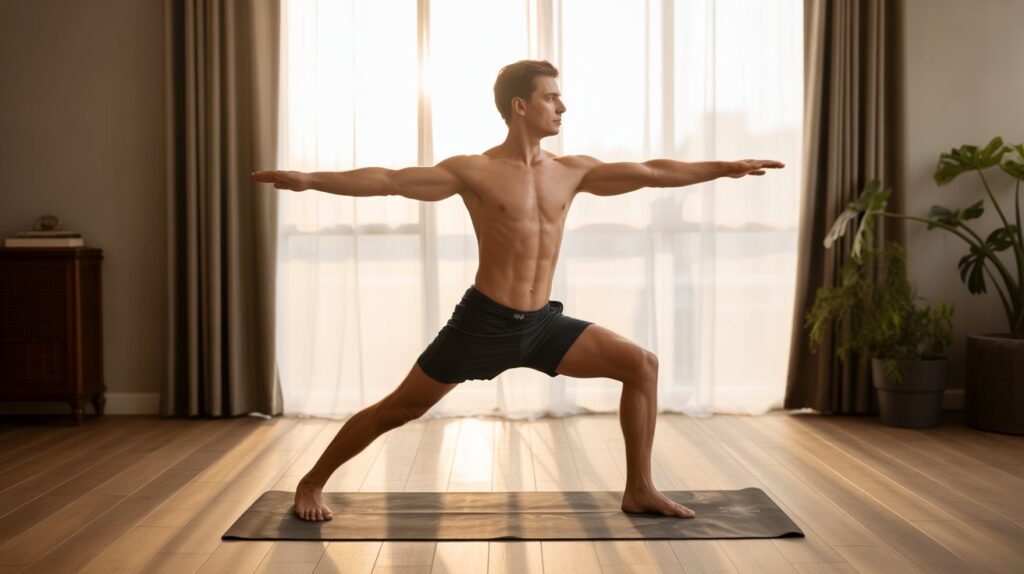
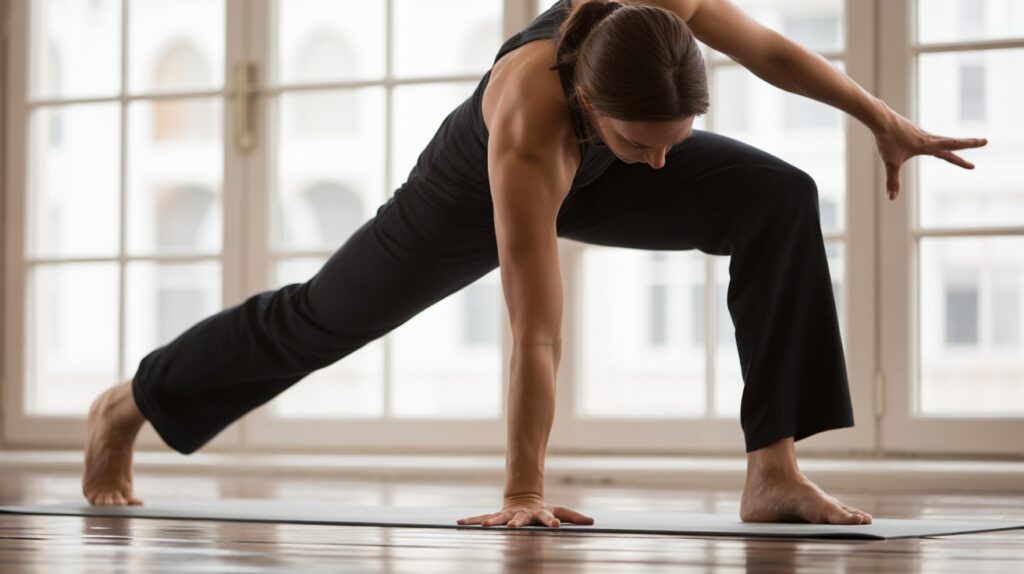
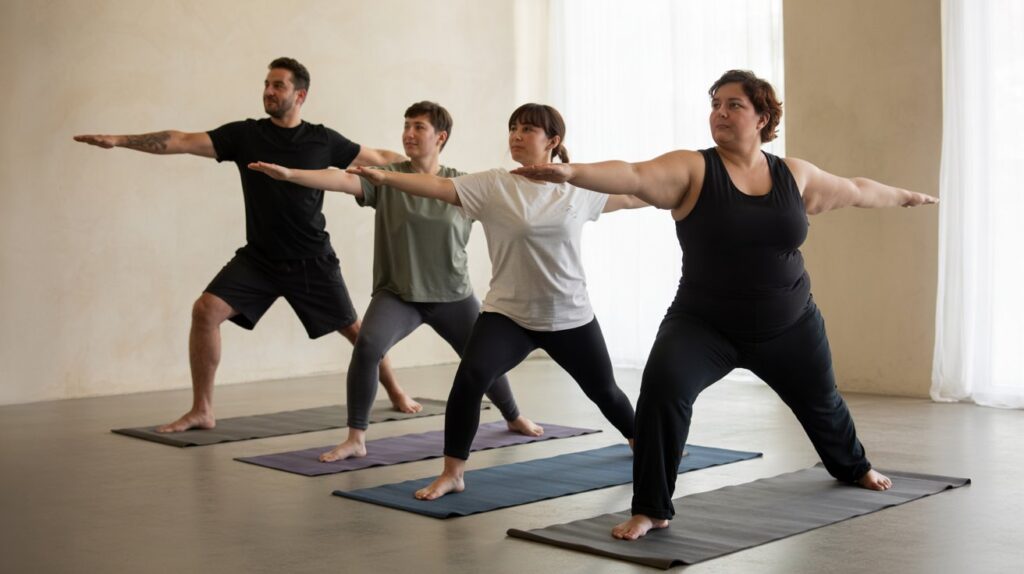
Wide mats, often measuring 26 to 30 inches across, add lateral space. They’re particularly useful for people with broader shoulders or anyone who feels cramped during wide-stance poses like Warrior II or side lunges, where elbows and feet frequently extend past a standard 24-inch width.
Travel mats are usually thinner and sometimes shorter by design. Built specifically for portability, they fold easily into luggage or backpacks — the trade-off being reduced cushioning in exchange for significant space savings.
Extra-thick mats prioritize comfort and joint support, often measuring 8mm or more. They’re best suited to restorative sessions or practitioners managing sensitive knees and wrists, though the added softness comes at the cost of stability in standing poses.
4. Standard Yoga Mat Thickness Options: Which One Fits Your Practice
Yoga mat thickness plays a major role in how comfortable, stable, and supportive your practice feels session after session. Most mats fall into four common thickness categories — each built for a different balance of cushioning, portability, and ground connection.
1–2 mm (Travel Yoga Mat Thickness):
These ultra-thin travel mats are designed purely for convenience. They fold flat, slide easily into backpacks or suitcases, and are ideal for on-the-go practice or studio hopping. However, they offer minimal cushioning, making them better suited for experienced yogis or anyone who typically practices on soft flooring like carpet.
3–4 mm (Standard Yoga Mat Thickness):
This range sits at the thinner end of standard sizing and offers a firm, responsive feel with strong ground connection. It works well for practitioners who prioritize stability over cushioning — particularly balance-focused styles, advanced practice, or slow, controlled flows where a closer floor connection improves control.
4–6 mm (Most Common Yoga Mat Thickness):
This is the range most manufacturers default to for general-use mats, striking the best overall balance between comfort and stability. It suits nearly every practice style — stretching, standing poses, slow flows, and everyday use — which is why it remains the go-to choice for most yogis, beginner through advanced.
8 mm and Above (Extra-Cushioned Yoga Mats):
These thicker mats offer maximum softness and joint protection, making them a strong choice for restorative yoga or practitioners managing sensitive knees and wrists. The trade-off is reduced stability during standing balance poses, where a firmer surface typically performs better.
Yahan optimized version hai, internal link ke sath:
5. Material Differences & How They Affect Size Stability
The material of a yoga mat directly determines how well it holds its shape, grip, and overall structure over time. Different materials respond differently to pressure, stretching, and repeated use — which means two mats with identical listed dimensions can behave very differently after a few months of practice.
PVC (Polyvinyl Chloride)
PVC mats are known for durability and a consistent surface texture. They resist stretching and tend to hold their shape well, which means the mat you buy is close to the mat you’ll still have a year later. This dimensional consistency makes them a reliable choice for frequent, heavy use.
TPE (Thermoplastic Elastomer)
TPE mats are lightweight, flexible, and more eco-friendly than PVC. The trade-off is that they’re more prone to slight stretching, especially under heavy pressure or high heat — worth factoring in if you practice in a warm studio. Despite this, they offer solid cushioning and comfort for the weight savings.
Natural Rubber
Rubber mats deliver strong traction and dense support, and they generally stay stable in size. Their natural elasticity means they compress during practice but reliably spring back to original shape — though the material’s weight can make them noticeably harder to transport than synthetic alternatives.
Cork
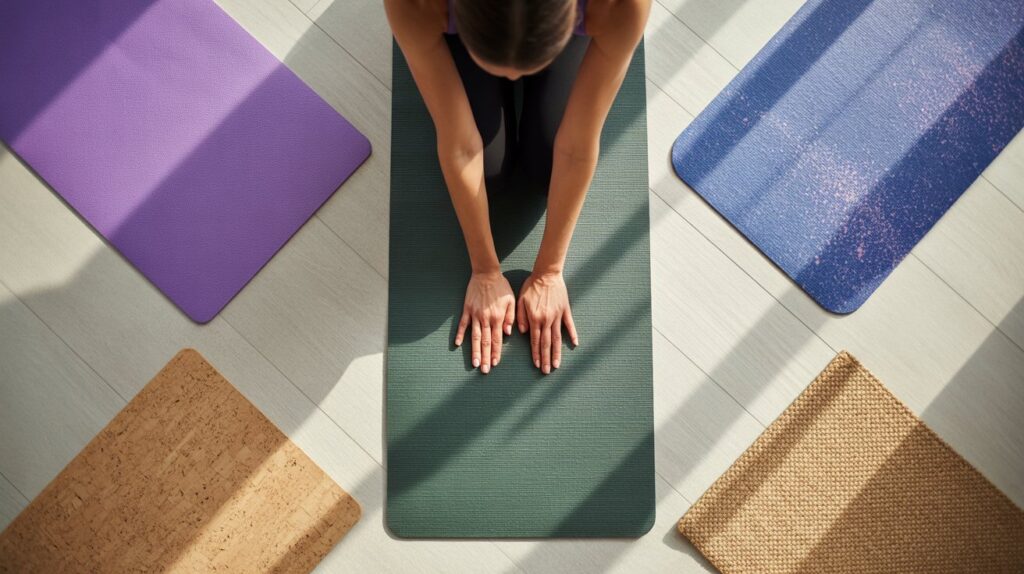
Cork mats pair a firm surface with natural grip that actually improves when wet. The cork layer itself doesn’t stretch, which is a key reason cork mats tend to keep their exact dimensions longer than most materials. They also resist wear and visible pressure marks over time.
Jute
Jute mats are lightweight and eco-friendly, offering a naturally textured feel. However, jute fiber is less rigid than rubber or PVC, which can lead to subtle shape changes with intense, long-term use — something to keep in mind if precise, unchanging dimensions matter to your practice. For a full breakdown of how each material performs beyond just sizing, see our guide to yoga mat materials and grip.
6. Ideal Mat Dimensions for Different Body Types
The right yoga mat size depends on more than your height. Your body type, shoulder width, wingspan, and movement style can all affect how much surface area you need. Choosing suitable dimensions can give you more room to practice comfortably while helping you stay supported during different poses.
For Tall Practitioners:
If you’re taller than average, a longer mat—typically 72 to 85 inches—can provide better coverage during full-body stretches, lying poses, and plank positions. Extra length helps keep your head and feet comfortably on the mat.
For Short or Medium-Height Users:
A standard-length mat is usually sufficient for many people. It provides enough space for everyday yoga without taking up unnecessary room in your practice area.
For Plus-Size Practitioners:
A wider mat, often around 26 to 30 inches, can provide additional room for side-to-side movements, wider stances, and floor-based poses. The extra surface area can also make practice feel more comfortable.
For Broad Shoulders or a Longer Wingspan:
A wider surface can provide better support when your hands and arms extend outward during poses such as downward-facing dog and plank. This extra room may also make it easier to maintain a comfortable position.
For Beginners:
Beginners can benefit from a mat with balanced length and width. Having enough space to position your hands and feet comfortably can make learning new poses feel more secure and less restrictive.
7. Standard Yoga Mat Dimensions for Various Yoga Styles
Different styles of yoga require different levels of space, cushioning, and stability. While common mat sizes work well for most practices, certain styles benefit from more length, width, or padding.
Vinyasa or Flow Yoga:
This style involves continuous movement, transitions, and full-body stretches. A typical-sized mat offers enough space for smooth flow, but those who prefer larger movements may enjoy a slightly longer version for added room.
Hatha Yoga:
Hatha sessions are generally slower and more controlled. A regular-sized mat provides sufficient space for seated, standing, and lying poses without requiring extra length.
Hot Yoga or Bikram:
These practices involve heavy sweating and deep stretching. While a common size is adequate, a mat with strong grip and slightly wider dimensions can help maintain stability in slippery conditions.
Restorative or Yin Yoga:
Since these styles involve holding poses for longer periods, extra cushioning is more important than extra length. A thicker mat within common width and length works well here.
Ashtanga Yoga:
Ashtanga is dynamic and physically demanding. A regular size offers enough room, but some practitioners prefer additional length to support jump-throughs and extended poses.
Power Yoga:
This fast-paced style may require mats with a bit more grip or width. Added space can help maintain balance during strong standing sequences.
8. Portability & Storage Based on Mat Size
Yoga mat size, thickness, and weight can affect how easily you carry and store it. A larger or thicker mat may provide more cushioning and practice space, but it can also take up more room when rolled. If portability matters to you, understanding the relationship between mat dimensions and weight can make your choice easier.
Portability
Thinner mats, especially around 1–3 mm, are generally lighter and easier to carry. Some travel mats can also be folded, making them convenient for backpacks, suitcases, or regular trips to a yoga studio. For more guidance on how thickness and weight affect portability, see this yoga mat thickness and weight guide from REI Expert Advice.
Standard-width mats are also relatively easy to transport because their narrower profile creates a manageable rolled shape. In contrast, extra-long or wide mats can be heavier and bulkier, so they may require a larger carrying strap or suitable storage solution.
Storage
A mat with traditional dimensions can usually be rolled and stored in a closet, under a bed, or upright against a wall without taking up excessive space. Thicker and oversized mats create a larger roll and may require more storage room.
If you have a small apartment or limited storage, choosing a moderate mat thickness and standard width can make everyday storage easier without sacrificing too much practice space.
9. Durability & Lifespan Related to Mat Dimensions
Yoga mat dimensions can affect comfort and everyday performance, but durability, material quality, thickness, and frequency of use also play an important role in how long a mat remains in good condition. A larger or thicker mat may provide more cushioning, but its construction and maintenance ultimately determine how well it handles repeated practice.
Thickness and Longevity
Thicker mats generally provide more cushioning and joint support, which can be helpful during kneeling, seated poses, and floor-based exercises. However, soft materials may gradually compress in areas exposed to repeated pressure. Thinner mats provide less padding but can feel firmer and more stable, particularly on a supportive floor.
Length and Width Considerations
Extra-long and wider mats give you more practice space, but frequent pressure in the same areas can eventually create visible signs of wear. Standing poses, kneeling positions, and repeated transitions may cause certain sections to develop compression or surface changes. Rotating the mat occasionally and using it on a suitable surface can help promote more even wear.
Material and Construction
The mat material and surface construction have a major impact on lifespan. PVC is generally known for its durable structure and resistance to everyday wear, while natural rubber can provide strong traction but may require careful cleaning and storage. Cork surfaces can also be durable, although excessive moisture and improper maintenance may affect their condition.
When evaluating a yoga mat, consider more than dimensions alone. Surface grip, cushioning, resilience, material quality, edge construction, and maintenance requirements can all influence long-term performance. Choosing a mat that matches your practice frequency and workout style is often more important than simply selecting the thickest or largest option.
10. Price Differences Based on Dimensions
The size of a yoga mat can influence its cost, along with material and brand. Understanding these differences helps you make an informed choice without overspending.
Length and Width:
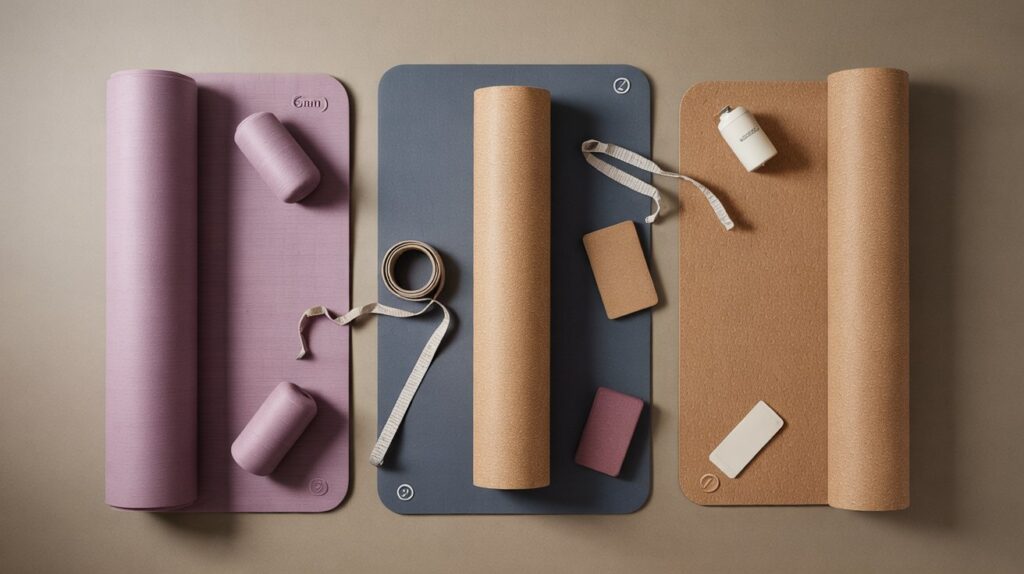
Longer or wider mats usually cost more than standard-sized mats because they require additional material during production. Taller practitioners or those who prefer extra space may pay a premium for a mat that offers extra room.
Thickness:
Thicker mats often come with higher price tags due to the extra cushioning and materials used. Mats designed for joint support or restorative practices may be more expensive than thinner, basic versions.
Travel and Compact Mats:
Portable mats, even though smaller or thinner, can sometimes be priced higher if they use lightweight, high-quality materials. Convenience and packability add value for frequent travelers.
Material Influence:
Materials like natural rubber, cork, or eco-friendly TPE generally cost more than basic PVC, regardless of size. When combined with larger dimensions or added thickness, the price can rise further.
11. Standard Dimensions Across Popular Brands
The term “standard yoga mat” does not guarantee identical measurements across brands. When you compare popular yoga mat brands, differences in length, width, thickness, and overall construction become easier to notice. Checking the actual specifications is a better way to compare mats than relying on the word “standard” alone.
Manduka
Manduka mats, including models in the PRO range, are commonly around 71–72 inches long and 24 inches wide. This slightly longer format provides additional coverage while maintaining a familiar width for everyday practice.
Liforme
Liforme mats are generally wider than the traditional 24-inch format, with many models measuring around 72–74 inches long and 26 inches wide. The additional surface area can be useful for practitioners who prefer more room for extended poses and wider movements.
Gaiam
Gaiam mats commonly fall within a more traditional size range of approximately 68–71 inches in length and 24 inches in width. This familiar footprint can work well for general yoga sessions, stretching, and home practice.
Jade Yoga
Jade Yoga mats are commonly available around 68 inches long and 24 inches wide, which closely matches the conventional yoga mat size. Their dimensions remain relatively standard, while the material and surface feel can vary between models.
Lululemon
Lululemon mats commonly use a 71 × 24-inch footprint, keeping the length and width close to familiar dimensions. Some models use around 5 mm of thickness, providing additional cushioning while maintaining a standard-sized practice surface.
What This Comparison Shows
These examples show why checking the exact mat dimensions matters. Even a difference of a few inches in length or width can affect your available practice space, storage requirements, and overall comfort. Always check the manufacturer’s current specifications before comparing one yoga mat with another.
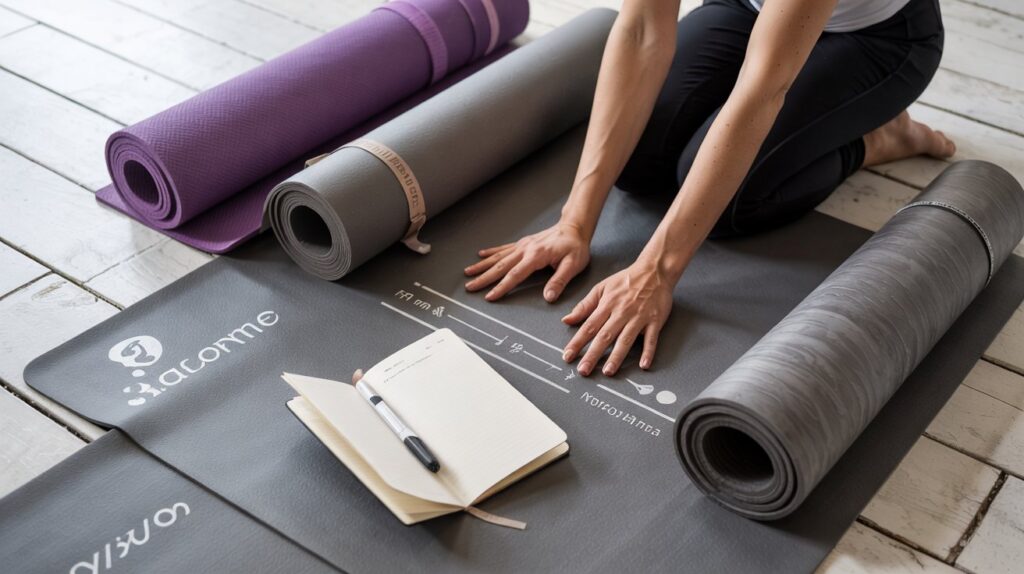
12. How to Measure Your Yoga Mat Correctly
Knowing how to measure a yoga mat correctly helps you confirm its length, width, and thickness before comparing it with standard yoga mat sizes. Accurate measurements are especially useful when checking manufacturer specifications, replacing an old mat, or choosing a size that provides enough practice space and cushioning.
1. Measure the Length
Place the yoga mat completely flat on a hard, level surface. Use a flexible tape measure to measure from one end to the other in a straight line. Make sure the mat is fully unrolled and not stretched or curled, then record the measurement in inches or centimeters.
2. Measure the Width
Measure from one side of the mat to the other at its widest point. Keep the tape measure straight and perpendicular to the length. Checking the width helps you determine whether the mat offers enough side-to-side space for your usual poses and movements.
3. Check the Thickness
For an accurate thickness measurement, place a ruler or caliper against the mat’s edge and measure from the floor to the top surface. Mat thickness can affect cushioning, stability, balance, and joint comfort, so this measurement is useful when comparing different options.
4. Check for Consistency
Measure the mat at more than one point if you want to confirm its dimensions are consistent. Check the edges and surface for noticeable differences in width or thickness. Minor variations can occur because of manufacturing methods or the mat’s construction.
Quick Measurement Tip
For the most reliable results, measure your mat when it is clean, fully unrolled, and resting naturally on a flat surface. Compare your measurements with the manufacturer’s listed yoga mat dimensions rather than relying only on the product name or “standard size” label.
FAQs
What is the most common yoga mat size?
Most mats are around 68 inches long and 24 inches wide, offering enough room for basic poses and stretches.
Are longer yoga mats worth it?
Yes, especially if you’re tall. A longer option prevents your head or feet from hanging off the ends during extended poses.
Do wider mats improve comfort?
Wider mats provide more space for side-to-side movement and help users with broad shoulders or larger body types feel more supported.
What’s the best thickness for general practice?
Around 4–6 mm works well for most people. It offers a balance between cushioning and stability.
Do mat materials affect durability?
Absolutely. PVC mats last the longest, while rubber and cork provide great traction but may need more care.
Conclusion
Understanding the exact numbers behind standard yoga mat dimensions — length, width, thickness, and how each material holds up over time — gives you a real basis for comparison instead of guessing based on marketing claims. Whether you’re measuring a mat you already own or comparing specs before buying, this precision is what separates an informed choice from a random one.
Once you know the technical details, the next step is matching them to your actual body and practice style. Our complete guide to choosing the right yoga mat size walks through exactly that — helping you translate these measurements into the mat that fits how you actually practice.
Take the time to compare specs, not just prices — the right dimensions, thickness, and material beneath you make every session more stable, more comfortable, and genuinely more effective.