Introduction
Choosing the right foldable yoga mat can make your practice far more convenient — especially if you travel, commute, or simply need a space-saving solution at home. Unlike traditional roll-up mats, these are engineered to fold flat, making them lightweight, compact, and easy to store without sacrificing comfort. In this guide, we break down the key features that actually matter — from portability and grip to durability and overall value — so you can confidently choose an option that fits how you actually move through your day.
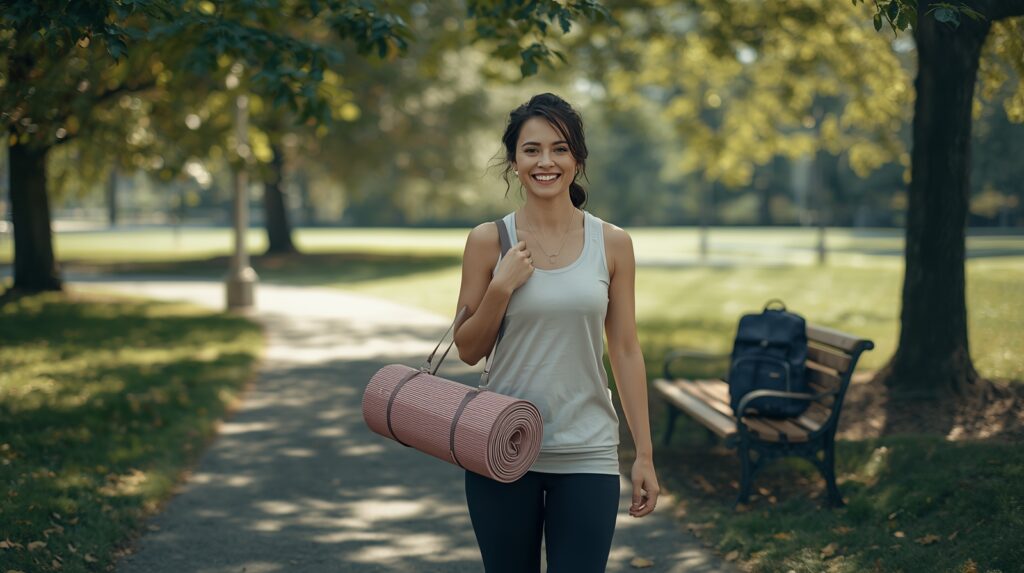
Table of Contents
Portability & Compactness
When choosing a travel-friendly yoga mat, portability is one of the most important factors to get right. A good compact design folds down into a small, easy-to-carry shape without eating up space in your bag — making it practical for commuters, frequent flyers, or anyone who practices outside the home.
Look for models that strike a balance between size and convenience: thin enough to fold neatly, yet supportive enough to actually hold up during practice. Pay close attention to the folded dimensions, not just the full unfolded size — this is what actually determines whether the mat fits in a backpack or a small storage space. If you’re unsure how folded measurements compare to standard unfolded ones, our guide to standard yoga mat dimensions breaks down exactly how to measure and compare both. Some mats even come with built-in folding lines that guarantee a smooth, uniform pack every single time.

Material Quality & Durability
The material of a travel-friendly yoga mat plays a major role in how long it lasts and how well it performs. Since this type of mat is designed to be folded repeatedly, the material must be flexible enough to bend without tearing or forming deep creases. High-quality options are usually made from TPE, natural rubber, or eco-friendly blends that combine strength with comfort.
Durability also depends on how resistant the surface is to wear, especially at the fold lines. Cheaper materials may show cracks or flaking over time, while premium ones maintain their structure even with daily folding and unfolding. It’s also helpful to choose a mat with reinforced or textured surfaces, as these reduce friction damage and improve overall lifespan.
Thickness & Comfort Level
The thickness of a portable mat has a direct impact on how comfortable your practice feels — especially in poses that put sustained pressure on your knees, wrists, or spine. Thinner mats are easier to fold and carry, but that portability comes with a trade-off: less cushioning, which makes them better suited for travel or quick sessions rather than long, intense routines.
If comfort is a priority, look for a mat with moderate padding that still folds without becoming bulky. Materials like TPE or natural rubber often provide noticeably better shock absorption even at thinner measurements, so you don’t have to choose thickness purely by the millimeter. Ultra-thin mats — usually under 3mm — lean fully into convenience over softness, making them a solid fit for users who don’t mind a firmer surface in exchange for a lighter pack.
Fold Design & Ease of Folding
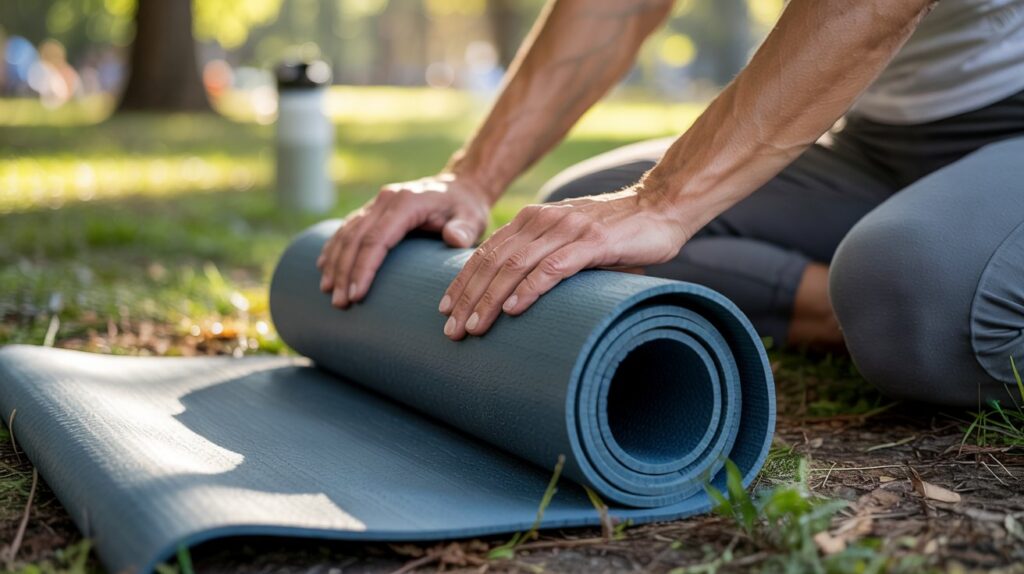
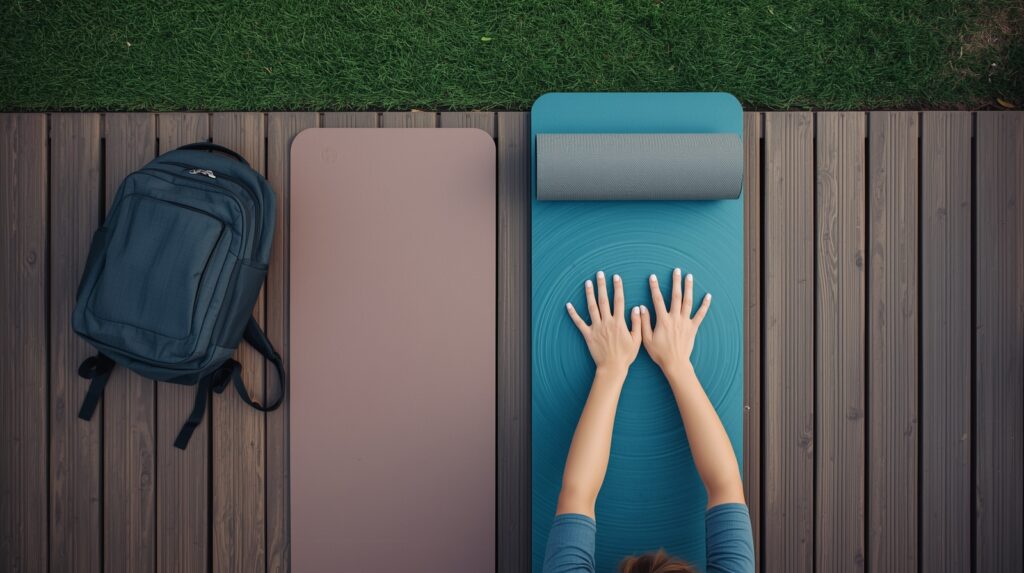
A well-designed folding pattern makes a real difference in how practical a travel-friendly mat actually feels day to day. Some mats use pre-defined crease lines that guide the folding process, letting you pack it neatly in seconds without wrestling to keep the edges aligned. These built-in folds also help the mat hold a consistent shape over time, reducing the uneven wear that comes from folding along random, inconsistent lines.
Ease of folding also comes down to the material’s flexibility — not just the fold design itself. Softer, more pliable materials fold smoothly and bounce back without resistance, while stiffer ones demand more effort and tend to develop noticeable crease lines over time. For a deeper look at which materials flex well versus which hold their shape rigidly, our guide to yoga mat materials breaks down how each one behaves under repeated folding and pressure. A well-designed mat should always open flat without curling at the edges, giving you a stable surface the moment you unroll it.

Weight of the Mat
The weight of a portable yoga mat plays a major role in how convenient it is to carry during travel, commuting, or daily activities. A lightweight option is ideal for users who need something easy to pack into a backpack, suitcase, or gym bag without feeling weighed down.
Most travel-friendly mats range from ultra-light to moderately heavy, depending on the material and thickness. Thinner mats are naturally lighter, but they may offer less cushioning. Meanwhile, mats made from dense materials like natural rubber tend to be heavier—even when compact—so they’re better suited for those who prioritize stability over portability.
Choosing the right weight depends on how often you plan to carry the mat and the level of comfort you expect during practice. A good balance ensures you get enough support without adding unnecessary load to your daily routine.
Grip & Non-Slip Performance
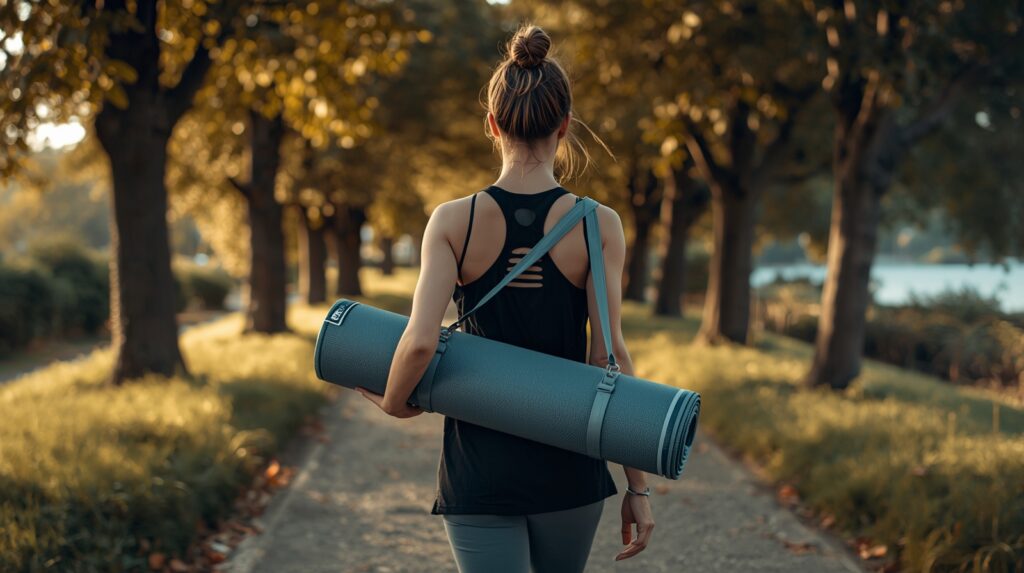
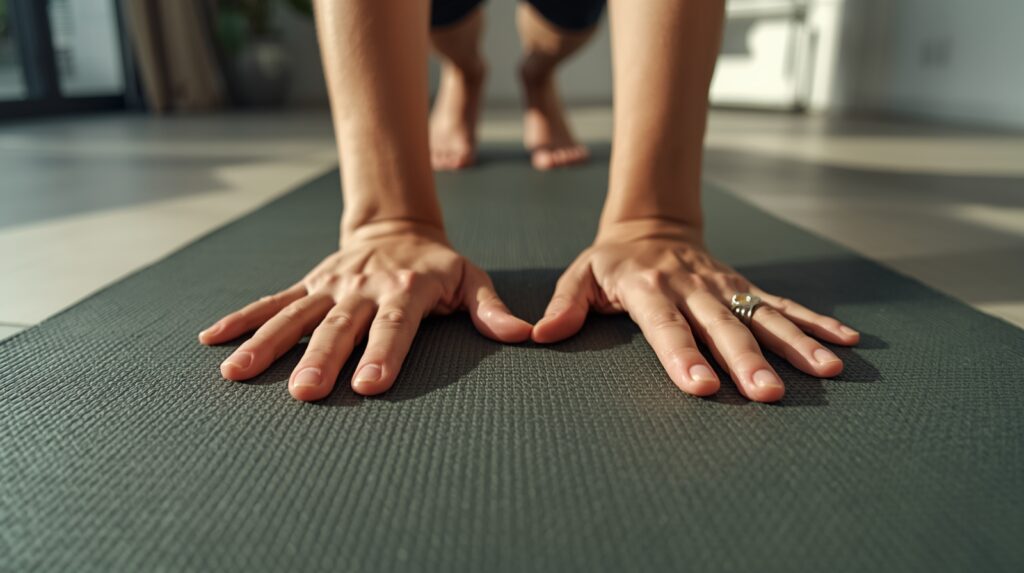
A reliable grip is essential for maintaining stability during yoga practice, especially in poses that require balance or deep stretching. A good travel-friendly mat should offer a textured surface that prevents slipping, even when your hands or feet get slightly sweaty. This ensures you can move confidently without adjusting your position constantly.
Non-slip performance depends on both the top layer and the material used on the bottom side. The top should provide enough traction for secure hand placement, while the bottom should anchor firmly to the floor to keep the mat from shifting. Some mats feature dual-texture designs to enhance grip on different surfaces, whether you’re practicing indoors or outdoors.
Size & Dimensions (Folded vs. Unfolded)
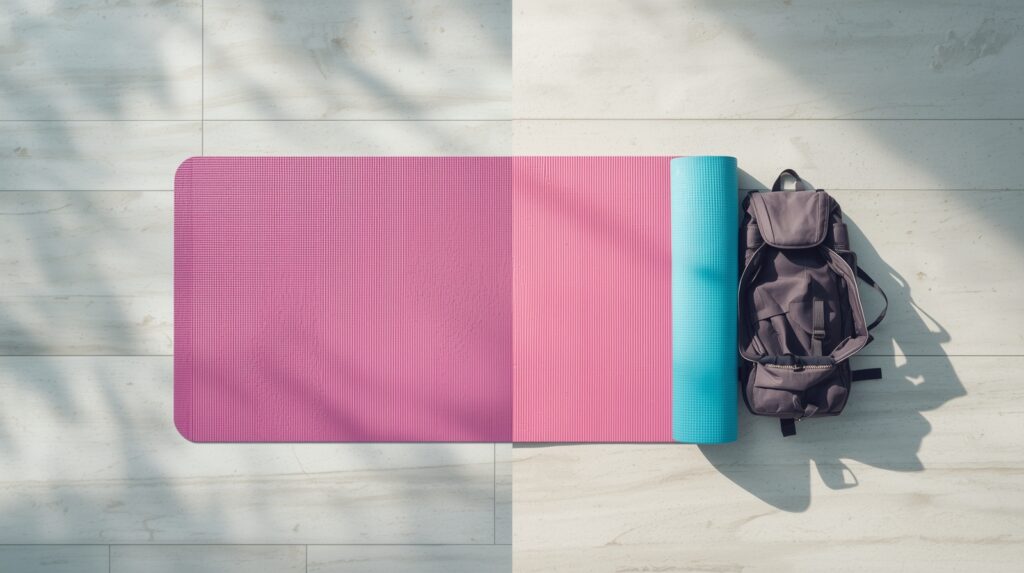
Understanding both the folded and unfolded dimensions of a portable mat is essential when deciding whether it fits your lifestyle. The unfolded size should provide enough space for comfortable movement, allowing you to stretch fully in standing, seated, and lying postures. Most users prefer a length that supports their height and a width that offers enough room for arm and leg placement.
Folded dimensions, however, determine how easy the mat is to pack and store. A compact fold should fit into a backpack, suitcase, or small shelf without taking up unnecessary space. Some mats fold into a square or rectangle, while others use multiple panels to create an ultra-slim profile.
Balancing both sets of dimensions ensures the mat is comfortable during practice and convenient to carry when you’re on the go. A well-sized option gives you freedom of movement without compromising portability.
Water Resistance & Sweat Absorption
A portable yoga mat should be able to handle moisture effectively, especially if you practice dynamic styles or tend to sweat more. Water resistance helps prevent liquids from seeping into the material, making the mat easier to clean and less likely to develop odors over time. This feature is especially useful for outdoor sessions or humid environments where moisture is unavoidable.
Sweat absorption plays a different but equally important role. A mat with good absorption helps maintain grip during intense practice by reducing surface slipperiness. However, it should also dry quickly to avoid trapping moisture inside the layers, which can shorten the mat’s lifespan.
The best options strike a balance between repelling excess moisture and managing sweat during use. With the right combination, your mat stays cleaner, fresher, and more comfortable throughout your sessions.

Cleaning & Maintenance Requirements
Proper cleaning and maintenance are essential to keep a portable yoga mat in good condition and extend its lifespan. Regular wiping with a damp cloth or a mild soap solution can remove sweat, dirt, and oils that accumulate during practice. For deeper cleaning, some mats can be hand-washed with warm water, but it’s important to check the manufacturer’s instructions to avoid damaging the material.
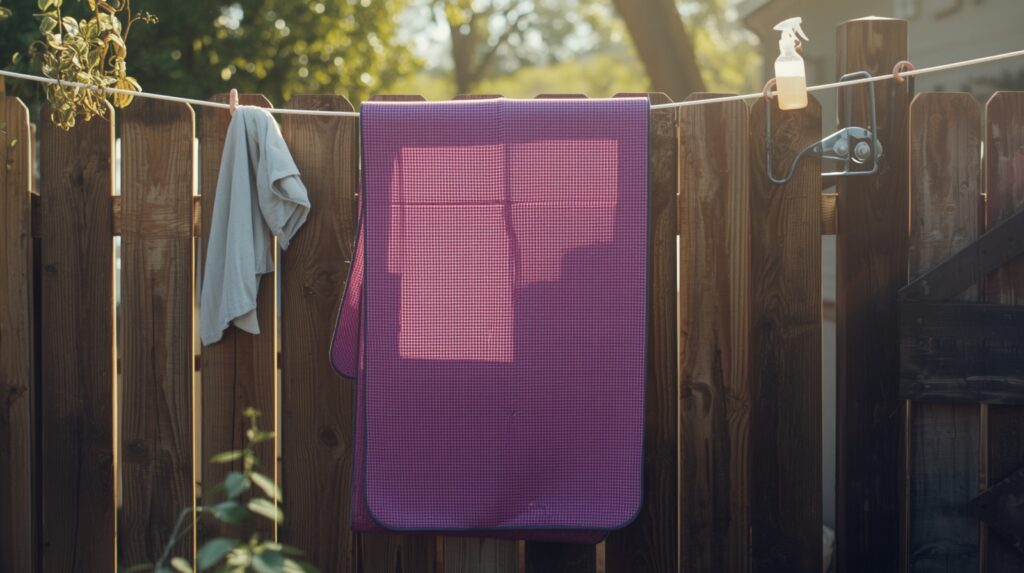
Drying is equally important. Mats should be air-dried flat or hung up to prevent warping or lingering moisture, which can lead to odors or mold growth. Avoid using harsh chemicals, bleach, or direct sunlight for extended periods, as these can degrade the material and reduce flexibility.
Support for Different Yoga Styles
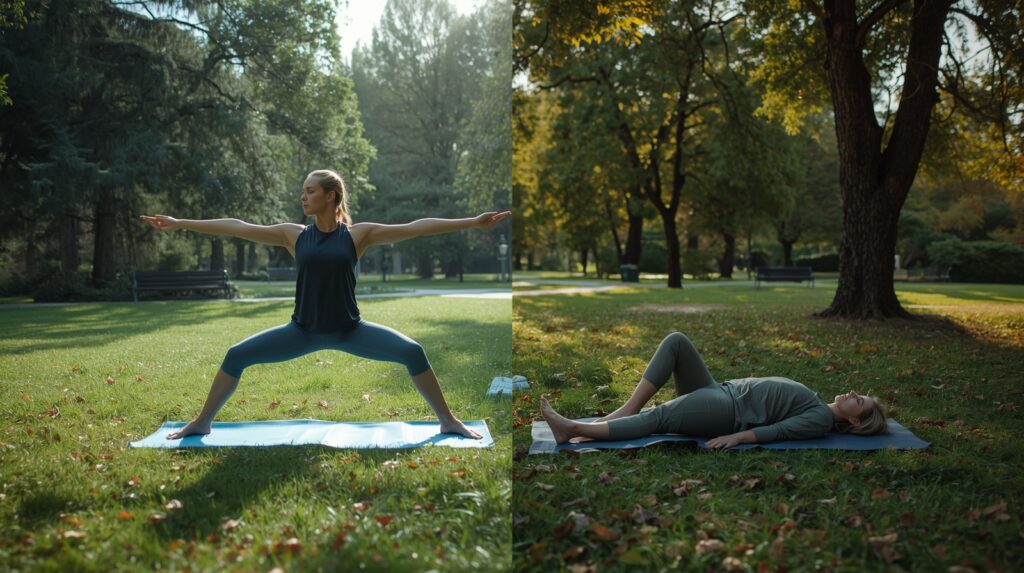
A versatile mat should accommodate a variety of yoga practices, from gentle stretching to more dynamic flows. Thicker mats provide extra cushioning for restorative and floor-based exercises, protecting joints during long holds. Meanwhile, firmer mats are ideal for balance-focused or standing poses, offering stability and consistent support under pressure.
Some mats are better suited for high-intensity or sweaty styles like Vinyasa or Ashtanga, as they maintain grip even during rapid movements. Others excel in quieter practices, such as Yin or meditation, where comfort and cushioning are more important than traction.
Eco-Friendliness & Safety (Non-Toxic Materials)
Selecting a mat made from environmentally friendly and non-toxic materials matters for both your health and the planet — and it’s worth understanding exactly what you’re avoiding, not just the marketing label “eco-friendly.” Mats constructed from natural rubber, organic cotton, or biodegradable TPE reduce environmental impact while avoiding harmful chemicals such as PVC, phthalates, or heavy metals. According to the National Institute of Environmental Health Sciences, phthalates — commonly used to soften plastics like PVC — have been linked to endocrine disruption with prolonged skin contact, which is part of why practitioners increasingly look for phthalate-free mats. These safer materials also tend to be gentler on skin and less likely to emit unpleasant odors during use.
Safety extends beyond materials to durability and resistance to wear. Eco-friendly mats that hold their structure over time prevent small particles from breaking off during practice — a real concern with low-quality synthetic mats that degrade faster under repeated folding and pressure. Choosing non-toxic, sustainable materials ultimately ensures your practice stays safe, comfortable, and aligned with a more environmentally conscious lifestyle.
Price Range & Value for Money
When comparing portable yoga mats, it’s helpful to look beyond the initial price and consider what you’re getting in return. Budget-friendly options may work well for occasional use, but they often compromise on durability, grip, or cushioning. This can result in needing a replacement sooner, which increases the long-term cost.
Mid-range mats tend to offer the best balance of quality and affordability. They usually provide solid traction, reliable comfort, and materials that hold up better over time. For frequent practitioners, this range often delivers the most value.
Premium mats come with higher price tags but justify the cost with superior materials, advanced folding designs, stronger grip, and longer life spans. These are great choices for users who practice regularly, travel often, or want the best combination of performance and durability.
Storage Convenience (Home, Office, Travel)
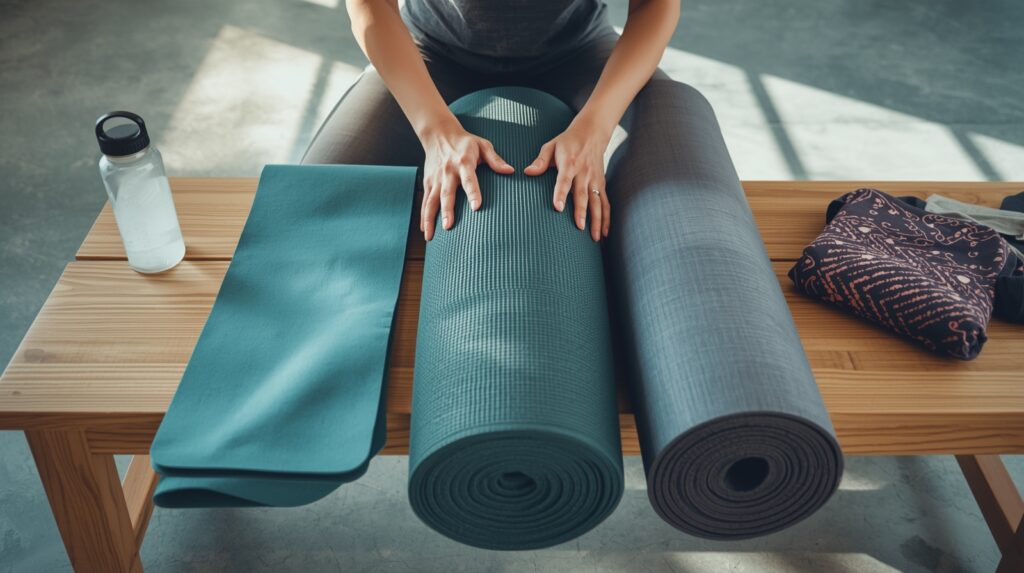
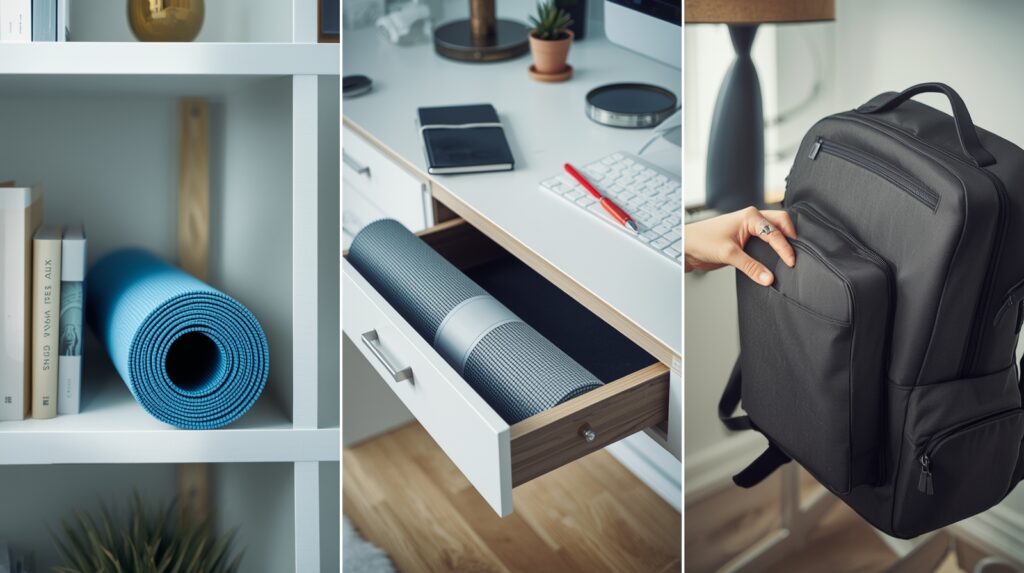
A good portable yoga mat should be easy to store no matter where you are. At home, compact mats fit neatly into shelves, drawers, or small corners without taking up valuable space. This makes it simple to keep your practice area tidy and clutter-free.
In an office setting, storage convenience becomes even more important. A mat that folds into a slim shape can slide into a desk drawer, locker, or tote bag, allowing you to practice during breaks without carrying bulky equipment around all day.
For travel, compact design is key. A mat that folds flat or into a small square fits easily into backpacks and suitcases, leaving room for other essentials. Its shape should also stay secure so it doesn’t unfold or create bulk inside your luggage.
Aesthetic Options (Colors, Patterns, Branding)
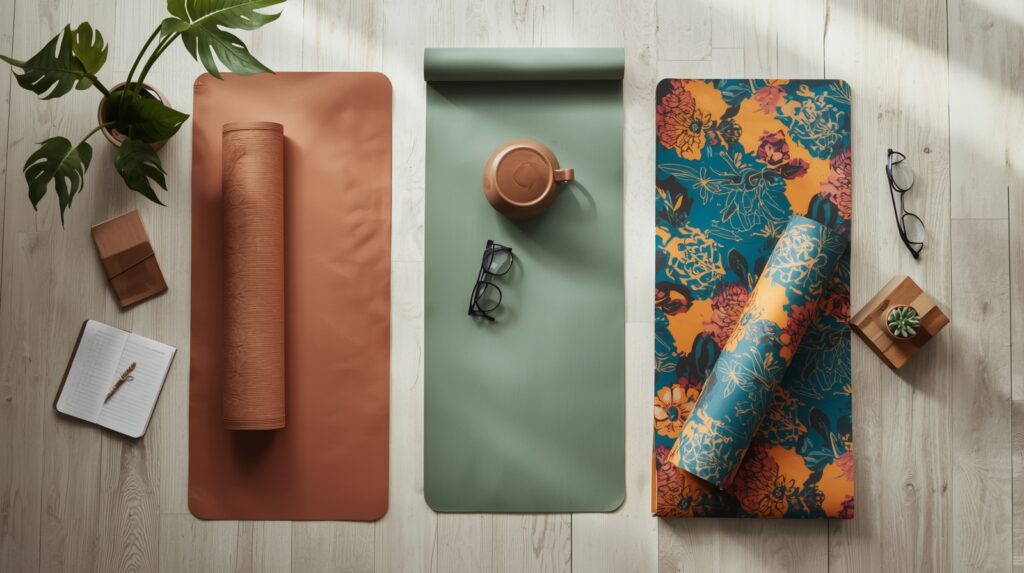
Design plays a surprisingly important role in choosing a portable yoga mat, especially if you enjoy your gear reflecting a bit of your personality. Most foldable mats now come in a wide range of colors, from calming neutrals for a minimalist studio look to bold, vibrant tones that stand out during outdoor sessions or group classes.
Patterns add another layer of function and style. Some designs feature built-in alignment guides that help with foot and hand placement during poses, while others focus purely on visual appeal. Whether you gravitate toward clean, minimalist surfaces or artistic prints, there’s enough variety now that aesthetics rarely mean compromising on performance.
Branding can influence your decision too, though it’s worth looking past the label. Well-known brands often deliver more consistent quality control and durable construction, while smaller or independent brands sometimes push harder on unique designs or genuinely eco-friendly production methods. Weighing both aesthetics and brand reputation together helps you land on a mat that feels personal without falling short on the performance features that actually matter.
User Reviews & Real-World Feedback
Real-world experiences from other users can give you valuable insight into how a portable yoga mat performs beyond its listed features. Reviews often highlight practical details you may not find in product descriptions, such as how well the mat holds up after repeated folding, whether it stays flat during practice, or if the grip changes over time.
Feedback also helps reveal patterns. If multiple users mention issues like slipping, creasing, or wear at the fold lines, it can signal potential long-term drawbacks. On the other hand, consistently positive comments about comfort, durability, or ease of storage can give you more confidence in your choice.
Paying attention to reviews from people who practice similar styles or use the mat in similar environments—such as travel, studio sessions, or outdoor workouts—can make your decision even more accurate. Overall, honest feedback provides a clearer picture of what you can expect in daily use.

FAQs: Best Yoga Mat Foldable Options for Travelers
Are travel-friendly yoga mats durable enough for daily use?
Yes, many are designed for regular practice, but durability depends on the material and how often the mat is folded. Higher-quality materials like TPE or natural rubber tend to last longer.
Do folding mats lose their shape over time?
Some may develop mild crease lines, but well-made mats are engineered to fold repeatedly without cracking or losing structure. Checking user reviews can help identify which models hold up best.
Can a folding mat replace a standard roll-up mat?
For most people, yes. They provide enough cushioning and grip for everyday practice. However, if you need extra-thick padding for joint support, a regular mat may still feel better.
Are these mats easy to clean?
Most can be wiped down with mild soap and water. Some materials dry faster and resist odors better, making them more convenient for frequent use.
Do they slip on smooth surfaces?
Grip varies by material. Mats with textured bottoms or dual-layer designs usually stay stable on hardwood or tile floors.
Conclusion
Choosing the right portable yoga mat comes down to understanding your needs and exactly how you plan to use it. By weighing factors like portability, durability, comfort, grip, and overall value, you can find a mat that supports your practice whether you’re at home, in the office, or halfway across the world on a trip. Small details — fold design, weight, moisture control, and aesthetic preferences — matter just as much for long-term satisfaction as the big-ticket specs do.
A well-designed foldable mat makes it easier to stay consistent with your routine, no matter where your day takes you. If you’re also curious how these compact dimensions compare to a standard mat’s full size and thickness, our guide to standard yoga mat dimensions breaks down the exact numbers side by side. With the right option, you get a balance of convenience, comfort, and performance that keeps your practice enjoyable and genuinely accessible.
If you’re ready to choose your next mat, use the categories above as your checklist — they’ll help you confidently pick an option that fits your lifestyle and supports your yoga journey for the long run.