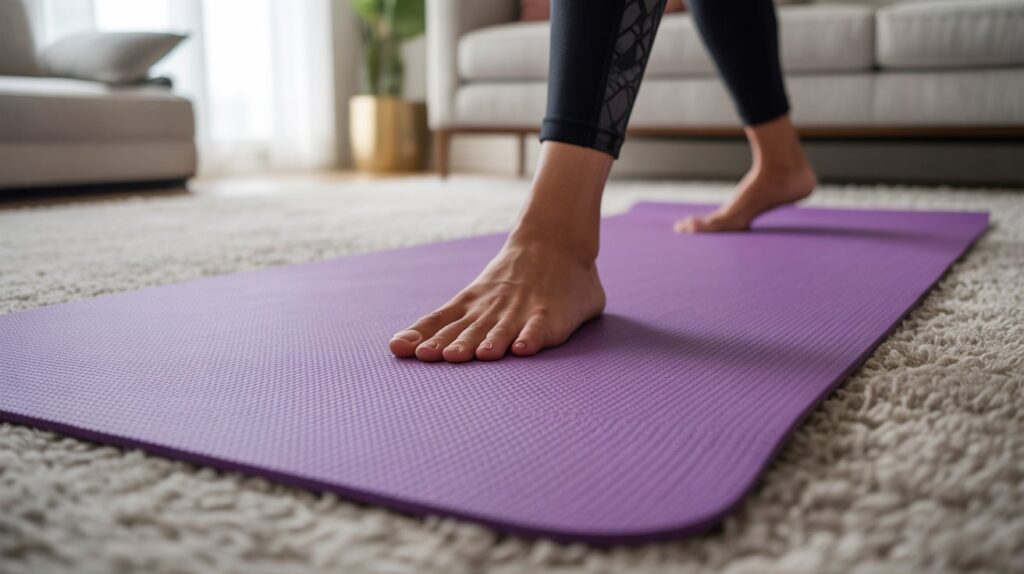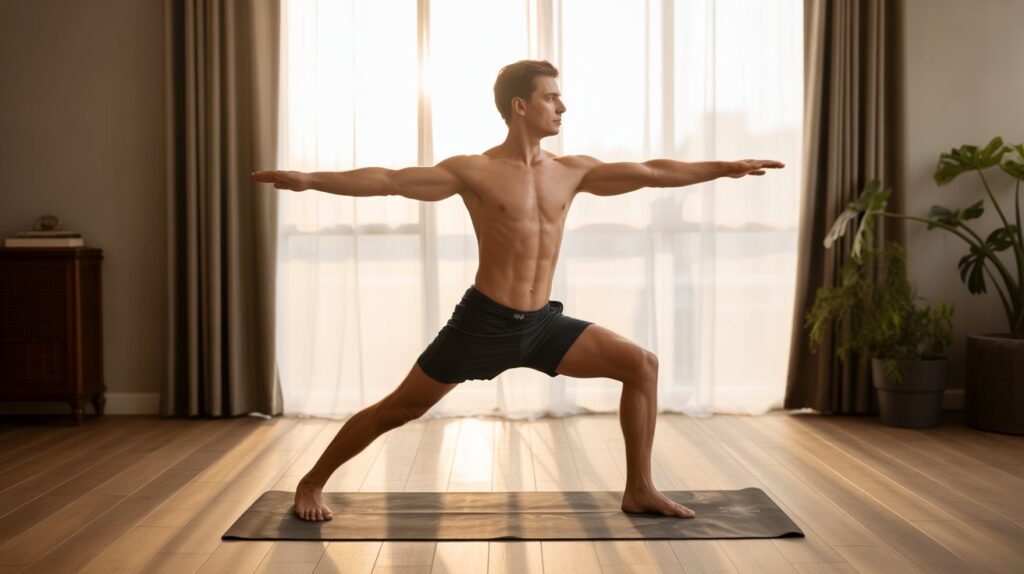
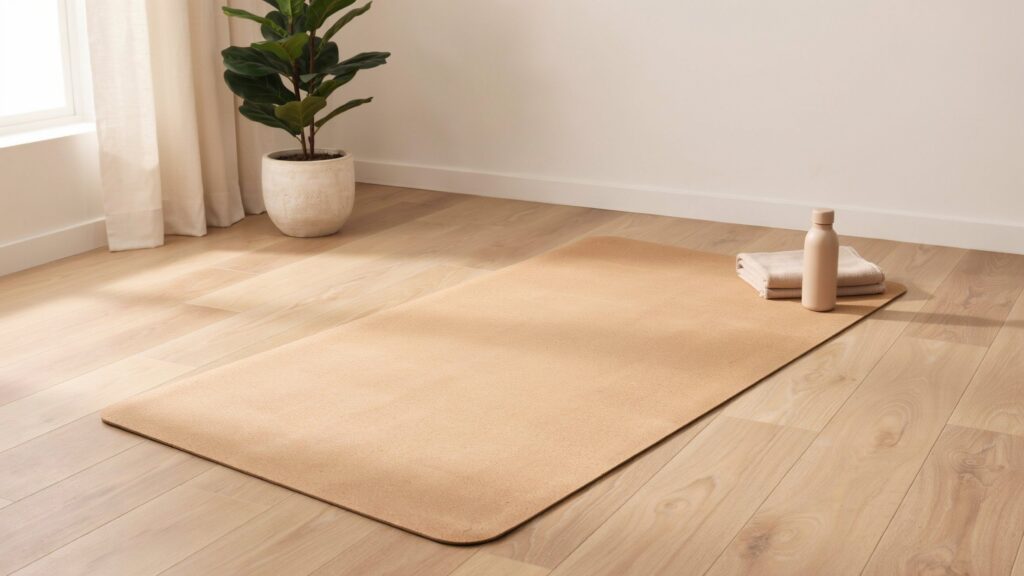
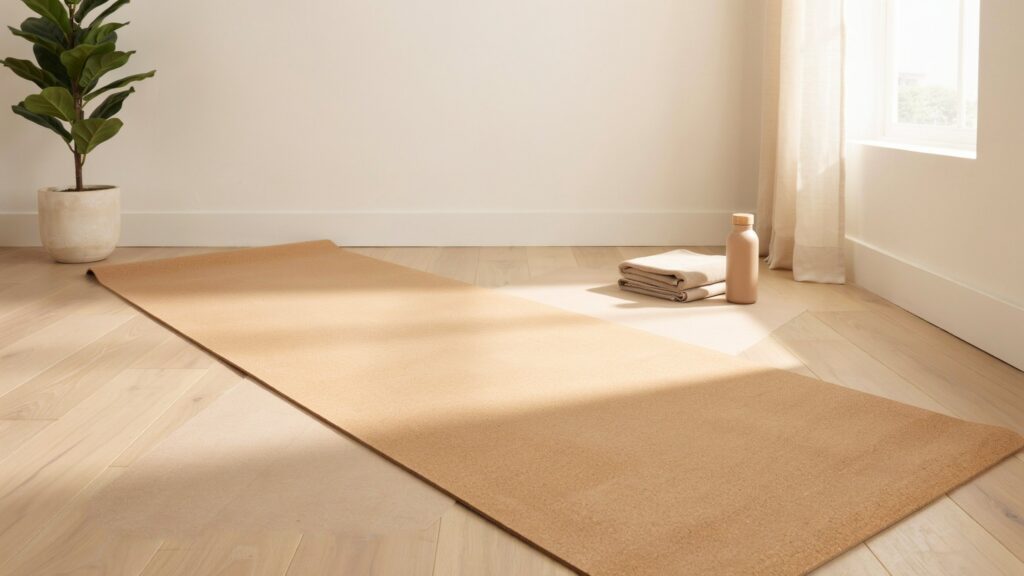
A yoga mat can change how comfortable and natural your practice feels, especially when you need more room to move. The Nomad XL Cork Yoga Mat stands out because of its unusually wide surface, cork top, and lightweight construction. It measures 80 inches long by 48 inches wide and is 4mm thick, giving practitioners considerably more room than a standard yoga mat.
But extra space is only part of the story. The surface material, grip, cushioning, floor contact, cleaning routine, and portability all affect how a large-format mat works in everyday use. This guide looks at those details so you can understand where this type of mat fits into a home yoga practice.
Table of Contents
What Makes an Extra-Large Yoga Mat Different?
Most traditional yoga mats are designed around a relatively compact practice area. A wider mat changes that experience by giving your hands, feet, and body more space during movement.
The Nomad XL measures 80 x 48 inches, making its width roughly twice that of many conventional mats. That additional area can be useful for people who often move beyond the edges of a standard mat during stretching, transitions, or floor exercises.
A larger surface may be especially practical for:
- Wide-legged standing poses
- Side-to-side transitions
- Full-body stretching
- Pilates and floor exercises
- Mobility work
- Home practice where extra floor coverage is helpful
The important point is that a larger mat does not automatically improve every practice. You still need enough open floor space to use it comfortably, and the added width can matter more at home than in a crowded studio.
How the Cork Surface Affects Grip
Cork gives this mat a noticeably different surface feel from many common synthetic yoga mats. According to the manufacturer, the cork surface is designed to provide non-slip traction, with grip becoming stronger as moisture increases.
That characteristic can be useful during practices where your hands and feet become damp.
For example, a dry cork surface may feel relatively natural and firm during gentle stretching. As a practice becomes more active, moisture can change the interaction between your skin and the surface. This is one reason cork is often considered for sweaty yoga sessions.
However, grip should always be considered in relation to your personal practice. Hand pressure, movement speed, sweat level, and floor stability can all affect how secure a mat feels.
A useful way to evaluate traction is to think about the movements you perform most often rather than simply looking for a “non-slip” label.
Is 4mm Thick Enough for Everyday Practice?
The Nomad XL is 4mm thick, which places it in a middle range that can provide a balance between floor connection and basic cushioning.
Thickness affects more than softness. A very thick mat may feel comfortable under the knees but can also create a softer, less direct connection with the floor. A thinner surface can provide a firmer feel but may offer less cushioning during kneeling or seated movements.
A 4mm surface may work well for people who want:
- Moderate cushioning without excessive softness
- A stable feel during standing poses
- Better floor awareness during balance work
- Enough support for everyday stretching
- A versatile surface for yoga and floor exercises
Your flooring also matters. A hard wood or tile floor may make a 4mm mat feel different from the same mat placed on carpet.
If you are comparing thickness options more generally, our guide to yoga mat thickness and size provides additional context on how dimensions and thickness can affect everyday practice.
Why the 48-Inch Width Can Matter at Home
The biggest practical feature of the Nomad XL is its width. At 48 inches, it gives you a much larger working area than a conventional mat.
That can be useful when your routine includes movements that travel sideways or require more floor coverage. You may not need to reposition your hands or feet as often, and you can transition between yoga, stretching, and floor-based exercises without immediately reaching the edge.
A wider mat can also make sense for a dedicated home practice area. Instead of thinking of it only as a yoga mat, you can view the surface as a personal exercise zone.
There is one practical limitation: space planning.
Before choosing an extra-large mat, measure the area where you normally practice. A 48-inch-wide surface needs significantly more floor space than a standard mat. Doors, furniture, workout equipment, and walking paths should also be considered.
How Portable Is Such a Large Mat?
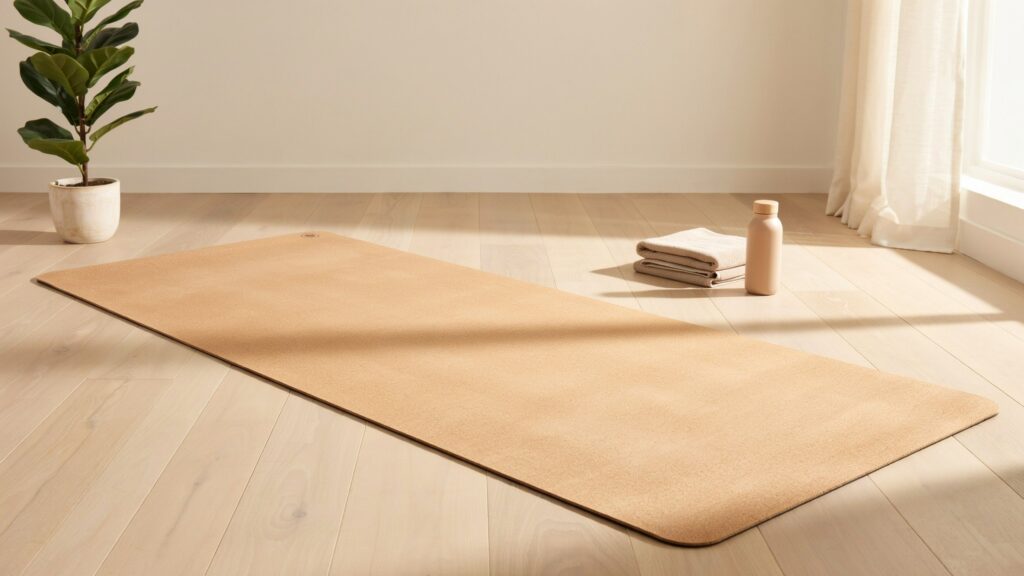
Extra-large usually means heavier and harder to transport, but the Nomad XL takes a different approach. The manufacturer lists its weight at 4.5 pounds, despite the 80 x 48-inch dimensions. It also rolls to approximately 6 inches in diameter.
That makes the size more manageable than you might expect.
For a home user, portability can mean moving the mat between rooms rather than carrying it across town. Still, the large footprint remains something to consider when storing or transporting it.
Think about where the mat will live when it is not being used. A dedicated storage corner, closet, or open wall area can make an oversized mat much easier to manage.
What Materials Are Used in the Nomad XL?
The construction combines a cork surface with a dense plant-foam base. The manufacturer states that the mat contains 33% USDA-certified bio-based renewable materials and is made without PVC, latex, or plasticizers. It is also described as a vegan product.
These material choices influence the overall experience.
The cork provides the distinctive top surface and its moisture-related grip characteristics. The foam underneath contributes to cushioning and support without making the mat excessively heavy for its size.
For anyone with material sensitivities, checking the complete manufacturer specifications is still important. “Latex-free” or “PVC-free” does not mean every person will have the same response to every material used in a product.
What Types of Practice Can Suit a Large Cork Mat?
A large-format mat can be particularly useful when your practice involves frequent changes in position.
Yoga and Mobility Work
The extra width gives your body more room during wide stances, lateral stretches, and transitions. This can make a home practice feel less restricted.
Pilates and Floor Exercises
The additional surface area can also be useful for exercises where your arms, legs, or torso extend away from the center of the mat.
Gentle and Restorative Sessions
A larger surface can make seated stretches, relaxation work, and floor-based mobility exercises feel more spacious.
Sweat-Heavy Practice
Because the cork surface is designed to become more grippy with moisture, it may be worth considering for practices where sweat affects traction.
Still, no surface should be treated as universally slip-proof. Your technique, flooring, moisture level, and body position all influence stability.
How Should You Clean a Cork Yoga Mat?
Cork is relatively straightforward to maintain, but gentle care is important. The manufacturer’s care guidance recommends lightly spraying the surface with a suitable mat cleaner or natural cleaner after use and allowing the mat to dry flat.
For regular maintenance:
- Remove visible dust or debris.
- Lightly clean the surface after practice.
- Use a soft cloth rather than aggressive scrubbing.
- Allow the mat to dry completely.
- Store it only when the surface is dry.
Avoid experimenting with strong household chemicals unless the manufacturer specifically approves them. Cleaning products that work on one yoga mat material may damage another.
You can also read our detailed guide on how to clean a yoga mat for broader maintenance principles.
What Are the Main Things to Consider Before Choosing It?
The Nomad XL makes the most sense when its design matches your actual routine. Before choosing an extra-large cork mat, consider these practical questions. Your practice space, movement needs, surface preference, and cushioning requirements should all fit the type of exercise you regularly do. American Council on Exercise – Exercise Library
- Do you have enough floor space? Measure your practice area before buying.
- Do you want more room to move? The 48-inch width is its defining feature.
- Do you prefer a cork surface? Cork has a different feel from rubber, PVC, TPE, and PU surfaces.
- How much cushioning do you need? At 4mm, it provides moderate padding rather than a very plush feel.
- Do you sweat during practice? Moisture can enhance the cork surface’s traction.
- Will you move the mat often? At 4.5 pounds, it is relatively manageable for its size.
- How will you store it? Its large dimensions require more storage space than a standard mat.
These questions are more useful than simply choosing a mat because it looks premium or has a particular material.
Is a Nomad XL Cork Yoga Mat Practical for a Home Studio?
For a home studio, the large format can be one of its strongest practical advantages. A dedicated practice space gives the 80 x 48-inch surface enough room to function as more than a simple strip of flooring.
It can create a defined area for yoga, stretching, mobility, or floor workouts without requiring you to constantly reposition a standard mat.
The trade-off is space. In a small apartment, bedroom, or shared living area, the extra width may become inconvenient when the mat is not in use.
For that reason, the right question is not simply, “Is a larger mat better?” Instead, ask whether your available space and practice style justify the additional surface area.
Final Thoughts on the Nomad XL Cork Yoga Mat
The Nomad XL Cork Yoga Mat takes a different approach to everyday yoga by combining a very wide practice surface with a 4mm cork-and-foam construction. Its 80 x 48-inch dimensions provide substantial room for movement, while the 4.5-pound weight keeps the oversized design relatively manageable.
Its cork surface is also worth considering for practitioners who want a natural-feeling surface with moisture-enhanced traction. At the same time, the large footprint means you should check your available floor and storage space before making a decision.
For the right home setup, the extra room can make yoga, stretching, mobility, and floor-based workouts feel less confined. The key is to judge the mat by your actual routine, flooring, comfort preferences, and available space rather than size alone.
Frequently Asked Questions
Is the Nomad XL Cork Yoga Mat good for beginners?
It can be suitable for beginners who have enough floor space and prefer a wider practice area. Beginners should still consider grip, cushioning, and overall comfort when choosing a mat.
How big is the Nomad XL Cork Yoga Mat?
It measures 80 inches long and 48 inches wide, making it substantially wider than a typical yoga mat.
How thick is the Nomad XL?
The mat is 4mm thick. This provides a balance between cushioning and a relatively direct connection with the floor.
Does cork become grippier when wet?
According to the manufacturer, the cork surface is designed to provide stronger grip as moisture increases.
How much does the Nomad XL weigh?
The listed weight is 4.5 pounds, which is relatively light for an 80 x 48-inch yoga mat.
Is the Nomad XL easy to clean?
The manufacturer recommends lightly cleaning the surface after use and laying it flat to dry. Gentle, material-appropriate care is preferable to harsh cleaning methods.
About the Author
Bilal Khan is a content writer focused on yoga, yoga mats, and practical wellness topics. He creates clear, research-based guides to help readers understand materials, grip, comfort, care, and everyday mat use.