Introduction
You’re ready to roll out your mat, but one decision stands between you and a truly comfortable practice: getting the thickness right. With options ranging from ultra-thin travel mats to extra-plush cushioned ones, choosing the ideal yoga mat thickness can feel more complicated than it should be. Yet this single choice shapes everything — how your knees feel in a low lunge, how steady you stay in Tree Pose, and even how easily you can toss your mat over your shoulder on the way to class.
There’s no universal “best” thickness here — it’s about finding what works for your body and your practice. Whether you need extra cushioning for sensitive joints, a firmer connection for a powerful flow, or something light enough to travel with, this guide will help you land on the right choice. Let’s find the mat that actually supports how you move.
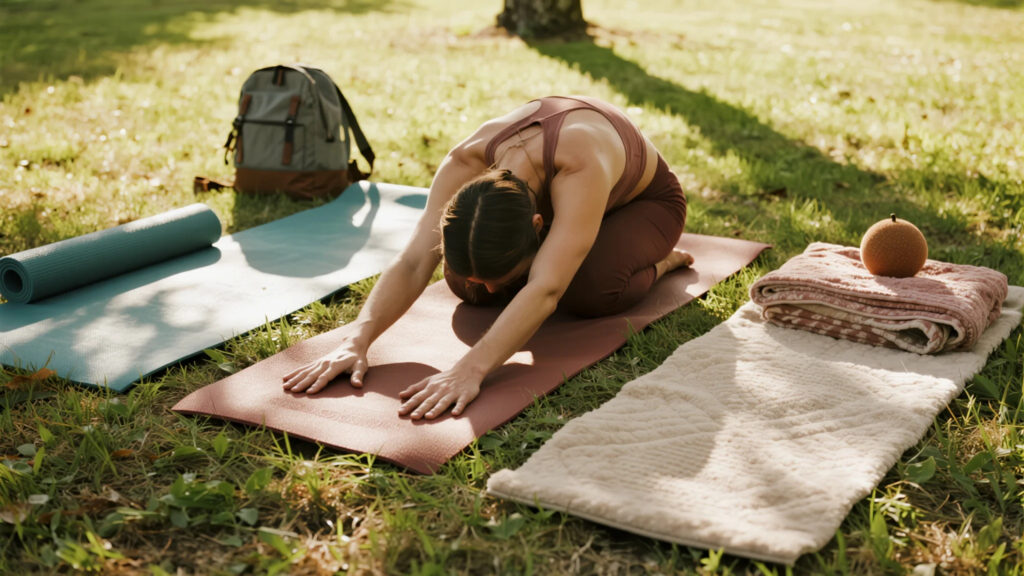
Table of Contents
Understanding Yoga Mat Thickness
Yoga mat thickness has a bigger impact on your practice than most people realize — it shapes both how comfortable you feel and how stable you stay in each pose. Thickness typically ranges from 1/16 inch (about 2mm) to 1/2 inch (about 12mm), with each level suited to different needs and yoga styles.
A standard mat, around 1/8 inch (3mm), strikes a balanced combination of cushioning and support, making it the go-to choice for most practitioners. On the lighter end, thinner mats like 1/16 inch (2mm) are easy to carry and popular for travel, or for yogis who prefer staying closer to the floor during balance work.
Thicker mats (1/4 inch or more) shift the focus toward cushioning and joint protection — ideal for restorative or gentle styles where you spend extended time on the floor. The trade-off is stability: extra padding can make standing or balance poses feel less grounded. This becomes especially noticeable if your palms tend to sweat during practice, since a mat that’s too soft can make it harder to keep a firm grip — something we cover in more detail in our guide to choosing a yoga mat for sweaty hands.
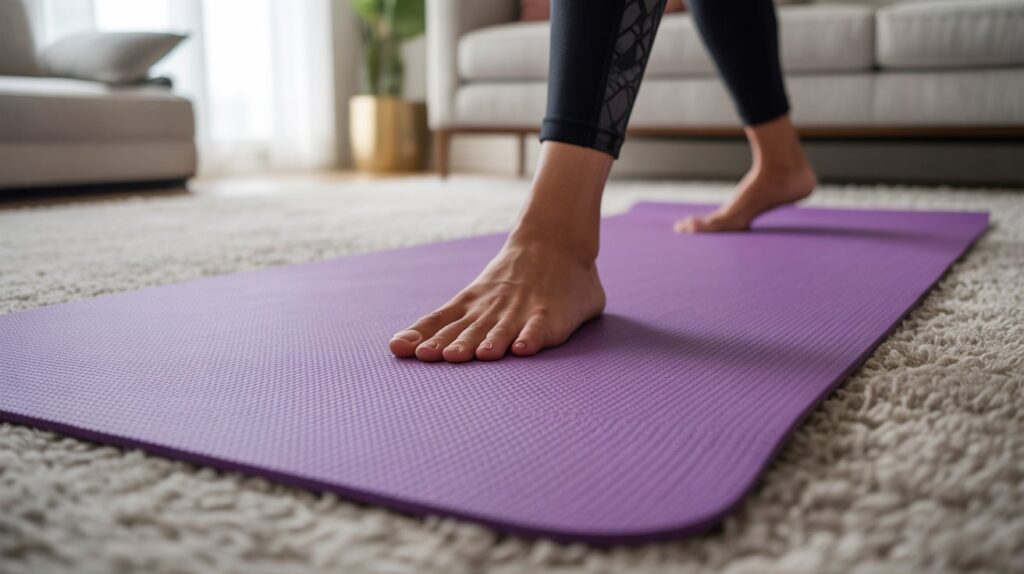
Ultimately, the right thickness depends on your body type, comfort preferences, and the surface you practice on. A thin mat can feel great on carpet, while a thicker one often performs better on hard surfaces like wood or tile.
Why Thickness Matters
The thickness of your yoga mat plays a direct role in how comfortable, balanced, and grounded you feel throughout your practice. It determines both the cushioning your body receives and the stability you maintain in each pose.
A thicker mat adds extra padding that protects sensitive joints like knees, elbows, and wrists — particularly valuable if you practice on hard floors or already deal with joint discomfort. That additional cushioning absorbs pressure and reduces strain, letting you hold poses longer without that nagging ache setting in.
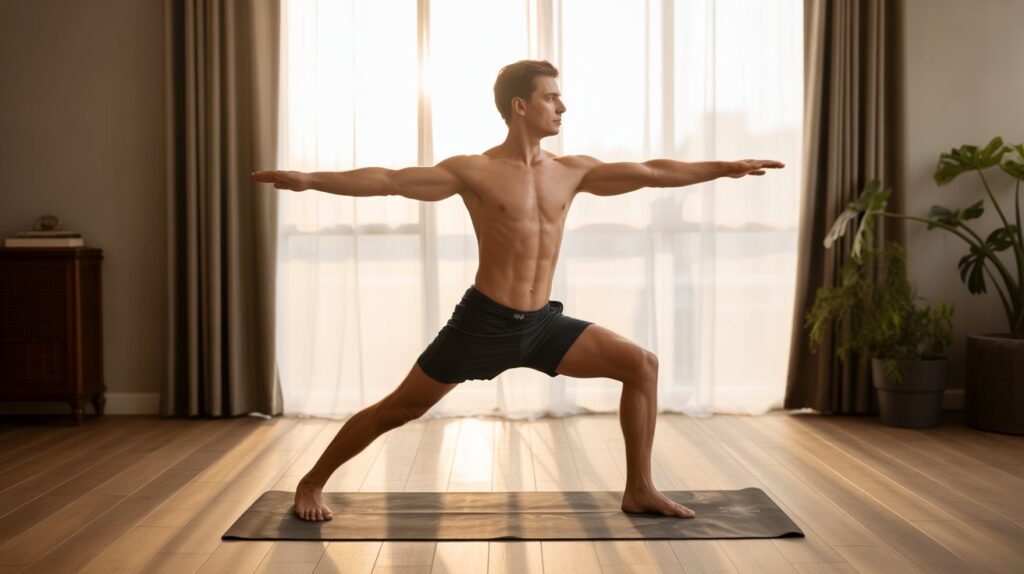
But there’s a trade-off: too much thickness can start working against your stability. When the surface feels overly soft, balancing in standing poses like Tree Pose or Warrior II becomes noticeably harder. That’s why thinner mats tend to be the better fit for styles built around balance, strength, or fast-paced flow. Material plays a role here too — the density and grip of your mat matter just as much as its thickness, especially if you sweat during practice. Our guide on finding the best yoga mat for sweaty hands breaks down how material and grip work together with thickness to keep you steady.
At the end of the day, the right thickness is about balance — enough cushioning to protect your body, without losing the firm, stable connection you need with the ground.
Different Types of Yoga Mats by Thickness
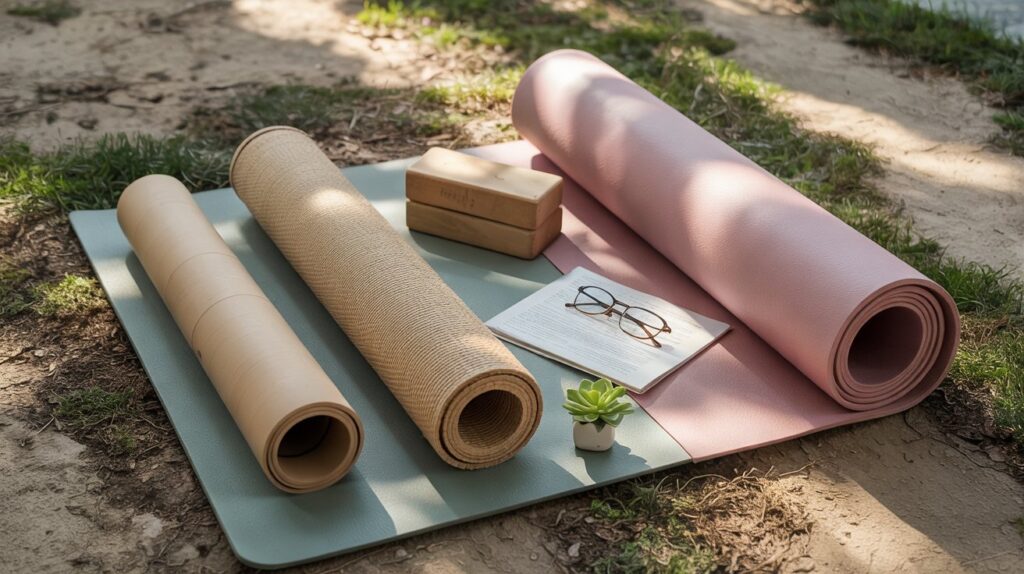
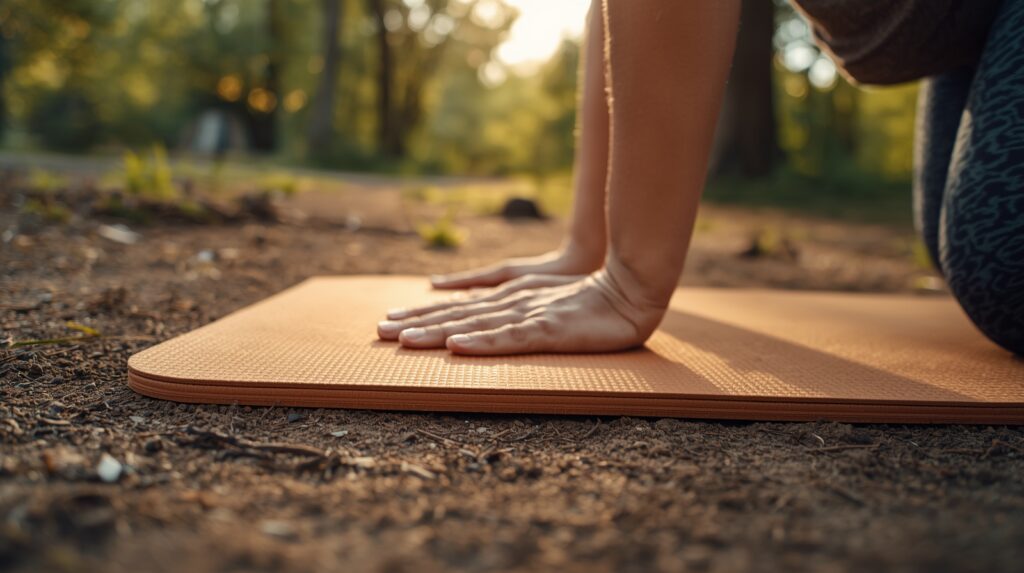
Yoga mats come in a wide range of thickness options, each engineered to accommodate different practice styles, bodily needs, and portability preferences. Choosing the correct profile ensures you achieve the ideal balance of joint cushioning, tactile ground feedback, and stability.
1. Thin Travel Yoga Mats (1/16” or 1mm to 2mm)
- Best For: Frequent travelers, outdoor yogis, and practitioners prioritizing maximum ground connection.
- Why It Works: These ultra-low-profile mats are lightweight and fold or roll tightly into luggage. They provide exceptional stability during balance poses like Tree Pose (Vrksasana) by keeping your center of gravity low. However, they lack significant impact absorption, making them less suitable for sensitive joints.
2. Standard Yoga Mats (1/8” or 3mm to 4mm)
- Best For: General studio classes, home practices, and multi-style flows.
- Why It Works: Serving as the industry baseline, standard mats strike the ultimate balance between cushioning and structural firmness. They offer enough padding for kneeling postures while maintaining the tactile feedback needed for active styles like Vinyasa or Ashtanga.
3. Thick Yoga Mats (1/4” or 6mm and Above)
- Best For: Restorative yoga, Yin yoga, prenatal practices, and individuals with sensitive wrists or knees.
- Why It Works: Thicker cushioning absorbs heavy pressure during floor-based sequences. While they provide superior joint protection, the trade-off is slightly reduced stability during standing balance postures due to the extra foam sinkage.
4. Extra-Thick / Pilates Mats (1/2” or 10mm to 12mm)
Why It Works: Offering maximum plush padding, these mats safeguard the spine and tailbone against hard floors. However, their high compressibility makes them unstable and unsuited for fast-paced yoga flows or advanced balance sequences.
Best For: Floor workouts, core conditioning, and meditation.
Best Thickness for Different Yoga Styles
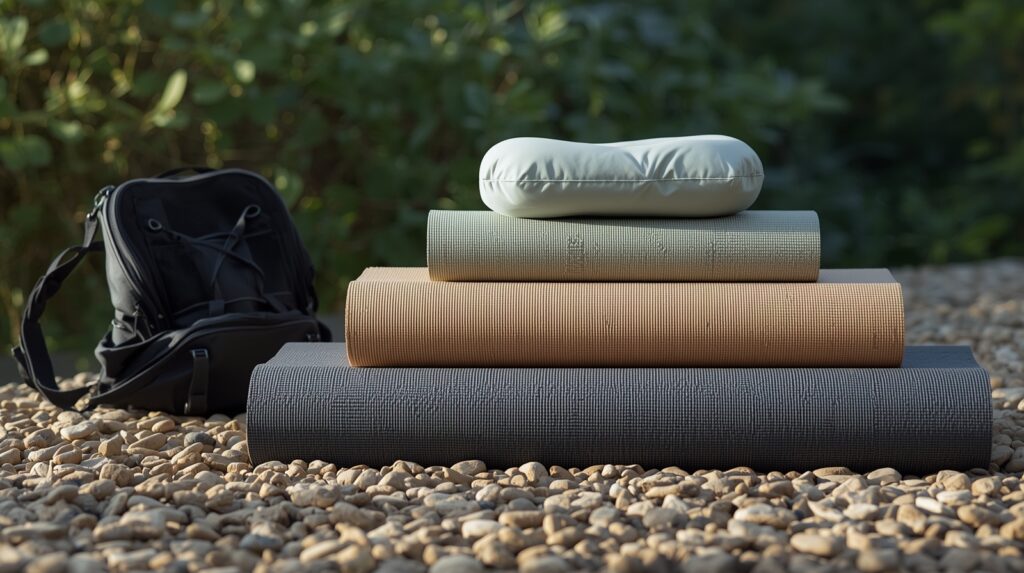
Different yoga styles put different demands on your body, so the right mat thickness varies depending on what you’re practicing. Getting this match right can make your sessions more comfortable while helping you hold proper balance and alignment. Here’s how thickness breaks down across popular styles:
1. Vinyasa or Power Yoga
These fast-paced, dynamic styles involve constant transitions between poses. A standard mat around 1/8 inch (3mm) works best here — enough grip and stability without feeling too soft, so you can flow smoothly and stay balanced through standing sequences.
2. Hatha or Iyengar Yoga
These styles emphasize posture, alignment, and holding poses for extended periods. A medium-thick mat (about 4–5mm) offers the right amount of cushioning without compromising the stability needed for precise alignment work.
3. Restorative or Yin Yoga
Comfort takes priority in these slow, meditative practices. A thicker mat (1/4 inch or 6mm and above) provides the extra cushioning needed for longer holds and floor-based poses, easing pressure on joints and supporting deeper relaxation.
4. Hot Yoga or Bikram Yoga
Heat and heavy sweating shift the priority here — traction and hygiene matter more than extra padding. A standard mat (3mm) with a reliable non-slip surface, paired with a towel cover if needed, is the safest choice since it prevents slipping while staying easy to clean. Hydration matters just as much as your gear in heated classes — the American Academy of Orthopaedic Surgeons specifically recommends staying well-hydrated during Bikram or hot yoga sessions to reduce injury risk.
5. Travel Yoga
Portability is the priority for yogis on the move. A thin travel mat (1–2mm) folds or rolls down small enough to fit in luggage. It offers less cushioning, but it’s a solid way to keep your practice consistent while traveling.

How to Choose the Right Yoga Mat Thickness for You
Selecting the ideal yoga mat thickness depends heavily on your personal body mechanics, joint comfort, preferred practice style, and flooring surface. The ultimate objective is to achieve a precise equilibrium between spinal/joint cushioning and solid foundational stability.
1. Assess Your Joint Sensitivity and Body Type
- What to Consider: If you frequently experience discomfort in your wrists, knees, or hips, upgrading to a thicker profile (around 6mm) offers vital impact absorption. Conversely, if you prioritize uncompromised stability during single-leg balances, a standard 3mm to 4mm mat keeps your center of gravity firmly anchored.
2. Match Thickness to Your Yoga Style
- What to Consider: Slow, restorative, and Yin yoga styles involve prolonged floor poses, making plush comfort a priority. In contrast, fast-moving Vinyasa or Power flows demand firmer, thinner surfaces to prevent slipping or ankle wobbling during transitions.
3. Evaluate Your Practice Surface
- What to Consider: Practicing directly on hardwood, tile, or concrete floors requires extra shock absorption. On the flip side, if you roll out your gear on thick carpeting, a thinner mat prevents your feet from sinking, helping you maintain proper structural alignment.
4. Factor in Portability and Storage
- What to Consider: If you commute to a local studio or travel frequently, a lightweight, low-profile mat is much easier to pack. If your practice stays localized to a dedicated home space, a bulkier, highly cushioned mat can remain rolled out or stored nearby.
5. Review Material Durability and Eco-Friendly Options
What to Consider: Thickness also dictates how a mat wears over time. Premium high-density materials maintain their structural integrity longer without bottoming out. For guidance on selecting safe, skin-friendly materials alongside your ideal profile, review our detailed non-toxic exercise mat guide.

Grip and Stability Factors
Grip and stability go hand in hand when it comes to maintaining proper posture and balance during practice. Your mat’s thickness plays a direct role here too, shaping how steady you feel and how much traction you get in every pose.
1. Grip and Surface Texture
Surface texture is what really determines traction. A slightly rough or textured surface helps prevent slipping, even once you start to sweat, while an overly smooth surface might feel soft at first but can turn slippery fast during intense sessions. Materials like natural rubber and cork consistently outperform PVC or foam-based mats when it comes to reliable grip — something we cover in more depth in our guide to the best yoga mat for sweaty hands.
2. How Thickness Affects Stability
More cushioning doesn’t always mean better performance. Thicker mats can actually work against you during standing or balance-focused poses, since the extra softness makes it harder to stay grounded. Thinner mats keep you closer to the floor, giving you better control for balance and alignment work.
3. Importance of Density
Density matters just as much as thickness. A dense mat manages to stay both cushioned and firm, offering joint protection without sacrificing steadiness — a great option if you want comfort and grip without compromise.
4. Matching Grip with Practice Style
For hot yoga or other high-intensity styles, prioritize a mat with strong traction and moisture resistance. In calmer or restorative sessions, grip matters less, and comfort can take the lead instead.

Portability and Storage: Finding the Right Balance
Portability and storage are critical factors when selecting a yoga mat, especially if you commute to local studio classes, travel frequently, or practice outdoors. A mat’s overall thickness, density, and material composition directly dictate how easy it is to pack, carry, and store.
1. Weight and Compact Dimensions
- Thin Mats (1mm to 3mm): Highly lightweight and compact. They roll or fold tightly, sliding easily into standard yoga bags, backpacks, or suitcases.
- Thick Mats (6mm and Above): Provide superior cushioning for sensitive joints, but their added foam volume makes them significantly heavier and bulkier to haul.
2. Ease of Transport and Travel Gear
- Commuting Convenience: If you practice outside the home, look for a mid-weight balance or invest in specialized accessories.
- Carrying Solutions: Many mats include dedicated carrying straps or harnesses. For frequent fliers, ultra-thin travel mats can fold flat like a garment, saving valuable luggage space.
3. Long-Term Storage at Home
- Preserving Shape: For home-based practitioners, storage is simpler, but proper maintenance is vital. Always store your mat rolled loosely rather than tightly compressed.
- Environmental Protection: Keep your gear in a cool, dry area away from direct sunlight and high humidity to prevent premature material degradation, crumbling, or warping.
4. Balancing Cushioning With Convenience
Making the Choice: Prioritize a thinner profile if travel is your routine, or choose a thick mat if it stays rolled out permanently in a dedicated home studio space.
Material Matters: If you need portability without sacrificing comfort, look for lightweight, high-performance materials like TPE (Thermoplastic Elastomer) or natural rubber blends.
Maintenance and Durability: Maximizing Your Mat’s Lifespan
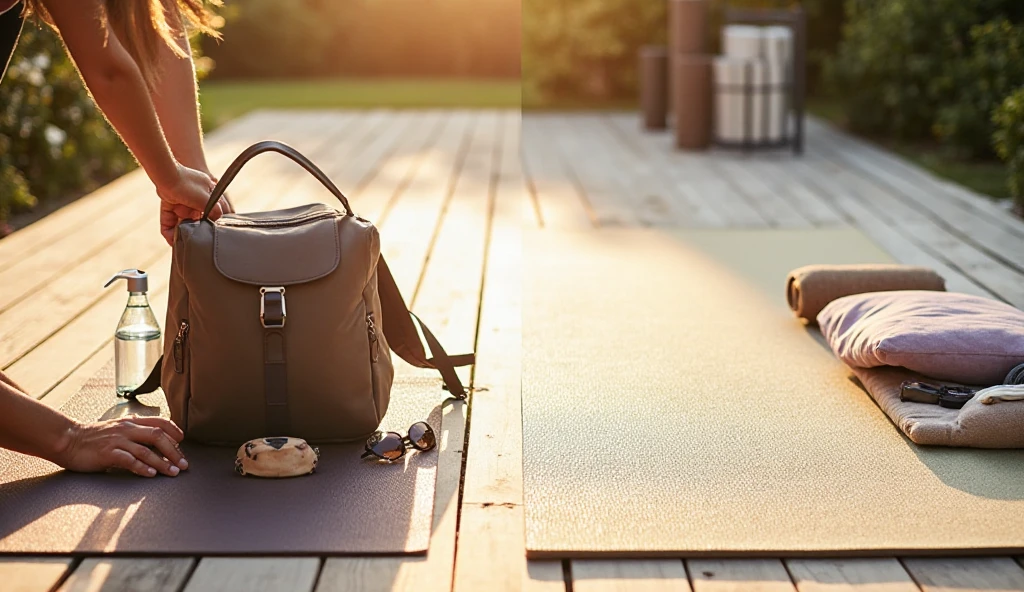
Maintenance and durability are critical factors that dictate how long your yoga mat will perform at a high level. Both the material composition and the overall thickness profile directly influence wear resistance, cleaning routines, and long-term structural integrity.
1. Durability Variations Based on Thickness and Material
- Wear Resistance: Thicker mats generally provide substantial foam volume to absorb continuous physical stress, but true longevity depends heavily on the core material.
- Material Quality: High-performance materials like natural rubber, TPE (Thermoplastic Elastomer), and cork offer excellent eco-friendly resilience and tear resistance. While traditional PVC mats are exceptionally long-lasting, their surface traction can degrade with heavy friction over time.
2. Routine Cleaning and Hygiene Maintenance
- Post-Practice Wipes: Preserve your mat’s grip and eliminate bacterial buildup by wiping it down with a damp microfiber cloth and mild, organic soap after intense sessions.
- Deep Sanitization: For periodic deep cleans, use a specialized yoga mat cleanser or a mild dilution of water and white vinegar.
- Drying Protocol: Always allow your mat to air dry completely in a shaded area before rolling it back up to prevent mold growth, mildew, and unpleasant odors.
3. Proper Storage Practices to Prevent Wear
- Environmental Control: Store your rolled mat in a cool, dry environment away from high humidity and direct UV sunlight, which can break down foam elasticity.
- Avoiding Creases: Never fold thick mats for storage, as permanent creases compromise cushioning; always keep them loosely rolled.
4. Signs It Is Time to Replace Your Yoga Mat
Structural Degradation: Visible flaking, surface tearing, thinning spots where your knees press down, or persistent odors mean it is time to invest in a replacement to maintain optimal joint protection.
Loss of Traction: If your grip fails during standard balancing postures or downward dog, safety is compromised.

Expert Recommendations and Tips for Choosing Yoga Mat Thickness
Professional yoga instructors and movement coaches agree on a fundamental principle: matching your mat thickness to your exact practice style and body mechanics profoundly impacts your comfort, joint safety, and performance. Consider these expert-backed guidelines when selecting your equipment.
1. Align Thickness With Your Primary Yoga Style
- Dynamic Flows: Active disciplines like Vinyasa, Power Yoga, and Ashtanga thrive on medium-thin profiles (3mm to 4mm). These offer the firm tactile feedback required for rapid transitions and single-leg balance stability.
- Slow & Restorative: Yin, restorative, or prenatal sessions demand extra cushioning (6mm or more) to protect joints during prolonged floor holds.
2. Prioritize Individual Body Mechanics and Joint Care
- Addressing Sensitivities: If you manage chronic wrist discomfort, sensitive kneecaps, or lower back issues, look for high-density foam options that absorb impact without letting you sink completely out of alignment.
- Functional Testing: Pay attention to how your joints feel during kneeling and pressing movements to determine your exact cushioning threshold.
3. Never Sacrifice Traction for Cushioning
- The Stability Factor: Thickness alone does not dictate a safe practice; surface grip is equally critical. Even a heavily padded mat can become dangerous if it lacks proper friction underfoot.
- Material Reliability: Experts often recommend textured surfaces or natural rubber composites to ensure reliable slip-resistance across demanding balancing asanas.
4. Factor in Mobility and Travel Demands
- Commuter Convenience: If you frequently walk to a studio, catch public transit, or travel, heavy mats quickly become burdensome. Ultra-lightweight or travel-specific options (1mm to 2mm) provide the necessary portability for on-the-go schedules.
5. Real-World Testing and Feel
Hands-On Evaluation: Whenever possible, test different mat densities in person at a studio or retail shop. Experiencing the tactile surface texture, squish factor, and weight in real-time offers far more insight than a spec sheet alone.

Common Mistakes When Choosing Yoga Mat Thickness
Choosing the wrong yoga mat thickness can affect your comfort, balance, and overall practice. Here are some common mistakes to avoid when selecting a mat:
1. Choosing Too Thick for Balance Poses
While extra-thick mats offer cushioning, they can make it harder to maintain stability during standing or balance-focused poses. Many practitioners make the mistake of prioritizing comfort over control, which can lead to wobbly alignment and potential strain.
2. Picking Too Thin for Joint Protection
On the flip side, very thin mats provide minimal cushioning, which can be uncomfortable for knees, wrists, and elbows. Practicing on hard surfaces without sufficient padding may cause joint pain, especially in restorative or floor-based yoga styles.
3. Ignoring Material and Density
Some people focus solely on thickness without considering the mat’s density or material. A soft, low-density mat may compress too much under body weight, reducing both comfort and stability. Dense materials like natural rubber or TPE offer better support even at moderate thicknesses.
4. Overlooking Portability Needs
A mat that is too thick and heavy can be difficult to carry to classes or travel with. Conversely, very thin mats may be easy to transport but lack the comfort needed for longer sessions. Balancing thickness with portability is key.
5. Not Testing Before Purchase
Many make the mistake of buying a mat based on online reviews or recommendations alone. Feeling the mat under your hands and feet before committing ensures it matches your practice style, comfort level, and stability requirements.
Best Thickness for Beginners: Finding the Sweet Spot
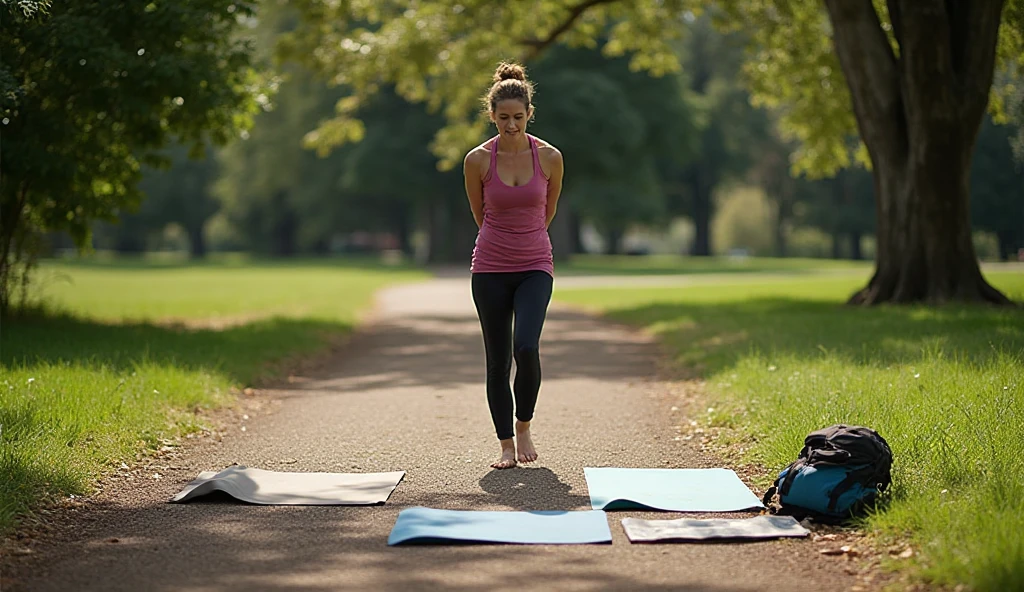
For those stepping onto the mat for the first time, choosing the correct thickness is vital for comfort, joint protection, and building stable physical alignment. Beginners generally need a forgiving profile that cushions sensitive joints without sacrificing the foundational stability required to learn basic poses.
1. Opt for Moderate Cushioning (3mm to 6mm)
- The Ideal Range: A thickness between 1/8 inch and 1/4 inch (3mm to 6mm) serves as the gold standard for beginners.
- Why It Works: This profile provides enough padding to protect tender knees and wrists during floor work while still maintaining a firm connection to the ground.
2. Evaluate Your Practice Environment
- Hard Flooring: If your home practice space features hardwood, tile, or laminate flooring, leaning toward the thicker end (around 5mm to 6mm) prevents bruising and discomfort.
- Carpeted Surfaces: If you roll your gear out over plush carpeting, a standard, firmer 3mm mat prevents your feet from sinking, helping you maintain proper ankle stability.
3. Balance Comfort with Balance Stability
- The Stability Trade-off: While ultra-plush mats feel comfortable initially, they create a sinking sensation that makes standing balancing postures (like Tree Pose or Warrior III) much more difficult for beginners.
- The Solution: Prioritize high-density foams that offer supportive cushioning rather than marshmallow-soft padding.
4. Material Quality and Density Matter
- Supportive Materials: Beginners benefit immensely from mats manufactured using natural rubber or high-grade TPE (Thermoplastic Elastomer).
- Why It Matters: These dense materials snap back quickly, providing consistent shock absorption and durability while you are still developing baseline strength and flexibility.
5. Start Simple and Adapt Over Time
Evolving Needs: Avoid overcomplicating your first purchase. Select a versatile, mid-thickness mat that feels secure and comfortable underfoot. As your practice evolves and your personal preferences sharpen, you can always explore specialized travel or restorative mats later.
Comparison Chart: Yoga Mat Thickness Guide
To make it easier to understand how different mat thicknesses affect comfort, stability, and portability, here’s a simple comparison chart. This guide can help you decide which option best fits your body type, yoga style, and practice environment.
| Mat Thickness | Approx. Measurement | Comfort Level | Best For | Advantages | Disadvantages |
|---|---|---|---|---|---|
| Thin Mat | 1–2 mm (1/16 inch) | Low | Travel Yoga, Hot Yoga | Lightweight, easy to pack, better floor connection | Less cushioning for joints |
| Standard Mat | 3–4 mm (1/8 inch) | Medium | Vinyasa, Hatha, Ashtanga | Good balance of comfort and stability, widely available | May feel firm on hard floors |
| Thick Mat | 5–6 mm (1/4 inch) | High | Restorative, Yin, Gentle Yoga | Extra cushioning for knees and joints | Slightly heavier and less stable |
| Extra-Thick Mat | 8–12 mm (1/2 inch) | Very High | Meditation, Stretching, Pilates | Maximum comfort and support | Bulky, not ideal for balance poses |
| Travel Mat | Foldable, around 1–2 mm | Low | Traveling, Outdoor Yoga | Ultra-portable and easy to clean | Minimal padding, less durable for daily use |
This chart provides a clear overview of the most common yoga mat thicknesses and their best uses. By comparing these options, you can easily find a mat that matches your comfort level, lifestyle, and yoga style preferences.
FAQs
Does yoga mat thickness affect grip and traction?
Indirectly, yes. While grip depends primarily on material texture, overly thick or spongy mats allow hands and feet to sink, reducing the firm contact needed for stability during sweaty flows.
What thickness is best for practicing on hard floors like hardwood or tile?
A 5mm to 6mm mat provides the ideal shock absorption to protect joints on unyielding surfaces. Conversely, thin mats work best on carpeted floors to prevent ankle wobbling.
Do heavier practitioners need a thicker yoga mat?
Generally, yes. Higher body weight increases pressure on contact points, meaning a high-density mat (6mm+) prevents “bottoming out” against the hard floor.
Can I use the exact same mat thickness for every yoga style?
While a 4mm to 5mm mat serves as a decent all-rounder, specialized practices—such as restorative Yin or fast-paced Power Yoga—benefit from customized thicknesses.
Does a thicker mat automatically mean higher quality?
No. Thickness means little without density. A thin, high-density natural rubber mat often outperforms a thick, low-density foam mat in both durability and comfort.
Conclusion: Finding Your Ideal Yoga Mat Thickness
There is no universal “best” thickness for every practitioner. The right yoga mat ultimately comes down to a personalized balance of three core factors: joint cushioning, postural stability, and routine portability. Whether you select a versatile standard profile, a plush mat for restorative floor work, or an ultra-low-profile travel option, the goal is a secure foundation that supports your movement.
Beyond thickness, material safety and quality remain paramount. Explore our comprehensive non-toxic exercise mat guide to pair your ideal thickness with an eco-friendly, skin-safe surface built for long-term durability.
Listen to your body, adapt as your practice deepens, and choose a mat that brings stability and confidence to every pose.
About the Author
Bilal Khan
Bilal Khan is a dedicated yoga practitioner, movement enthusiast, and fitness researcher who specializes in biomechanics and home-based training gear. With a strong commitment to evidence-based health writing, he helps practitioners navigate equipment choices—from mat density to non-toxic materials—so they can build safe, sustainable, and comfortable practices at home.