Introduction
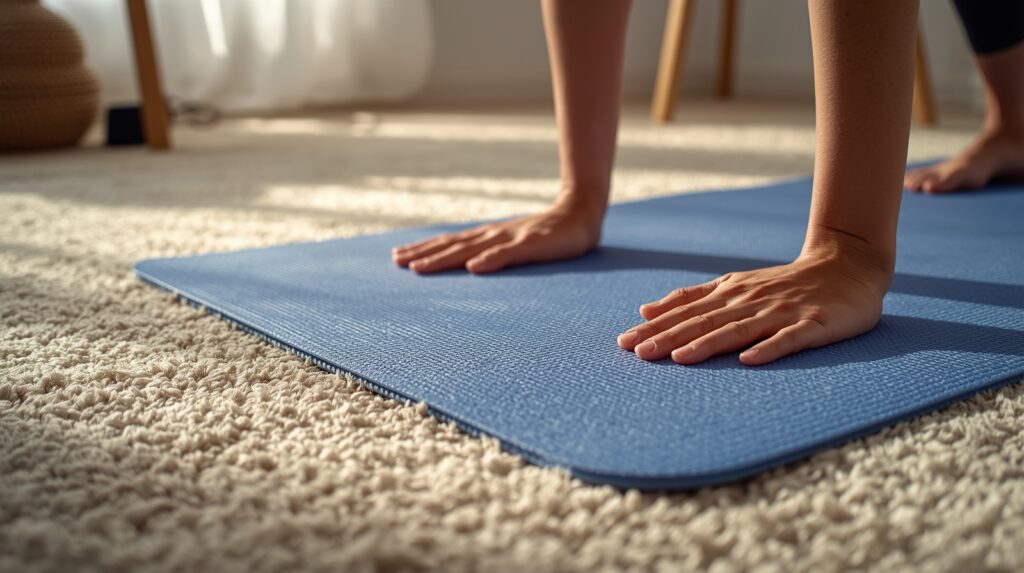
Rolling out your mat on plush carpet sounds cozy — until your hands slip mid-pose or your feet slide during a balance. That’s why finding the best yoga mat for carpet in 2026 matters. The right mat grips the surface, stays put, and offers just enough cushioning without feeling unstable.
Whether you’re a beginner or an experienced yogi, the right carpet mat means fewer slips and more focus. In this guide, we’ll cover the key features to look for, our top picks, and tips to keep your mat stable on carpet.
Table of Contents
Why You Need a Yoga Mat for Carpet in 2026
Practicing yoga on carpet might feel comfortable at first, but it can actually make your poses unstable and inconsistent. That’s why choosing the right yoga mat for carpet matters — it gives you the grip, stability, and support a standard mat can’t.
Place an ordinary mat directly on carpet and it tends to bunch up, stretch, or slide, especially during standing or balancing poses — disrupting your flow and increasing injury risk. A carpet-friendly mat solves this with a non-slip bottom layer that grips the soft surface and stays put through your session.
Carpet also adds its own cushioning, so an overly thick mat can feel soft and wobbly underfoot. A firm, moderately cushioned mat — typically 4mm to 6mm thick — strikes the right balance, supporting your joints while keeping you steady on uneven ground.
Key Features to Look for in a Yoga Mat for Carpet
Choosing the right yoga mat for carpet can make a big difference in how comfortable, stable, and effective your practice feels. Carpeted floors are soft and slightly uneven, so it’s important to find a mat that balances grip, support, and durability. Here are the key features to check before you buy.
1. Non-Slip Grip
A good carpet yoga mat needs a strong non-slip base. Since carpet fibers make regular mats slide or shift, look for a textured or rubberized underside that bites into the surface. This keeps the mat firmly anchored, giving you confidence during balance poses or strength-focused flows like Vinyasa.
2. Cushioning & Comfort
Carpet already provides some natural padding, so an overly thick mat can make you feel unstable. The ideal thickness for a carpet-friendly mat is around 4mm to 6mm — enough cushioning without sinking into the floor. This keeps your alignment steady and gives your joints proper support. Not sure which thickness suits you? Check our 6mm Yoga Mat vs Other Thicknesses comparison for a deeper breakdown.
3. Material Type
The material plays a big role in how a mat performs on carpet:
- PVC Mats – Durable and affordable, but less eco-friendly.
- Rubber Mats – Great grip and a natural feel, though heavier.
- TPE Mats – Lightweight, eco-safe, and ideal for home use.
- Cork Mats – Naturally non-slip and antimicrobial, perfect for hot yoga.
If sustainability matters to you, materials like cork and natural rubber are worth a closer look — see our Best Avocado Yoga Mat review for an eco-friendly option that grips well on soft surfaces.
4. Size & Portability
If you move your mat often or practice in tight spaces, portability matters. A standard length of 68–72 inches works for most users. Look for a mat that rolls up easily and comes with a carrying strap or bag — especially handy if you also take your practice on the road (our Best Travel Yoga Mat guide covers lightweight, foldable options).
5. Durability & Maintenance
Carpeted floors create friction that wears mats down faster than hard floors. Choose a high-density, tear-resistant mat built for regular use, and stick to easy-to-clean materials. Wipe your mat down after every session, and give it a deeper clean weekly to keep the grip fresh. Storing it properly between sessions helps too — a yoga mat rack keeps it flat and prevents creasing.
Top 5 Best Yoga Mats for Carpet
Choosing the right yoga mat for carpet can dramatically improve your practice—offering grip, stability, and comfort even on soft flooring. Below are five excellent options for 2026, each suited to different needs and preferences.
| # | Yoga Mat | Why It’s Great on Carpet | Considerations |
|---|---|---|---|
| 1 | Manduka PRO Yoga Mat | Dense, high-quality PVC construction gives excellent stability. Reviewers praise its grippiness and long lifespan. OutdoorGearLab+1 | Heavy and requires break-in time before full grip kicks in |
| 2 | Liforme Original Yoga Mat | Natural rubber + PU top, with alignment lines, and fantastic traction even in moist conditions. | Premium price; heavier than foam mats |
| 3 | Jade Harmony Yoga Mat | Made from natural rubber, known for strong grip and eco credentials. GQ+1 | Rubber scent initially; not ideal for latex allergy |
| 4 | Yoloha Cork Yoga Mat | Cork surface becomes more grippy with moisture, naturally antimicrobial. | Slightly firm feel; cork top might wear over years |
| 5 | Gaiam Essentials Yoga Mat | Budget-friendly option with decent cushioning. Good for casual or beginner use. | Less grippy underside; may need extra support under high-slip conditions |
This mat tops many “best of” lists for its unmatched density and durability. The closed-cell PVC construction helps prevent moisture absorption, a property that makes closed-cell PVC foam inherently water-resistant — beneficial for carpeted settings where trapped moisture can affect grip. Its firmness helps maintain stability on carpet, and many long-term users praise its longevity. However, its weight and the break-in period are trade-offs to consider.
2. Liforme Original Yoga Mat
This mat is a favorite among practitioners who want more than just grip — the printed alignment guides act like a built-in coach, gently nudging your hands and feet into the right position during standing poses and transitions. The rubber-and-PU top layer bites into the surface even when your palms get sweaty or the room lighting makes depth perception tricky, which matters more than people realize when you’re balancing on a carpeted floor. It’s also a solid pick for practitioners who care about sourcing, since the materials are produced with sustainability in mind.
3. Jade Harmony Yoga Mat
Built from natural rubber harvested through sustainable methods, the Jade Harmony has earned a loyal following among home practitioners who spend a lot of time on carpet. The rubber’s natural tackiness grips the floor well without feeling artificial underfoot, and cushioning sits at a comfortable middle ground — enough to protect your knees in tabletop poses without feeling unstable in standing balances. Jade also plants a tree for every mat sold, which resonates with practitioners who want their gear to reflect their values.
4. Yoloha Cork Yoga Mat
Cork behaves almost opposite to rubber or foam when it comes to moisture — the more you sweat, the grippier it gets, thanks to its natural micro-texture. That makes it a smart choice for anyone whose carpet practice tends to get intense, like a heated flow at home. Cork is also naturally resistant to bacteria and odor, so it stays fresher between washes. The one trade-off worth knowing: the cork surface can gradually wear down if used on rough or coarse carpet fibers over years of regular use.
5. Gaiam Essentials Yoga Mat
This one isn’t built specifically for carpet, but it earns its spot as the practical, budget-conscious option. The cushioning is comfortable enough for gentle practice, and pairing it with a thin non-slip underlay closes most of the grip gap compared to the pricier, carpet-specific mats above. It’s a sensible starting point for beginners still figuring out how often they’ll practice at home before investing in a higher-end mat.
Comparison Table: Best Yoga Mats for Carpet
To help you quickly decide which yoga mat for carpet best suits your needs, here’s a simple comparison table outlining the top features of each recommended mat. This table highlights key factors like material, thickness, weight, and overall performance—so you can make a smart, informed choice without scrolling endlessly.
| Yoga Mat | Material | Thickness | Grip on Carpet | Comfort Level | Durability | Best For |
|---|---|---|---|---|---|---|
| Manduka PRO Yoga Mat | PVC (High-density) | 6 mm | ★★★★★ | ★★★★☆ | ★★★★★ | Advanced yogis who want superior stability |
| Liforme Original Yoga Mat | Natural Rubber + PU | 4.2 mm | ★★★★★ | ★★★★★ | ★★★★☆ | Yogis seeking alignment help and strong traction |
| Jade Harmony Yoga Mat | Natural Rubber | 5 mm | ★★★★☆ | ★★★★☆ | ★★★★☆ | Eco-conscious users who need firm grip |
| Yoloha Cork Yoga Mat | Cork + Natural Rubber | 5 mm | ★★★★☆ | ★★★★★ | ★★★★☆ | Hot yoga or sweat-prone sessions |
| Gaiam Essentials Yoga Mat | NBR Foam | 6 mm | ★★★☆☆ | ★★★★☆ | ★★★☆☆ | Beginners or casual home practice |
How to Use This Table
- If stability is your main concern, the Manduka PRO and Liforme mats offer the best grip on carpet.
- If you prefer eco-friendly materials, go for Jade Harmony or Yoloha Cork.
- For those on a budget, Gaiam Essentials still performs well for basic practice, especially if paired with a rug gripper.
Each of these options performs well as a yoga mat for carpet, but your ideal pick depends on your priorities—grip, comfort, sustainability, or portability.
How to Keep Your Yoga Mat Stable on Carpet
Even a well-designed carpet mat can shift or bunch up during more intense poses. Carpet is inherently soft and slightly uneven, which makes it harder for any mat to grip consistently. The good news is that a few small adjustments can make a noticeable difference in stability.
1. Add a Non-Slip Rug Pad Underneath
Placing a thin rug pad or gripper pad beneath your mat is one of the simplest fixes. These pads are inexpensive, widely available, and originally designed to keep rugs anchored on carpet — which makes them equally effective for a yoga setup. They stop the mat from sliding and add a touch of extra cushioning as a bonus.
2. Pick a Mat Built for Traction
Material matters more than most people expect. Rubber and cork mats generally outperform standard foam or PVC when it comes to holding their position on carpet. If you’re shopping specifically for stability, look for a textured underside or a dual-layer build — both are designed to resist shifting even on thicker carpet.
3. Set Up on Lower-Pile Carpet When Possible
Carpet fibers aren’t all the same height, and that height affects how well a mat sits. Low-pile carpet — the shorter, tightly woven kind — gives your mat firmer contact with the floor, which translates to better balance during standing poses. Thick or plush carpet, by contrast, lets the mat sink and move more, making it harder to hold steady.
4. Secure the Corners
Curling or shifting corners are a common annoyance during longer or more dynamic sessions. Light weights, the edge of a nearby piece of furniture, or a strip of double-sided tape can keep the corners pinned down — particularly useful for flow-based practices like Vinyasa or Power Yoga, where quick transitions put more strain on the mat.
5. Keep the Surface Clean and Dry
Grip fades faster than people realize once sweat, dust, and stray carpet fibers build up on the surface. A quick wipe-down after each session, plus a more thorough clean once a week using a gentle mat cleaner or a diluted water-vinegar solution, keeps the surface tacky and reliable session after session.
FAQs about Yoga Mats for Carpet
- Do I need a thicker mat if my carpet is very plush?
Not necessarily — a thicker mat on plush carpet can feel unstable, since the carpet already adds cushioning. Sticking to 4mm–6mm usually gives better balance.
2. Can yoga mats damage or leave marks on carpet?
Generally no, if the mat is clean and dry. Some PVC mats may leave faint marks if left rolled out too long in humid rooms — roll your mat up after each session to avoid this.
3. Is it better to practice directly on carpet without a mat?
Not recommended. Carpet lacks consistent grip and joint cushioning, and bare fibers can irritate skin during floor poses. A mat also helps define your practice space.
4. Will a carpet yoga mat work on hardwood or tile too?
Yes, most carpet-friendly mats grip hard floors well too. The reverse isn’t always true — hardwood-specific mats may lack the firmness needed for carpet.
5. How long does a yoga mat last with regular carpet use?
Typically one to three years with proper care. Natural rubber and cork mats hold their grip longer than budget foam options.
Conclusion
The right yoga mat for carpet can transform your home practice. Carpet’s natural softness feels comfortable, but without the right mat, it can leave you shifting or unsteady mid-pose.
The best options combine a firm, non-slip base, balanced cushioning, and durable materials — whether that’s a high-performance pick like the Manduka PRO, an eco-friendly choice like Jade Harmony, or a budget-friendly option like Gaiam Essentials. What matters most is finding the mat that fits your practice style and needs. If you’re still weighing thickness or material, our yoga mat thickness guide can help narrow it down.
At the end of the day, yoga is about connection, not distraction. With the right mat underfoot, you can focus on your breath and movement — not on slipping.