Introduction
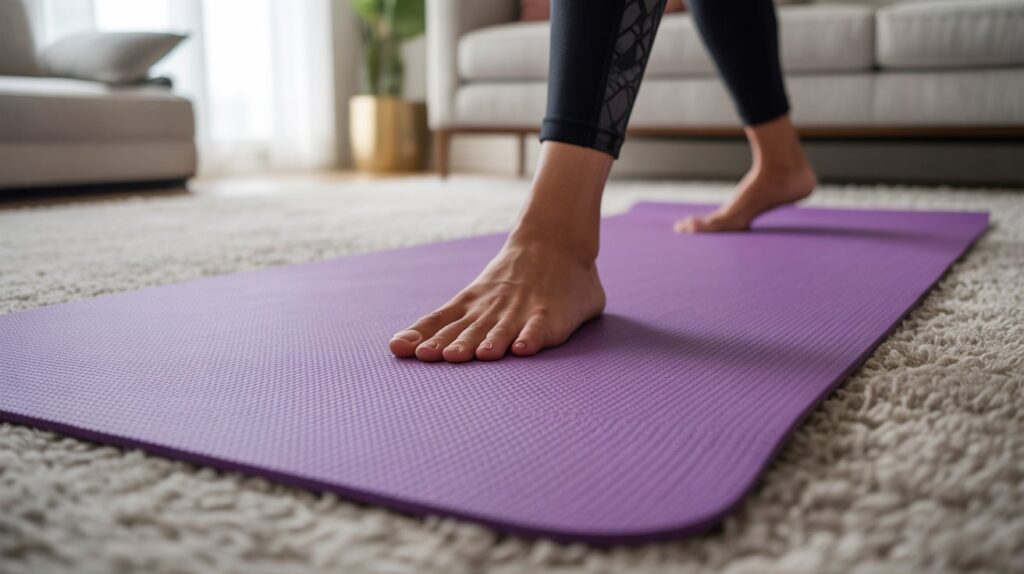
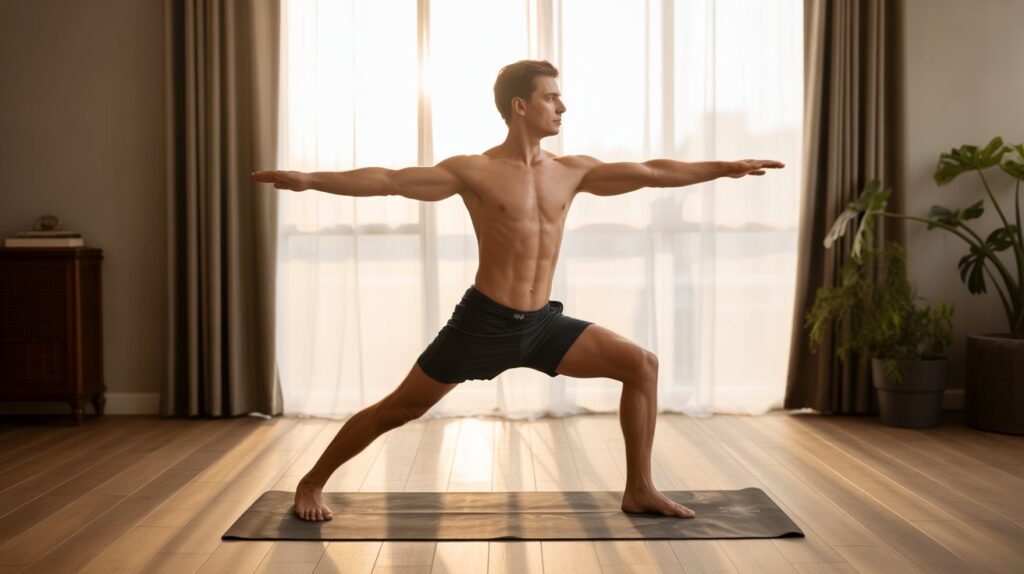
A non-skid yoga mat is essential for stability, balance, and proper alignment. Slipping hands or feet breaks your flow and raises injury risk — especially during standing balances or fast transitions. A mat with reliable non-slip grip lets you move confidently through every pose.
Grip matters at every level: beginners need extra traction to build confidence, while advanced yogis need consistent grip for arm balances and dynamic flows. For hot yoga, power yoga, or any sweat-heavy style, a true non-skid surface is non-negotiable — it’s what keeps you grounded when things get intense.
Table of Contents
1. Grip & Traction Performance
Grip and traction are the most important features of any slip-resistant yoga mat. A high-quality surface keeps your hands and feet firmly in place, letting you hold poses with confidence and proper alignment. Whether you’re flowing through vinyasas or holding long balance poses, reliable traction reduces the risk of sliding and injury.
A good mat should deliver immediate grip without needing a break-in period. Textured surfaces, dual-layer designs, or natural rubber bases typically anchor the mat to the floor while maintaining surface stability — this becomes even more important on slicker surfaces like hardwood or carpet floors, where the wrong mat can shift underfoot.
Grip performance matters even more during sweaty workouts like hot yoga or power yoga. Mats with moisture-activated grip actually improve traction as sweat increases, preventing slips even in intense sessions. Closed-cell surfaces resist moisture absorption, while open-cell materials offer superior grip but need more maintenance — a trade-off worth weighing if you also want a mat that’s durable enough for daily practice.
2. Material Quality & Grip Performance
The material of a yoga mat is the single biggest factor behind how well it grips the floor and resists slipping. Different materials deliver different traction levels, so understanding your options helps you choose a mat that actually stays put.
Natural rubber is prized for its excellent, dense traction — it grips the floor firmly and holds up over years of consistent practice, making it a top pick for stability-focused styles. The trade-off: it’s heavier, and not ideal for those with latex sensitivities.
TPE (Thermoplastic Elastomer) offers a lighter, more flexible feel with decent grip, making it a solid entry point for beginners and casual practitioners. It’s more eco-friendly than most synthetics, though it tends to wear out faster with daily use.
PVC mats are known for strong dry-surface grip, durability, and affordability — practical for frequent sessions, though less sustainable and less “natural” underfoot than rubber.
Hybrid blends pair a rubber base with a textured top layer, combining the best of both — better grip, better longevity, often at a lower weight than pure rubber mats.
3. Thickness & Its Effect on Stability
Thickness doesn’t just affect comfort — it directly impacts how stable and grounded a mat feels underfoot. The right balance depends on your body, your practice style, and how much floor connection you need for grip.
Thicker mats cushion joints like knees, elbows, and wrists, making them ideal for beginners, restorative yoga, and floor-based poses. The trade-off is a slightly less stable base for standing balance poses, since extra padding can reduce your connection to the floor.
Thinner mats put you closer to the ground, which sharpens stability and control — a real advantage for balance-heavy or advanced practices where every millimeter of grip counts. They’re also lighter and easier to carry for travel or studio use.
4. Texture & Surface Design for Maximum Grip
Surface texture is where non-skid performance really comes down to design. The right texture can be the difference between confidently holding a pose and constantly readjusting your hands and feet.
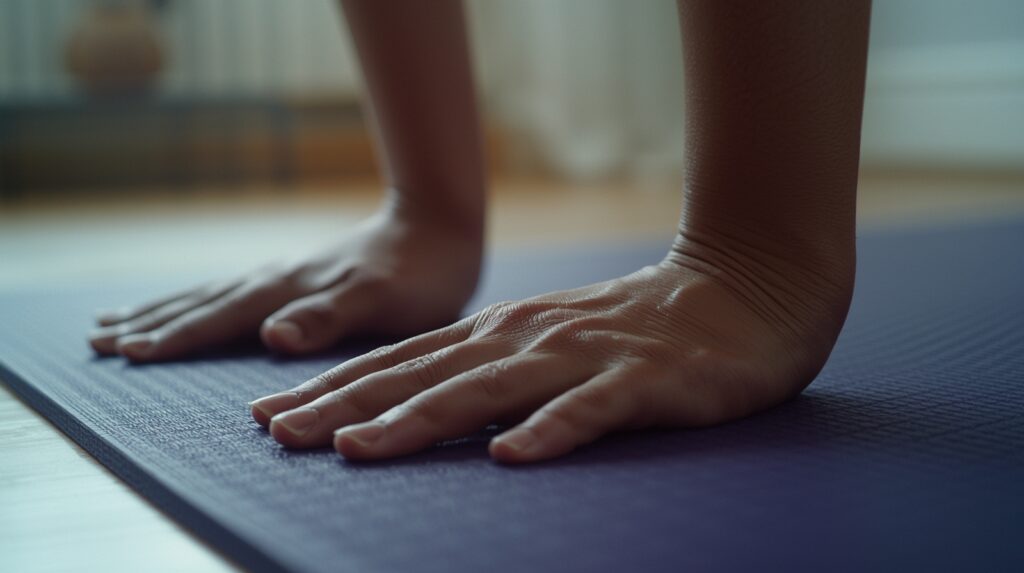
Textured patterns — raised dots, wave patterns, or alignment-style grooves — create friction between the mat and your skin, actively preventing slipping in both dry and sweaty conditions. These surfaces shine during dynamic flows and strength-based sessions where consistent traction is non-negotiable.
Smooth surfaces offer a softer, more minimal feel, often preferred for slower or restorative styles. They’re gentler on the skin and easier to move across between poses — but they can turn slippery fast during intense or sweat-heavy workouts, making them a weaker choice for grip-dependent practice.
5. Size & Weight — Does It Affect Grip?
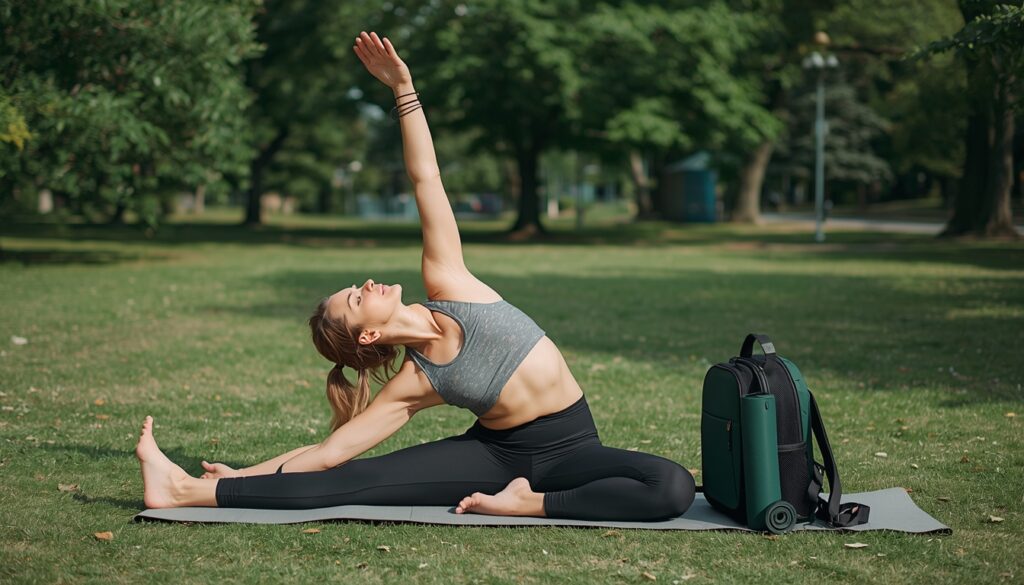
Size and weight mainly affect portability and how much space you have to move, rather than grip itself. Standard mats measure around 68 inches long and 24 inches wide — enough space for most practitioners, though taller yogis or those with a wider stance may feel boxed in. If sizing is your main concern, our full guide on extra-long and wide yoga mats breaks down the best dimensions for taller practitioners in detail.
For grip-focused shoppers, the key takeaway is simpler: heavier, denser mats (like natural rubber) tend to stay anchored to the floor better during dynamic movement, while lightweight travel mats are easier to carry but may shift more without a strong non-slip base underneath.
6. Sweat Absorption & Moisture Management for Better Grip
Moisture control isn’t just about hygiene — it’s directly tied to how well your mat performs when things heat up. In hot yoga or high-intensity flows, excess sweat can compromise traction fast if the surface isn’t built to handle it.
Open-cell surfaces absorb sweat and, in many cases, actually improve grip as moisture builds up — making them a strong choice for sweat-heavy, high-intensity sessions. The trade-off: absorbed moisture means these mats need regular cleaning and thorough drying to stay hygienic.
Closed-cell surfaces take the opposite approach, repelling moisture rather than soaking it in. These mats dry faster and clean up easier, and high-quality textured coatings can still hold solid traction even when wet — without the maintenance that open-cell designs require.
Bottom line for grip-focused buyers: if you sweat heavily, prioritize a mat with proven wet-grip performance, not just one that claims to be “moisture-resistant” — the two aren’t always the same thing.
7. Durability & Longevity: Does Grip Fade Over Time?
A mat’s grip is only as good as how long it lasts. Durability determines whether that non-skid performance you paid for actually holds up — or fades after a few months of regular use.
High-quality materials like natural rubber or reinforced hybrid blends resist wear far better than budget synthetics, handling repeated stretching, bending, and pressure without breaking down. For frequent practitioners, this matters more than it seems: a mat that degrades quickly doesn’t just look worn — its grip weakens too, since surface texture flattens out with use.
Wear-resistance is the metric to watch for. Mats that resist abrasion, tearing, and compression keep their surface texture — and therefore their traction — intact for longer. Heavy use, especially with frequent transitions or props, can cause lower-quality mats to develop indentations that flatten grip patterns and reduce stability over time. A genuinely wear-resistant mat holds its shape, its texture, and its traction session after session.
8. Eco-Friendly & Non-Toxic Materials: Grip Without the Chemicals
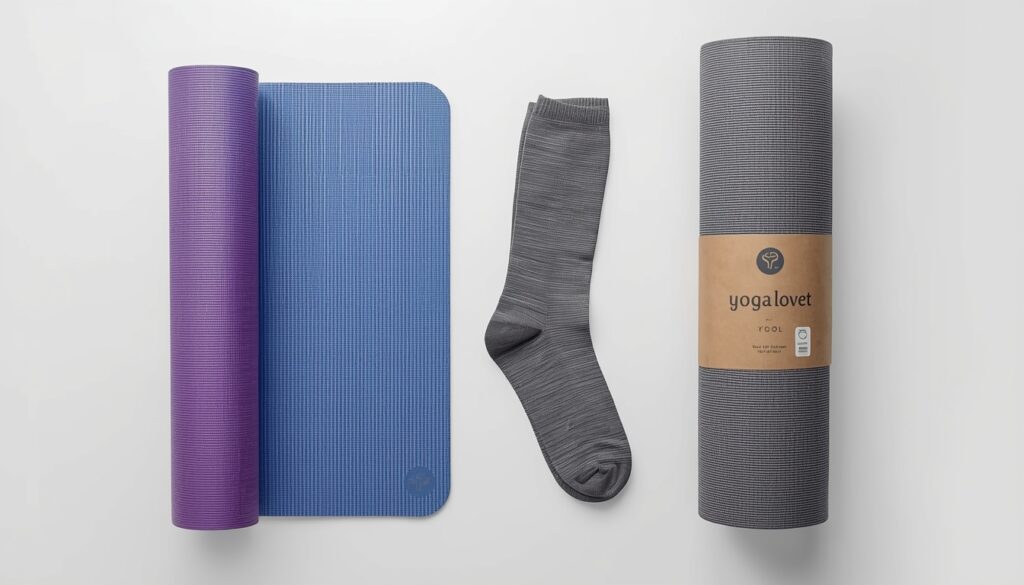
Choosing a mat made from sustainable, non-toxic materials benefits both your health and the environment — and for many practitioners, it’s become as important as grip performance itself. Eco-conscious mats reflect a commitment to mindful living that extends beyond the practice itself.
Sustainable materials — natural rubber, cork, jute, and certified recycled or recyclable TPE — reduce reliance on petroleum-based products while often delivering excellent traction. Natural rubber, for instance, offers strong grip and cushioning while being fully biodegradable, making it one of the strongest choices for eco-aware yogis who don’t want to compromise on performance.
Non-toxic construction means the mat is free from harmful chemicals like phthalates, heavy metals, and volatile organic compounds (VOCs). According to the US EPA, VOC concentrations indoors can run significantly higher than outdoors, and prolonged exposure has been linked to headaches, respiratory irritation, and other health effects — which is exactly why avoiding VOC-heavy mats matters, especially in enclosed practice spaces or heat-intensive sessions like hot yoga. Certifications like OEKO-TEX or similar third-party testing offer added assurance that a mat’s grip doesn’t come at the cost of air quality.
9. Ease of Cleaning & Maintenance (Without Wearing Down Grip)
Keeping your yoga mat clean isn’t just about hygiene — improper cleaning can actually degrade the surface texture that gives a mat its traction. A mat that’s easy to maintain properly encourages regular care and helps preserve both grip and appearance over time.
Most mats can be wiped down after practice with a gentle water-and-mild-soap mix or a dedicated yoga mat spray. Closed-cell or PVC-based surfaces resist moisture and stains, making them especially low-maintenance — they rarely absorb sweat, so a quick wipe is usually enough to refresh both hygiene and grip.
Open-cell or natural-fiber mats (like cork or jute) need more careful handling. While these materials often deliver excellent grip and texture, they can hold onto moisture and dirt if not dried properly — and trapped moisture can gradually break down the surface texture that creates traction. Always let these mats air dry fully before rolling them up to prevent mold, mildew, and premature grip loss.
10. Price & Value: What You’re Really Paying For
Price plays a real role in choosing a yoga mat, but the sticker price alone doesn’t tell you much about long-term value. Mats span a wide range — from budget-friendly entry-level options to premium, performance-driven designs.
Entry-level mats are typically more affordable and suit beginners or casual practitioners well, offering basic grip and cushioning for light or occasional use. The trade-off: they often wear out faster, and their traction can noticeably fade well before the mat physically falls apart.
Premium mats come with higher-quality materials, enhanced traction technology, better durability, and more thoughtful construction — features that justify the higher price for anyone practicing frequently or needing specific performance, like advanced texture or eco-friendly builds.
Bottom line: when comparing price, weigh grip retention over time, not just the initial feel. A mat that holds its traction for three years is often better value than one that needs replacing every six months — even if the second one is cheaper upfront.
11. User Experience & Comfort: How Grip Feels in Real Practice
Beyond specs on paper, user experience and comfort reflect how a mat actually performs when you’re mid-pose. This matters because a mat that genuinely feels good — stable, supportive, and secure underfoot — encourages consistent practice and makes every session more enjoyable.
The real-world feel of a mat comes down to surface texture, cushioning, and how it responds as you move. A well-balanced mat feels stable enough to trust your grip in standing poses, yet comfortable enough to support floor work without digging into joints. Most practitioners describe ideal comfort as a balance between support and softness — enough padding to protect the knees and wrists, without so much give that it compromises traction and balance.
Real practitioner feedback offers insight specs alone can’t capture. Look for comments on how a mat performs across different styles — slow, meditative sessions versus vigorous flows or hot yoga — and specifically how grip and sweat handling hold up during longer, more intense sessions. That’s often a better predictor of real-world traction than any marketing claim. And comfort isn’t just about the mat itself — what you wear matters too; our guide to comfortable, flexible yoga apparel covers how the right gear complements a grippy mat for a more stable practice overall.
12. Aesthetic & Color Options: Design Meets Grip
Performance matters most, but the look and feel of a mat still plays a real role in motivation and personal connection to your practice. A mat that feels good and looks good makes you more likely to actually use it.
Design and color options range from bold patterns and vibrant hues to minimalist, neutral tones — and increasingly, texture and pattern do double duty by also enhancing grip. Raised or embossed designs, for example, aren’t just visual; they often create the friction points that improve traction. If eco-conscious design with standout aesthetics is what you’re after, our full review of the avocado yoga mat breaks down a design-forward option that doesn’t sacrifice grip for style.
Beyond personal taste, darker colors and textured surfaces tend to hide wear, sweat marks, and stains better — helping a mat maintain both its look and its grip-relevant texture for longer. Choosing a design you genuinely love increases the odds you’ll stick with consistent practice, which matters just as much as any technical spec.
FAQs
How can I test a yoga mat’s grip before buying it?
If shopping in-store, place your palms on the mat and press down while sliding slightly — a good non-skid surface will resist movement immediately. Online, check for verified reviews mentioning grip during sweaty sessions, since that’s the toughest real-world test.
Why does my yoga mat get slippery even though it’s labeled non-skid?
This usually happens when sweat builds up faster than the surface can manage, or when the mat’s texture has worn down from age and heavy use. New mats can also feel slippery during a short break-in period before the surface fully “grips” with regular use.
Is natural rubber or PVC better for a non-skid yoga mat?
Natural rubber generally offers stronger, more consistent grip — especially in sweaty conditions — while PVC provides reliable dry-surface traction at a lower price. If grip is your top priority and budget allows, natural rubber is usually the better choice.
Do I need a yoga towel if my mat is already non-skid?
For most moderate sessions, a quality non-skid mat is enough. But for hot yoga or heavy sweating, a yoga towel adds an extra layer of moisture control that keeps grip consistent even when the mat’s surface is fully saturated.
How do I restore grip on an old, worn-out yoga mat?
A deep clean with a mild soap-and-water solution can remove oil and residue buildup that dulls traction. However, if the surface texture itself has physically worn smooth, cleaning won’t restore grip — that’s usually a sign the mat needs replacing.
Conclusion
Choosing the right non-skid yoga mat comes down to what actually keeps you stable and confident — not marketing claims. Grip, material, thickness, and durability each play a role, and comparing them side by side is what leads to the right choice.
Whether you practice intense, sweat-heavy sessions or slow flows, a good non-slip mat improves stability, protects your joints, and lets you focus on practice instead of footing. Prioritize real-world grip and long-term value — a mat that holds its traction for years, not just the first few sessions. And once your mat is sorted, the right gear matters too — check out our guide to comfortable, flexible yoga apparel to complete a stable, grip-focused practice setup