Introduction
Ever rolled out a yoga mat in your living room and had no idea what to do next? You’re not alone. Learning how to start yoga at home for beginners feels overwhelming at first, especially with no instructor guiding each move. This article walks through everything from choosing beginner yoga poses and building a simple yoga sequence, to staying consistent long after the initial motivation fades.
Table of Contents
4 Reasons to Start a Home Practice
Starting a home yoga practice gives you the freedom, consistency, and privacy that a studio schedule simply can’t match. If you’re figuring out how to start yoga at home for beginners, the good news is you don’t need much — once you set up even a small corner with a yoga mat, you remove every excuse that usually gets in the way of showing up regularly.
1. You control the time and pace
A studio class runs on someone else’s clock — usually 60 or 90 minutes, whether you have that long or not. At home, a 10-minute yoga practice before work is just as valid as a full hour on a Sunday morning. This flexibility is often what turns an occasional habit into a daily yoga practice, simply because there’s no longer a scheduling barrier standing between you and your mat.
2. It builds real self-discipline
Practicing alone, without a teacher cueing every move, asks you to listen to your own body. This is where genuine self-discipline in yoga develops — you decide when to push into a deeper stretch and when to rest in child’s pose instead. Over time, this kind of self-regulation through yoga carries into other parts of life, from managing stress at work to staying calm in traffic.
3. It deepens the mind-body connection
Without the distraction of a crowded room, you notice small things — how your breath shortens in a low lunge pose, or where tension sits during a seated forward fold. This heightened awareness of the mind-body connection is one of the biggest reasons long-term practitioners say home sessions feel more personal than studio ones.
4. It’s sustainable, even on busy days
Life doesn’t always allow for a 45-minute class across town. A home yoga routine adapts — some days it’s a full yoga sequence with sun salutation and standing poses, other days it’s five minutes of pranayama and stillness. That adaptability is exactly what keeps a lifelong yoga practice alive instead of it fading out after a few weeks — and it’s exactly the mindset beginners need when learning how to start yoga at home for beginners without burning out.
Ready to begin? Explore our full range of yoga mats designed to support your home practice from day one.
How to Design a Home Yoga Practice
Designing a home yoga practice comes down to four decisions: where you’ll practice, what sequence you’ll follow, how long you’ll stay on the mat, and how you’ll structure the session so it doesn’t feel random. Get these right once, and every future practice becomes easier to repeat.
Choose a dedicated yoga space
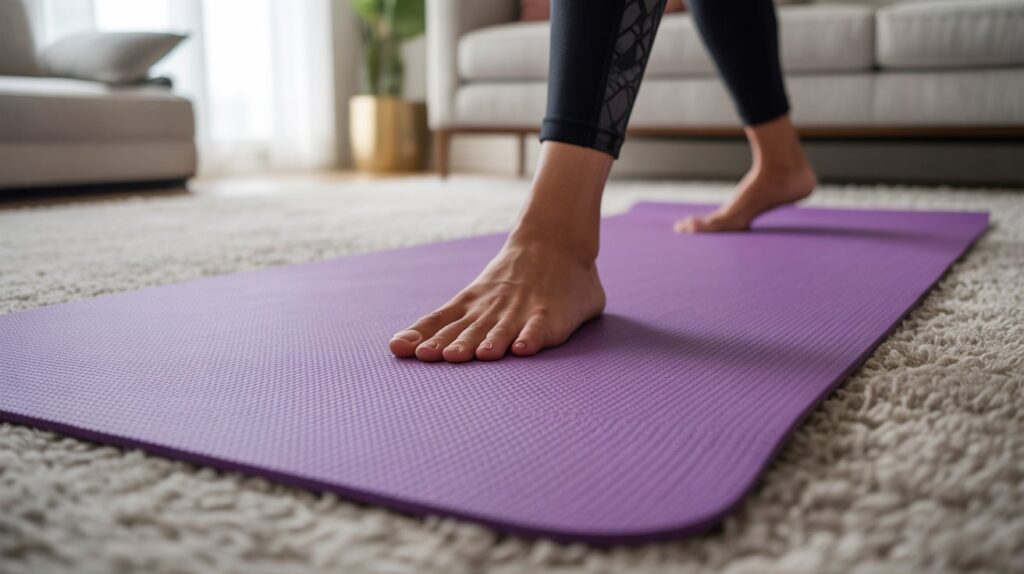
You don’t need an extra room — a 6×4 foot patch of floor next to a window is enough for most beginner yoga poses. What matters is consistency of location. When your yoga mat lives in the same spot every day, your brain starts associating that corner with practice, which removes the friction of “getting ready” each time. A dedicated yoga space, even a small one, also makes it easier to keep basic yoga props — a block, a strap, a bolster — within reach instead of buried in a closet.
Structure a balanced sequence
A well-designed yoga sequence typically moves through a logical arc: gentle warm-up, active work, and a wind-down. A simple structure many beginners follow is:
- Start with 2–3 rounds of sun salutation to warm the spine and shoulders
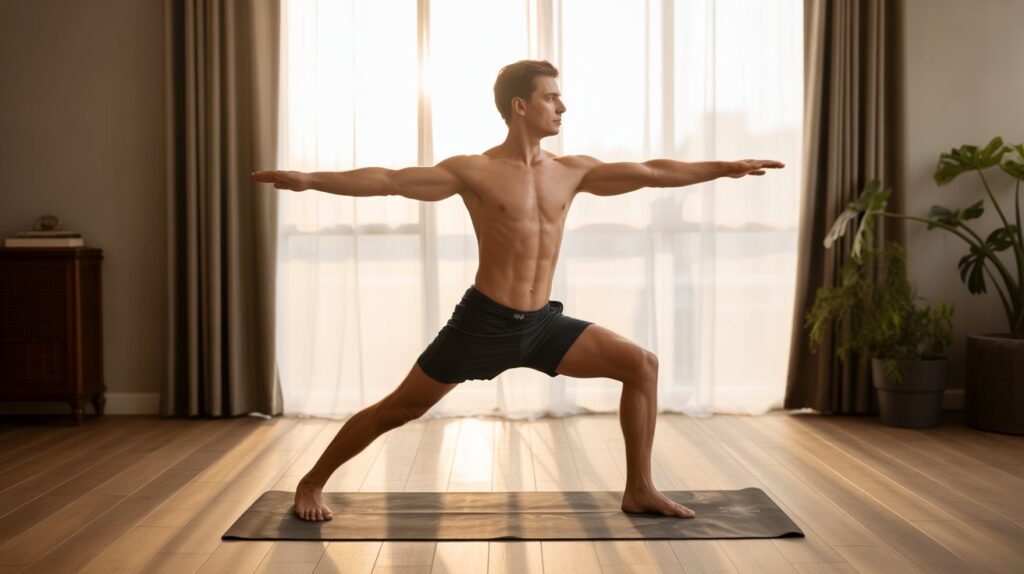
- Move into standing poses for strength and balance
- Add backbends or hip openers like pigeon pose depending on the day’s focus
- Close with a restorative pose such as reclining big toe pose or child’s pose
This kind of sequencing gives even a 10-minute yoga practice a clear beginning, middle, and end, rather than a random string of stretches.
Decide between vigorous and restorative days
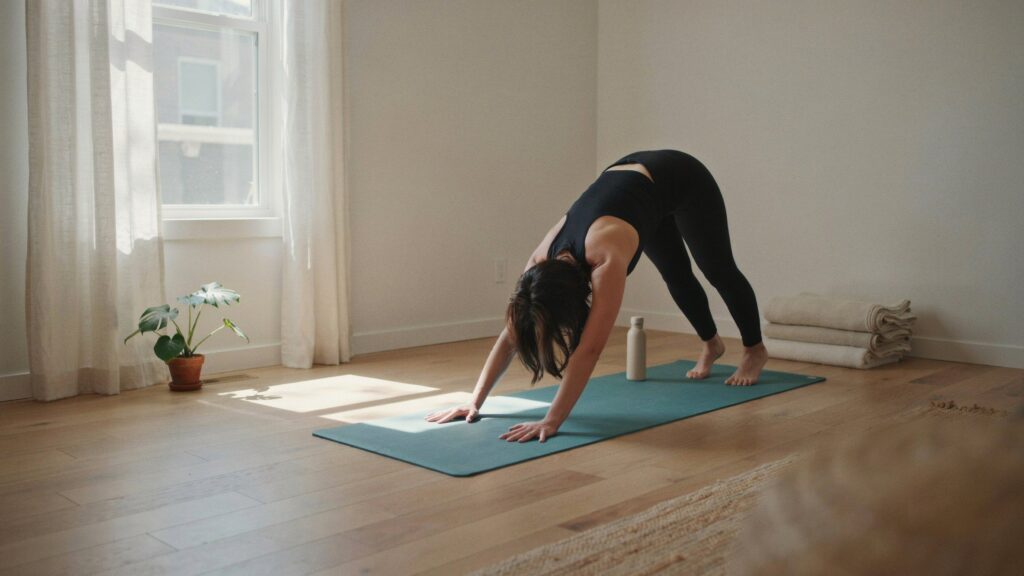
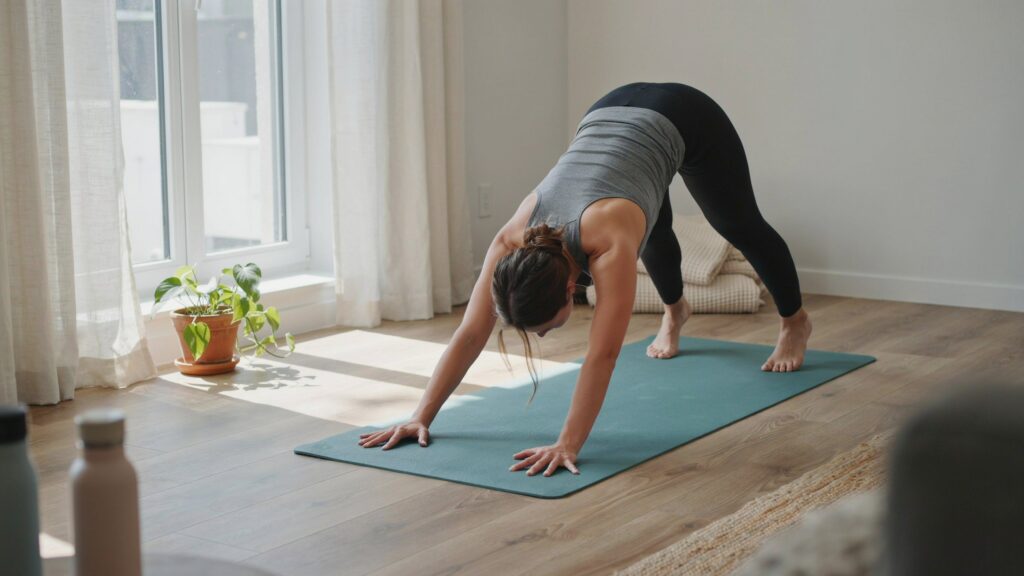
Not every session needs to be intense. Alternating a vigorous practice — think faster-paced sequences with inversions or arm balances — with a restorative yoga day that leans on downward-facing dog pose, folds, and long holds prevents burnout. Many long-term practitioners plan three vigorous days and two restorative ones each week, which keeps the body challenged without overtraining.
Add breath and stillness
A complete home yoga routine isn’t just physical postures. Setting aside even five minutes for pranayama or a short meditation practice at the end trains stillness and mindfulness, which is often what separates a workout from an actual yoga practice. This is also where grounding and stability are built — qualities that carry over into how you handle stress off the mat.
How to Design a Home Yoga Practice
Designing a home yoga practice comes down to four decisions: where you’ll practice, what sequence you’ll follow, how long you’ll stay on the mat, and how you’ll structure the session so it doesn’t feel random. This is really the core of how to start yoga at home for beginners — it’s not about having a perfect setup, it’s about making these four choices once so every future practice becomes easier to repeat. A good yoga mat is often the simplest place to start, since it turns any corner of your home into a dedicated practice space.
Choose a dedicated yoga space
You don’t need an extra room — a 6×4 foot patch of floor next to a window is enough for most beginner yoga poses. What matters is consistency of location. When your yoga mat lives in the same spot every day, your brain starts associating that corner with practice, which removes the friction of “getting ready” each time. A dedicated yoga space, even a small one, also makes it easier to keep basic yoga props — a block, a strap, a bolster — within reach instead of buried in a closet.
Structure a balanced sequence
A well-designed yoga sequence typically moves through a logical arc: gentle warm-up, active work, and a wind-down. A simple structure many beginners follow is:
- Start with 2–3 rounds of sun salutation to warm the spine and shoulders
- Move into standing poses for strength and balance
- Add backbends or hip openers like pigeon pose depending on the day’s focus
- Close with a restorative pose such as reclining big toe pose or child’s pose
This kind of sequencing gives even a 10-minute yoga practice a clear beginning, middle, and end, rather than a random string of stretches.
Decide between vigorous and restorative days
Not every session needs to be intense. Alternating a vigorous practice — think faster-paced sequences with inversions or arm balances — with a restorative yoga day that leans on downward-facing dog pose, folds, and long holds prevents burnout. Many long-term practitioners plan three vigorous days and two restorative ones each week, which keeps the body challenged without overtraining.
Add breath and stillness
A complete home yoga routine isn’t just physical postures. Setting aside even five minutes for pranayama or a short meditation practice at the end trains stillness and mindfulness, which is often what separates a workout from an actual yoga practice. This is also where grounding and stability are built — qualities that carry over into how you handle stress off the mat.
What Are Your Interests?
Before you build a home yoga practice around any fixed routine, it helps to ask what actually draws you to the mat — because that answer shapes which style, pace, and poses will keep you coming back.
Some people start yoga purely for physical fitness. If that’s you, you’re likely more drawn to vigorous practice — flowing through sun salutation, holding standing poses, and working toward challenges like an inversions practice or a full headstand. Others come to yoga after a stressful year at work, looking less for a workout and more for calm; for them, restorative yoga, long holds in pigeon pose, and a slow seated forward fold will feel far more rewarding than a fast-paced flow.
There’s also a middle group — people who are curious about the mental side of practice. If stress management, better sleep, or emotional balance is the goal, the real value often comes from pranayama and a short meditation practice, not from mastering advanced poses at all. A 35-year-old office worker dealing with tension headaches, for example, may get more relief from ten minutes of breathwork and child’s pose than from an hour of intense flexibility training.
Knowing this about yourself matters because it directly affects how you’ll structure your home yoga routine. Someone chasing fitness goals will plan sessions around backbends and strength-building sequences, while someone chasing calm will prioritize grounding and stability and slower transitions. Neither approach is more “correct” — the right one is simply whichever keeps you consistent enough to turn single sessions into a genuine yoga journey.
If you’re unsure where you land, it’s worth trying both styles for a week each before settling into a fixed consistent yoga practice. This kind of self-check is also useful before working with a yoga teacher, since being clear about your goals helps them guide you more effectively from day one.
Wear Loose-Fitting, Comfortable Clothes
What you wear can make or break a home yoga practice, mainly because tight or restrictive clothing limits how deep you can move into a stretch or fold. Comfortable, breathable clothes let your body move the way a pose actually intends.
Think about a simple seated forward fold — if your waistband is digging in or your shirt keeps riding up, you’ll spend more energy adjusting your clothes than settling into the stretch. This is a common reason beginners feel like certain poses “don’t work” for them, when the real issue is often just the outfit. The same problem shows up in a low lunge pose, where snug pants can restrict how far you can sink into the front leg.
A few practical guidelines make this easier:
- Choose fabrics with some stretch, like cotton-spandex blends, so your hips and shoulders move freely during standing poses and backbends
- Avoid clothes that are too loose around the ankles or wrists, since they can get caught during transitions like moving into downward-facing dog pose
- Pick moisture-wicking material if your home yoga routine leans toward a vigorous practice, where sweat builds up quickly
- Skip anything with metal zippers, buttons, or thick seams near the hips — they dig in during pigeon pose and other deep hip openers
- For restorative yoga or a slow meditation practice, softer, looser layers work better since you’ll be holding stillness for longer periods
None of this needs to be expensive. A basic $15 cotton-blend legging and a fitted tank often perform just as well as premium yoga brands, since fit and flexibility matter more than the label. What actually affects your practice is whether the clothing moves with you, not what it costs. For readers who want a deeper breakdown of fabric types and breathability, REI’s guide on choosing yoga clothing offers useful, brand-neutral background on this topic.
Take a Shower or Bath (Before Practice)
A warm shower before practice isn’t just about hygiene — it loosens tight muscles and calms the nervous system, making it one of the simplest ways to prepare when you’re learning how to start yoga at home for beginners. A few minutes under warm water can make the difference between a stiff, uncomfortable session and one where your body actually cooperates.
Warm water increases blood flow to muscles and joints, which is why many practitioners find poses like low lunge pose or a deep pigeon pose feel noticeably easier right after bathing compared to first thing after waking up cold. This is especially useful for anyone building a daily yoga practice, since morning stiffness is one of the most common reasons beginners give up on early sessions. A 10-minute warm shower before rolling out the yoga mat can reduce that stiffness enough to make a beginner yoga poses routine feel accessible instead of frustrating.
Something also shifts mentally during this pause. A shower acts as a clear signal to the body that regular activity is ending and focused practice is beginning — similar to how setting an intention for yoga works before a session starts. This small ritual helps create the mind-body connection that makes practice feel intentional rather than rushed.
A few practical tips to keep your pre-practice routine effective:
- Practice at least 20–30 minutes after eating, and ideally after bathing rather than right before, so you’re not moving into backbends or twists on a full stomach
- Keep water lukewarm rather than very hot, since overly hot showers can make muscles feel loose but slightly fatigued during standing poses
- If mornings are tight on time, even a quick rinse or splashing warm water on the hands and face can help ease into a 10-minute yoga practice
- Skip this step before a restorative yoga session if you’re aiming for a very slow, cool-down style practice, since gentle stretching doesn’t require the same muscle warmth
Start with an Invocation (or Stillness/Quiet)
Beginning your session with a few minutes of quiet or a simple invocation settles the mind before the body starts moving, which is exactly why this step matters so much when learning how to start yoga at home for beginners. A short pranayama practice works well here, since controlled breathing naturally quiets the mind before movement begins. Skipping straight into poses without this pause often means carrying the day’s distractions right onto the mat.
Why stillness comes first
Sitting quietly for even one or two minutes before beginning beginner yoga poses gives the nervous system time to shift out of “task mode.” A common scenario: someone finishes replying to work emails, sits down on their yoga mat, and immediately starts a yoga sequence — only to realize halfway through that their mind is still on the inbox. A short pause at the start prevents this. It’s a small but deliberate act of setting an intention for yoga, and it’s part of what separates a mindful home yoga practice from simple stretching.
What an invocation actually looks like
An invocation doesn’t need to be religious or elaborate. For many practitioners, it’s as simple as closing the eyes, taking five slow breaths, and silently naming one word — calm, strength, patience — to focus on for the session. Others prefer complete silence, just sitting in child’s pose or a comfortable cross-legged position for a minute before moving. Both approaches work because the goal is the same: building stillness and mindfulness before physical effort begins.
How this shapes the rest of the practice
This opening moment also supports grounding and stability later in the session. When a daily yoga practice starts from a calm baseline, transitions into standing poses or a sun salutation tend to feel steadier, since the body isn’t rushing to catch up with a scattered mind. Over weeks, this small habit becomes one of the quiet reasons a home yoga routine feels sustainable rather than forced.
A few simple ways to begin:
- Sit or lie down for 60–90 seconds before any movement, focusing only on the breath
- Use one calming word or phrase as a mental anchor instead of a full mantra
- If sound helps, a few seconds of a single “Om” or slow exhale can serve the same purpose as a longer chant
How to Keep Going, No Matter What
Staying consistent matters more than staying perfect — a consistent yoga practice is built on showing up regularly, even briefly, not on doing long or flawless sessions every time. This mindset is often the missing piece for people who’ve already figured out how to start yoga at home for beginners but struggle to keep the habit alive past the first few weeks.
Lower the bar on hard days
Most people quit not because yoga stopped working, but because they set the bar too high. A common scenario: someone plans a 45-minute session, misses one day due to work, feels like they’ve “failed,” and stops entirely. A more sustainable rule is to protect a 10-minute yoga practice as the non-negotiable minimum — a few rounds of sun salutation, one standing poses flow, and a brief child’s pose to close. Ten minutes is almost always possible, and it keeps the habit technically unbroken, which matters more for long-term consistency than session length does.
Plan for motivation dips
Motivation naturally rises and falls, so a home yoga routine built only on motivation will eventually break down. What holds a daily yoga practice together instead is structure — a fixed time slot, a specific corner of the room, or even the same yoga mat laid out the night before. These small environmental cues reduce the mental effort needed to start, which is often the real barrier on low-energy days, not the practice itself.
Let the practice adapt to the day
Sticking with yoga long-term also means accepting that not every session needs to be a vigorous practice. Some days call for restorative yoga — slow holds in pigeon pose or a reclining big toe pose — while others suit deeper work like backbends or inversions. Treating both as valid keeps the practice enjoyable instead of turning it into another rigid task, which is one of the biggest reasons people abandon fitness routines within the first two months.
A few habits that support this kind of staying power:
- Track sessions simply, even a checkmark on a calendar, since visible progress reinforces the habit
- Give yourself permission to do a shorter or gentler version instead of skipping entirely
- Revisit your original reason for starting whenever motivation dips, especially the goals from what are your interests
- Consider working with a yoga teacher periodically, even online, to stay accountable and refine form
Over months and years, these small choices are what turn scattered sessions into a genuine yoga journey — one that holds up not because every day is perfect, but because the practice is allowed to bend without breaking.
Conclusion
Learning how to start yoga at home for beginners isn’t really about mastering perfect poses — it’s about showing up on the mat, imperfectly, again and again. A home yoga practice grows through small, honest choices: a shorter session on a hard day, a moment of stillness before you begin, a willingness to adapt rather than quit. All you really need to begin is a quiet corner and a reliable yoga mat that makes returning to your practice effortless.
Now take a moment to think — what would change if you treated your next practice not as a goal to achieve, but simply as time you gave yourself?
FAQs
How should a beginner start yoga?
Start with simple beginner yoga poses like child’s pose and downward-facing dog pose, practicing just 10–15 minutes a few times a week before adding a full yoga sequence.
Is 20 minutes of yoga daily enough?
Yes, 20 minutes daily is enough to build strength, flexibility, and a genuine consistent yoga practice, especially when it includes both movement and short pranayama.
How do I learn yoga by myself?
Begin with basic poses, follow simple online sequences, and focus on breath and alignment — this is exactly how to start yoga at home for beginners without a teacher present.
Can I do yoga at home by myself?
Absolutely — a home yoga practice only needs a yoga mat and a small dedicated yoga space; no studio or partner is required to get real benefits.
What is the best way to start yoga at home?
Set a fixed time, keep sessions short at first, and follow a simple home yoga routine built around sun salutation and basic standing poses before progressing further.