Introduction
Finding the best folding yoga mat for travel doesn’t have to be complicated — but it does make a real difference in keeping your practice consistent while you’re on the move. Whether you’re navigating crowded airports, unrolling your mat in a hotel room, or practicing outdoors at your next destination, a lightweight, packable yoga mat helps you stay grounded without weighing down your luggage.
In this guide, we’ve broken down the 12 most important factors to consider when choosing a travel-friendly foldable yoga mat — from portability and grip to material quality, thickness, and eco-friendliness. By the end, you’ll know exactly what to look for so you can pick a mat that fits your travel style, supports your practice, and makes wellness effortless wherever you roam.
Table of Contents
1. Portability & Foldability
A good travel-friendly yoga mat should fold down easily without adding bulk to your bag. Look for mats that break into compact squares or slim rectangles, allowing them to fit inside a backpack, carry-on, or even a large tote. The best foldable yoga mats maintain their shape after unfolding, so you don’t have to deal with stubborn creases that affect your practice or grip.
Lightweight construction is also essential for portability. Most packable travel mats weigh between one to two pounds, making them easy to carry through airports, train stations, or on long road trips. A combination of flexible materials and smart engineering helps these mats stay thin enough for packing while still offering the support you need once laid flat.
If you’re taller or prefer extra room to move, it’s worth checking our guide on extra-long yoga mats for tall yogis to see how size and portability can be balanced together.
2. Material Quality & Texture
When choosing a compact travel yoga mat, the material plays a major role in both comfort and longevity. High-quality options are usually made from natural rubber, TPE (thermoplastic elastomer), or eco-friendly PVC, each offering its own balance of flexibility and durability. Natural rubber yoga mats provide excellent traction and a grounded feel, while TPE mats offer a lightweight and softer experience — ideal for travelers who prioritize packing weight.
Texture is equally important, especially if you practice dynamic or sweaty sessions like Vinyasa or Power Yoga. A slightly grippy or patterned surface helps prevent slipping, ensuring stability in standing and balancing poses. A smooth-but-sticky finish is ideal for travelers who often practice on unfamiliar or slippery floors, such as hotel rooms, gym studios, or Airbnb flooring abroad.
Overall, choosing a mat with resilient materials and a reliable, non-slip surface texture ensures your practice remains comfortable, safe, and secure — whether you’re on a yoga retreat, in a hotel gym, or practicing at home between trips.
3. Weight & Packability
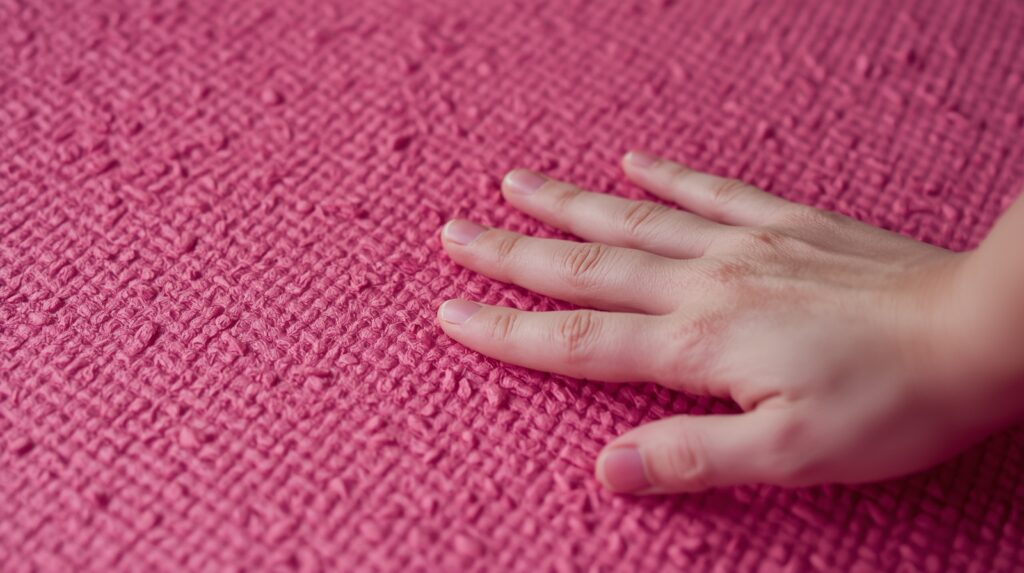
A great lightweight travel yoga mat should feel effortless to carry, whether you’re navigating airports or packing for a weekend getaway. Most lightweight options range from under 1 lb to about 2 lbs, striking a balance between portability and performance. Choosing a mat within this range helps reduce strain on your shoulders or luggage while still providing adequate support for your practice.
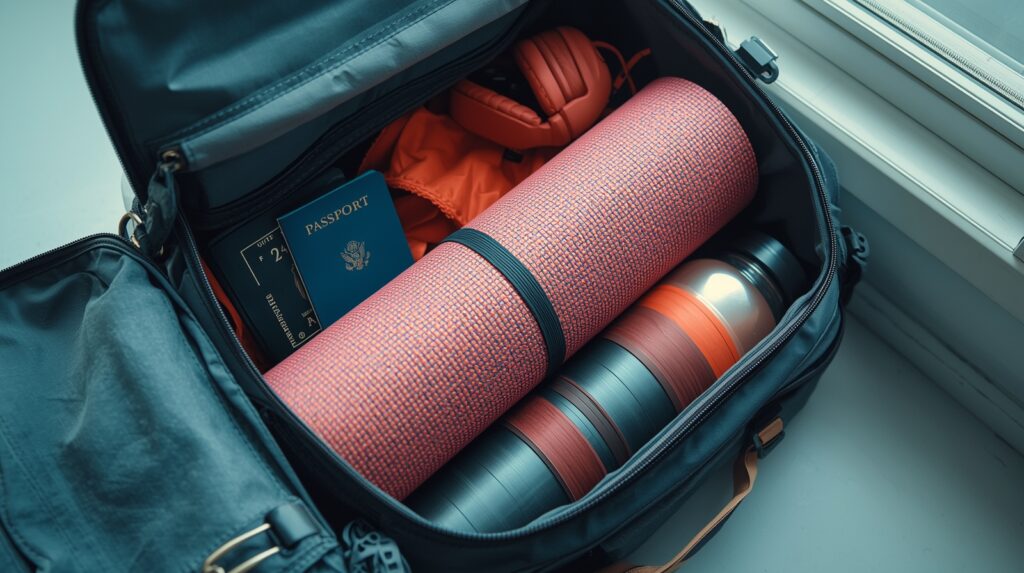
Packability is another key factor when selecting a packable yoga mat for travel. Look for mats that fold into compact, flat sections rather than rolling into bulky cylinders. This folding design makes it easier to slip the mat into tight spaces — like the laptop compartment of a backpack or the bottom of a suitcase — without compromising room for your other essentials.
4. Thickness & Cushioning Level
Travel-ready mats are typically thinner than standard versions, but the right yoga mat thickness can still provide enough comfort for your joints. Most foldable designs range from 1mm to 4mm, offering a balance between cushioning and packability. Thinner options are ideal for yogis who prioritize minimal weight, while slightly thicker mats offer more support during longer sessions or floor-based poses.
Cushioning also depends on the material. Natural rubber tends to feel denser and more supportive, even at a thinner profile, while TPE and PVC may feel softer but less stable on uneven surfaces. If you often practice on hard floors — like hotel tiles or studio wood — choosing a mat with a bit more padding can help reduce pressure on your knees, wrists, and spine. According to Healthline, mat thickness directly affects joint comfort and injury prevention, especially during floor-based or restorative poses.
5. Grip & Stability on Different Surfaces
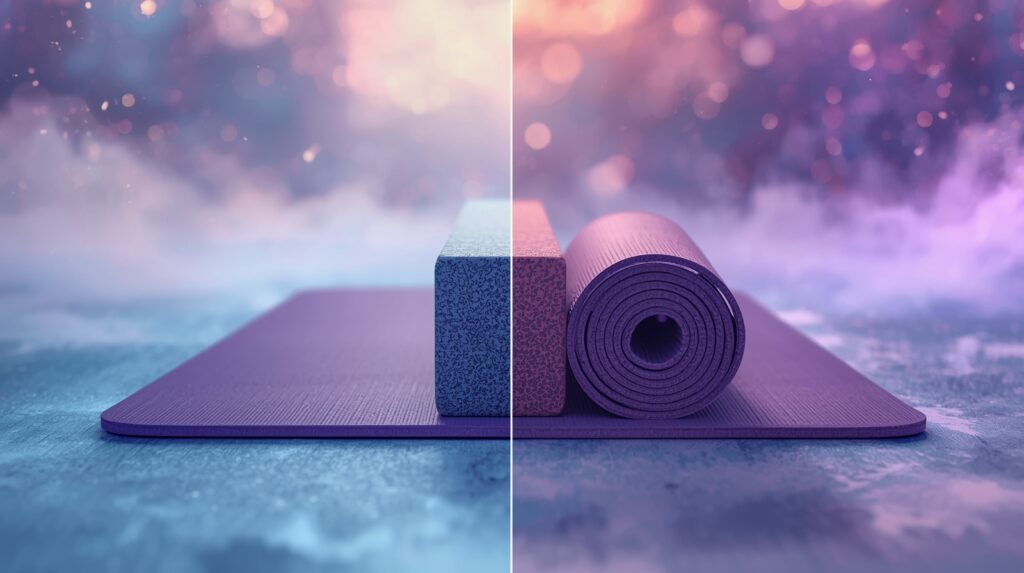
A reliable non-slip yoga mat grip is essential, especially when you’re practicing in unfamiliar environments. Whether you’re in a hotel room, on a studio floor, or outdoors, the mat should stay firmly in place without slipping or curling at the edges. Many compact travel mats use textured patterns or rubber-based surfaces that enhance traction and help you maintain steady footing during standing and balancing poses.
Stability also comes from how well the mat handles moisture. Some surfaces become slick when you sweat, so choosing one with a slightly tacky or non-slip top layer can make a big difference in your practice. This secure feel helps you move confidently through transitions without adjusting your position constantly.
If you also prefer extra room to move freely during standing sequences, our guide on choosing the right extra-large yoga mat covers how surface area affects stability and grip.
6. Durability & Tear Resistance
A durable travel yoga mat should handle frequent folding, unfolding, and being packed tightly without wearing out quickly. Sturdy materials like high-density rubber, reinforced TPE, or coated PVC help the mat maintain its structure even after repeated use. These options resist cracking, stretching, and thinning, which is important when the mat is constantly being folded instead of rolled.
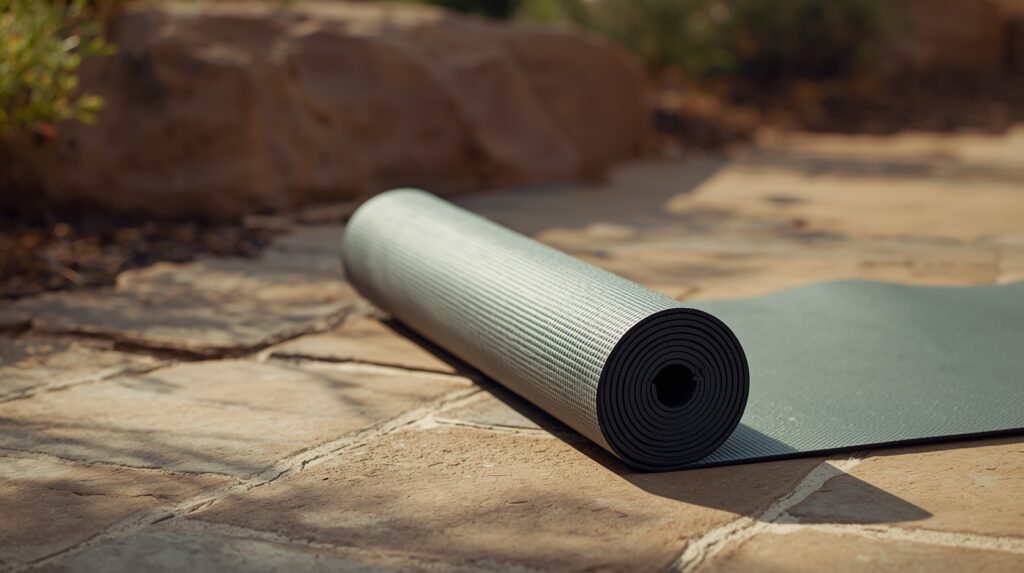
Tear-resistant construction also matters, especially if you practice outdoors or on rough surfaces. A well-built foldable yoga mat should withstand friction, pressure from sharp edges like rocks or uneven wood floors, and the stress of being placed on different types of terrain.
7. Ease of Cleaning & Maintenance
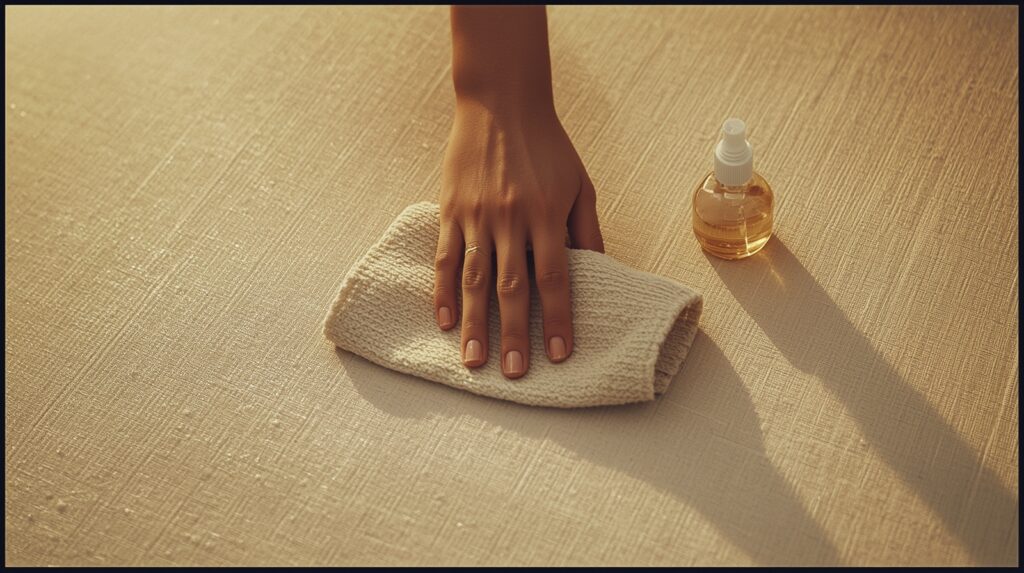
Travel mats often come into contact with hotel floors, studio spaces, and outdoor environments, so easy cleaning is a must. Most compact mats can be wiped down quickly with a gentle cleanser or a simple mix of water and mild soap. Some materials, like TPE or PU-coated surfaces, dry faster and resist absorbing sweat, making them ideal for frequent travelers.
Maintenance is also simple when the mat resists odors and stains. Look for designs that are moisture-resistant or antimicrobial, as these features help keep your mat fresh between uses. With the right care routine, your mat stays hygienic, long-lasting, and ready for your next session anywhere you go.
8. Eco-Friendliness & Non-Toxic Materials
Many travelers prefer gear that supports a healthier practice and a healthier planet. Eco-friendly yoga mats are typically made from natural rubber, TPE, jute, or recycled materials, all of which minimize environmental impact without compromising performance. These sustainable options avoid harmful chemicals and rely on biodegradable or responsibly sourced components — making them a smart pick for travelers who care about their footprint.
Non-toxic construction is equally important, especially when you’re practicing in enclosed spaces like hotel rooms or small Airbnb studios. Look for PVC-free yoga mats that are also free from phthalates and heavy metals. Certifications like OEKO-TEX or SGS-tested labels can help confirm a mat’s safety standards. These safer materials help reduce exposure to irritants and create a cleaner, healthier experience during your practice — wherever your travels take you.

9. Size When Open & Folded
When evaluating a travel yoga mat size, it’s important to consider both its full open dimensions and its folded footprint. The open size determines how much space you have for movement, ensuring your body fits comfortably for poses like downward dog or seated stretches. Most travel yoga mats measure around 68–72 inches long and 24 inches wide — slightly shorter or narrower than standard mats — but are still designed to accommodate most practitioners comfortably.
The folded size impacts how easily the mat fits into your luggage or backpack. A well-designed foldable yoga mat typically collapses down to roughly 13 x 11 inches, making it simple to slide into a carry-on or daypack without taking up excessive space. Choosing a mat that balances a sufficient practice area with compact storage ensures you can maintain your routine wherever you go — without sacrificing comfort for portability.
10. Comfort for Different Yoga Styles
Different yoga practices demand different levels of support and cushioning. For example, gentle styles like Yin or restorative yoga benefit from slightly thicker mats that provide extra padding for long-held poses and floor work. On the other hand, more dynamic styles such as Vinyasa or Ashtanga require a mat that offers firm support and excellent grip to prevent slipping during flowing sequences.
A well-designed compact mat balances comfort with stability, allowing you to practice various styles without fatigue or discomfort. Considering your preferred yoga type helps you choose a mat that enhances your experience, whether you’re stretching, balancing, or moving through more intense flows.

11. Versatility Beyond Yoga (Gym, Outdoors, Hotels)
A compact mat isn’t just for yoga—it can be a versatile companion for a variety of activities. At the gym, it serves as a clean surface for stretching, bodyweight exercises, or core workouts. Outdoors, it provides a barrier against dirt, moisture, or rough terrain during park workouts or beach sessions.
In hotels or temporary accommodations, a foldable mat ensures you have a reliable, hygienic surface even when studio space is unavailable. Choosing a mat that performs well across different environments maximizes its usefulness, making it a practical investment for travelers who want a multipurpose fitness solution.

12. Price & Overall Value for Money
When evaluating a travel-friendly yoga mat, price is often a deciding factor — but it should be weighed against quality, durability, and versatility. Budget-friendly mats may be easier on the wallet, yet they often sacrifice material integrity, cushioning, or grip over time. On the other hand, premium travel yoga mats usually offer better traction, more robust construction, and a longer lifespan.
Consider how often and in what conditions you’ll use the mat. If you travel frequently, a slightly pricier model that folds well, resists wear, cleans easily, and remains comfortable may pay off over time compared to replacing a cheaper mat every few months. Ultimately, the best “value-for-money” yoga mat strikes a balance between affordability and reliable performance across all the features discussed above — portability, grip, durability, and comfort combined.
FAQs
What is the best folding yoga mat for travel?
The best folding yoga mat for travel is lightweight (under 2 lbs), folds into a compact flat shape rather than rolling, and offers reliable grip on multiple surfaces. Materials like natural rubber or TPE are ideal since they balance durability, cushioning, and packability for frequent travelers.
How thick should a travel yoga mat be?
Most travel yoga mats range from 1mm to 4mm thick. Thinner mats (1–2mm) are best for minimal packing weight, while slightly thicker options (3–4mm) offer more joint support for longer sessions or floor-based poses on hard surfaces like hotel tiles.
Can a foldable yoga mat fit in a carry-on bag?
Yes, most foldable yoga mats fold down to roughly 13 x 11 inches, making them easy to fit inside a carry-on, backpack, or even a laptop compartment. Unlike rolled mats, folded designs take up far less space and pack flat against other items.
Are folding yoga mats as durable as regular yoga mats?
Quality folding yoga mats made from natural rubber or high-density TPE can be just as durable as standard mats. Repeated folding along the same crease lines is the main stress point, so choosing a mat designed specifically for folding — not just a thin standard mat — helps it hold up longer.
How do I stop my travel yoga mat from slipping?
To prevent a travel yoga mat from slipping, choose one with a textured or slightly tacky top layer, and always practice on a clean, dry surface. Wiping the mat down after sweaty sessions and letting it fully air-dry before folding also helps maintain long-term grip.
Conclusion
Finding the right folding yoga mat for travel comes down to understanding what matters most for your practice on the go. Whether you prioritize light weight, strong grip, eco-friendly materials, or extra cushioning, there’s a packable yoga mat option that fits your travel routine and personal comfort. By comparing features like packability, durability, and versatility, you can choose a mat that supports consistent movement — no matter where your journey takes you.
A well-designed compact travel yoga mat doesn’t just make travel easier; it helps you stay grounded and connected to your practice anywhere in the world. With the right choice, every destination becomes an opportunity to roll out your mat and reset.
Looking for more guidance on choosing the right mat for your practice? Explore our full range of yoga mat guides and reviews to find the perfect fit for your body, travel style, and budget.