1.Introduction
Looking for the best travel yoga mat in 2026? Whether you’re flying for work, heading on a vacation, or joining a yoga retreat, your mat should keep up with you — lightweight, quick to fold, and grippy enough for hotel floors, airport lounges, or outdoor sessions. A bulky studio mat simply doesn’t work when space and weight are limited.
In this guide, we break down the key features that separate a true travel-friendly yoga mat
Table of Contents
1. Portability & Weight
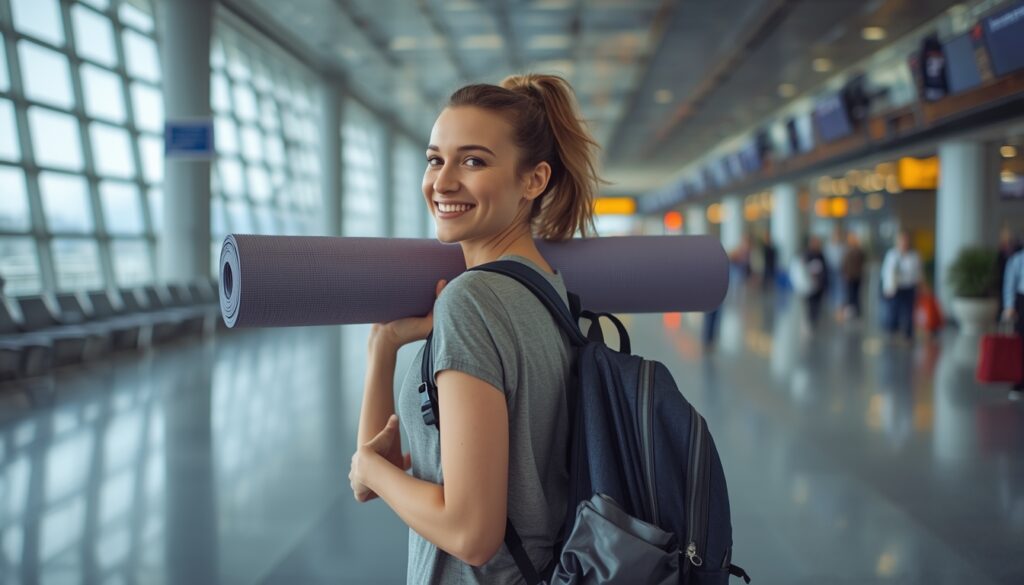
When choosing a travel yoga mat, how light and compact it is can make a big difference. A heavy or bulky mat quickly becomes a burden when you’re moving through airports, hopping between train stations, or climbing into a hostel bunk.
Weight matters because every extra ounce adds up in your bag. Look for mats specifically designed to be lightweight without sacrificing durability. Many travel-friendly options weigh significantly less than standard studio mats, making them easier to carry for long days on the road.
Another important factor is how the mat packs down:
- Foldable mats are designed to crease neatly and fit into small compartments. They’re ideal if you need to put your mat inside a backpack or suitcase without rolling it up every time. Foldable mats typically compress flat, which makes them easier to stash alongside clothing or gear.
- Rollable mats are the classic design most people are familiar with. These roll up into a tube and often come with straps or a carrying pouch. While they can be slightly bulkier when packed, many still compress well and are great if you prefer the feel of a traditional wide yoga mat.
2. Material & Durability
The material of a yoga mat determines how it feels, how long it lasts, and how it performs over time. When you travel frequently, you need a surface that can stand up to repeated use, different floors, and changing climates — not just any material will hold up.
Common materials and what they offer:
- TPE (Thermoplastic Elastomer): Lightweight and generally more affordable. TPE mats are easy to clean, resistant to moisture, and often recyclable. They’re a reliable choice for frequent travel because they balance grip and flexibility.
- Natural Rubber: Offers excellent traction and cushioning. Rubber tends to be more durable than many synthetic options, but it’s heavier and may have a distinct scent at first. If you don’t mind a bit of extra weight, rubber provides a stable, long-lasting surface.
- PVC (Polyvinyl Chloride): Very durable and often high-performance in terms of grip. However, PVC is less eco-friendly and can be heavier — some travelers avoid it due to environmental concerns.
- Cork & Microfiber Top: Cork naturally resists odor and provides a unique grip that improves when wet. Many cork mats include a microfiber layer that enhances comfort and sweat absorption. These materials run slightly heavier but are great for studio-style practice while on the road.
Durability considerations:
- Wear and Tear: Frequent rolling, folding, and exposure to different floors can cause thinner or low-quality mats to break down faster. Choose a resilient material if you practice often.
- Stretch and Memory: Some materials return to their original shape better than others. Mats that sag or deform make packing harder and feel uneven during use.
- Moisture and Temperature Resistance: Materials that resist moisture won’t smell or degrade as quickly in warm, humid environments — especially useful if you’re traveling in tropical climates or attending outdoor classes.
3. Thickness & Comfort
Thickness plays a key role in how a mat feels under your feet and joints, especially on hard floors like airport lounges, hotel rooms, or outdoor surfaces.
Travel vs. Regular Mat Thickness
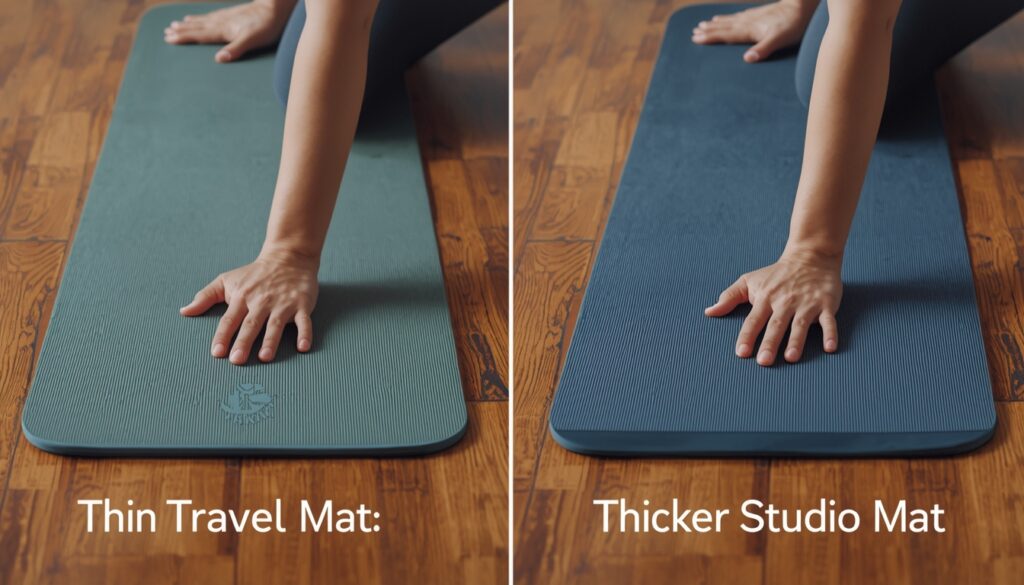
Standard mats usually run 4–6 mm thick, offering a balance of cushioning and stability for everyday practice. Travel-friendly mats are typically thinner, often between 1.5 mm and 3 mm. This reduced thickness makes them lighter and easier to roll or fold — but it also changes how they feel underfoot.
Thinner mats are great for portability, but with less padding, they may feel firmer under your hands, feet, and knees. If you prefer a plush, cushioned feel — especially for longer sessions or restorative poses — a very thin mat might not give you enough support.
Impact on Joint Support and Comfort
- Joint Comfort: Thicker mats generally offer more padding, protecting sensitive areas like knees, elbows, and wrists. If you practice on hard surfaces often, a slightly thicker option can reduce discomfort.
- Balance and Stability: Thinner mats provide a firmer connection to the ground, which can benefit balance-focused practices like Vinyasa or standing poses — though some people miss the soft feel of a thicker surface.
- Packing Trade-Off: A thicker mat feels cushier but takes up more space and adds weight. Choosing the right thickness means balancing comfort with convenience.
4. Grip & Traction
Grip and traction determine how stable you feel during your practice, especially when your hands and feet get sweaty or when you’re on uneven surfaces like grass, wood floors, or hotel room tile.
Why Grip Matters
Good grip prevents sliding, allowing you to hold poses with confidence. Without enough traction, even simple movements can feel unstable, increasing the risk of slips and strain.
Performance on Sweaty Hands
Sweat can quickly turn a smooth surface slippery:
- Textured surfaces help maintain friction when moisture is present. Mats with raised patterns or grippy coatings tend to hold better in sweaty conditions.
- Material plays a big role: Natural rubber and cork often provide excellent traction, while some synthetic materials may become slick.
If you regularly practice heated routines or tend to sweat a lot, look for options that specifically highlight moisture-friendly surfaces.
Uneven Surfaces
Travel often means practicing on floors that aren’t perfectly flat:
- Outdoor locations like parks or beaches may have subtle dips or bumps.
- Indoors, hardwood or tile can be hard and unforgiving.
A mat with good traction will cling to your feet and maintain stability even when the ground isn’t perfectly smooth. Edge-to-edge grip also helps prevent hands or feet from slipping off the sides during dynamic sequences.
5. Size & Fit
Choosing the right size ensures you have enough space to move comfortably through your practice, no matter where you are.
Standard vs. Extra-Long/Wide Options
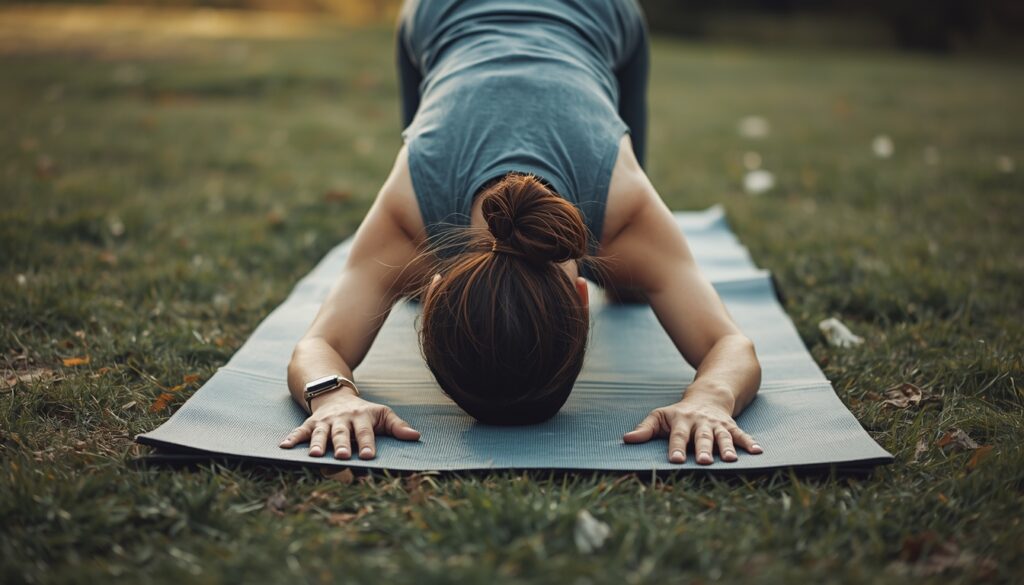
Most mats come in a standard size, typically around 68–72 inches long and 24 inches wide. This works well for many people, but it may feel restrictive for taller practitioners or those with a larger wingspan.
- Extra-long mats: These are usually 75 inches or more and provide additional length for taller individuals. They prevent your hands or feet from hanging off the edge during poses like Downward Dog or Savasana.
- Wider mats: Wider options offer more lateral space, which can be helpful during flows with big movements or for practitioners who prefer a bit more room.
Suitability for Different Body Types
Body size and proportions affect how a mat feels:
- Taller users often benefit from extra length to avoid feeling cramped.
- Broader shoulders or hips might find a wider surface more comfortable, especially in seated or supine poses.
- Smaller or average-sized practitioners usually do fine with the standard size, which also tends to be lighter and takes up less space when packed.
6. Packability & Storage
How well a mat packs and stores can greatly affect its convenience during travel. A mat that compresses small and stays organized makes packing easier and keeps your luggage tidy.
How Compact It Gets in a Suitcase or Backpack
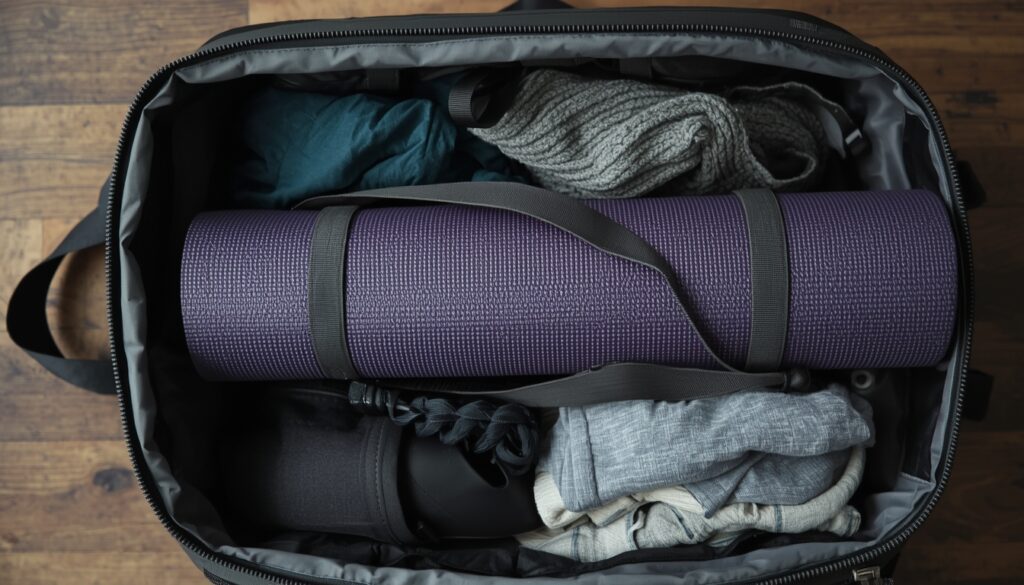
The ideal mat should fold or roll down to a size that fits easily into your luggage:
- Foldable designs often collapse flat and can slip between clothes or into smaller compartments.
- Rollable mats wrap into a cylinder shape that works well in backpacks or suitcases, though they may take up slightly more space than foldable options.
Check the packed dimensions before buying. Mats that compress to a smaller volume are generally simpler to carry, especially if you’re packing efficiently for a trip and trying to save space for other gear.
Included Straps, Carrying Cases, or Clips
Accessories can make a big difference in everyday usability:
- Straps or bands keep the mat tightly rolled so it doesn’t unravel in your bag.
- Carrying cases often have handles or shoulder straps, making transit more comfortable.
- Clips or buckles help secure foldable mats and prevent them from shifting in your luggage.
7. Eco-Friendliness
Many practitioners care about the environmental impact of their gear, and choosing a mat made from sustainable materials can make your practice more planet-friendly.
Sustainable Materials
Some mats are made from renewable or less harmful resources. These include:
- Natural rubber: Harvested from rubber trees, it’s biodegradable and often free from harsh chemicals.
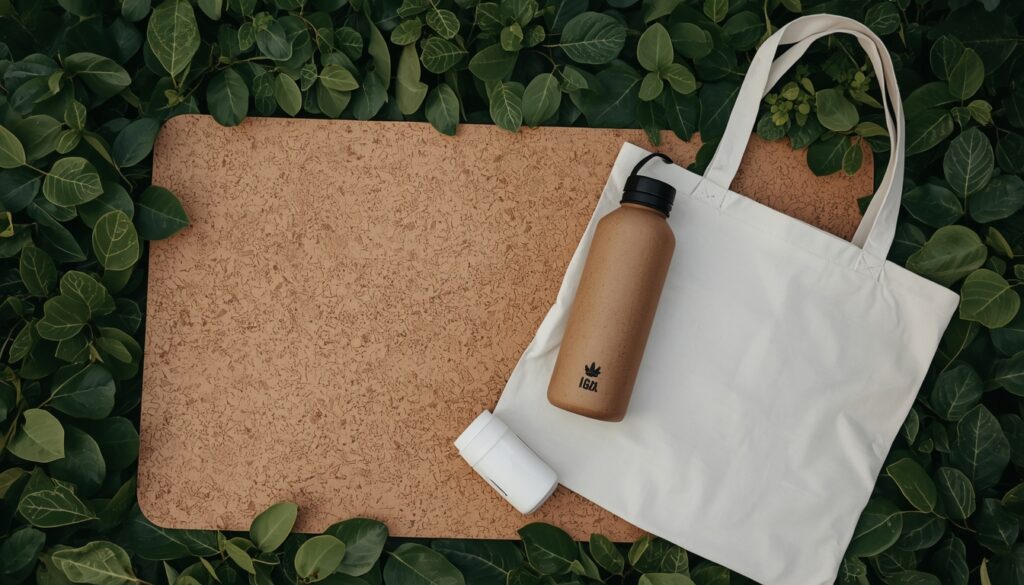
- Cork: Sourced from cork oak bark, which regenerates naturally. Cork is renewable and breaks down more easily than synthetic options.
- Jute and other plant fibers: These materials are strong, biodegradable, and reduce reliance on petroleum-based plastics.
Mats made from these materials tend to have a smaller ecological footprint compared to traditional plastic-heavy alternatives.
Recyclable or Recycled Options
Look for mats that:
- Use recycled materials, such as reclaimed rubber or plastics, to reduce waste.
- Are fully recyclable at the end of their life. Some brands offer take-back programs to ensure the mat is properly recycled rather than ending up in a landfill.
Certifications and Labels
Products with certifications like OEKO-TEX, GOTS, or similar eco-labels are tested for harmful substances and validated for safer materials. These certifications help ensure what you’re buying meets specific environmental and health standards.
8. Cleaning & Maintenance
When you’re on the move, keeping your yoga mat clean and fresh becomes more important—and sometimes more challenging—than at home.
Ease of Cleaning During Travel
Different materials require different care:
- Wipe-able surfaces: Mats with closed-cell surfaces or synthetic materials are usually easier to clean with a simple wipe using a damp cloth and mild soap. These surfaces resist water absorption, so they dry quickly—ideal when you’re packing up and moving the next day.
- Absorbent materials: Natural rubber, cork, and microfiber can soak up sweat and moisture. While these often offer great grip and comfort, they may need more thorough cleaning with gentle sprays or diluted cleaners. Allow extra drying time before rolling or folding.
Tips for travel cleaning:
- Carry a small spray bottle of cleaner or diluted mild soap.
- Use a soft cloth or travel-size towel to wipe down after sweaty sessions.
- Air dry flat for a few minutes before packing to prevent moisture buildup.
Odor Resistance
Materials that trap moisture can develop smells, especially in warm or humid environments:
- Odor-resistant surfaces like cork naturally fend off smells because cork has antimicrobial properties.
- Synthetic mats with closed-cell construction tend to resist sweat penetration, reducing lingering odors.
- Some mats are treated with antimicrobial coatings that help keep odors at bay.
Regular cleaning and proper drying help maintain freshness, but choosing a mat with good natural odor resistance can make life easier on longer trips.
9. Price & Value
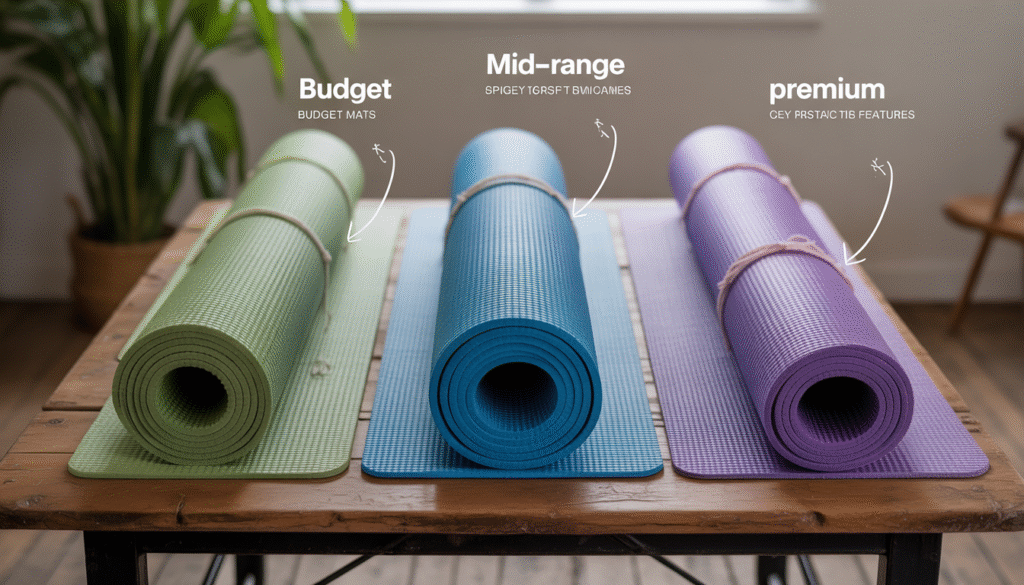
Understanding how price relates to features helps you make a smarter choice, whether you’re on a tight budget or willing to invest more for quality — see our full mat comparison guide for real-world pricing examples across categories.
Budget, Mid-Range, and Premium Options
- Budget mats: These are usually the most affordable and can still offer decent performance for occasional use. They may be lighter and simpler, but durability and advanced features can be limited. If you travel infrequently or want a spare mat, this category is a practical starting point.
- Mid-range mats: This category balances cost and performance. You’ll often find better materials, improved grip, and more thoughtful design elements like included straps or enhanced texture. For many people, mid-range options deliver strong value without a premium price tag.
- Premium mats: These are top-tier products with high-end materials, excellent traction, long-lasting durability, and often eco-friendly construction. Premium mats may offer superior comfort and extra features but come with a higher upfront cost. They make sense for frequent travelers or serious practitioners who want a mat that performs well over many trips.
Price-to-Features Comparison
When comparing prices, think beyond the number on the tag:
- Durability: A slightly more expensive mat that lasts significantly longer may be a better investment than a cheap one that needs replacing quickly.
- Included accessories: Mats that come with straps, carrying cases, or clips can save you money on additional purchases.
- Performance: Better grip, comfort, and material quality can make a noticeable difference in your practice, especially if you use the mat often.
10. Best Use Case
Choosing a mat that fits the way you travel makes a big difference in comfort and convenience. Different travel styles benefit from different features.
Best for Airplane Travel
When flying, space and weight are at a premium. Look for mats that:
- Pack down very small and fit easily in carry‑on bags.
- Are lightweight to avoid extra baggage fees.
- Can be tucked into overhead bins or under the seat without hassle.
Mats that fold flat or compress tightly make airline travel smoother and keep your luggage organized.
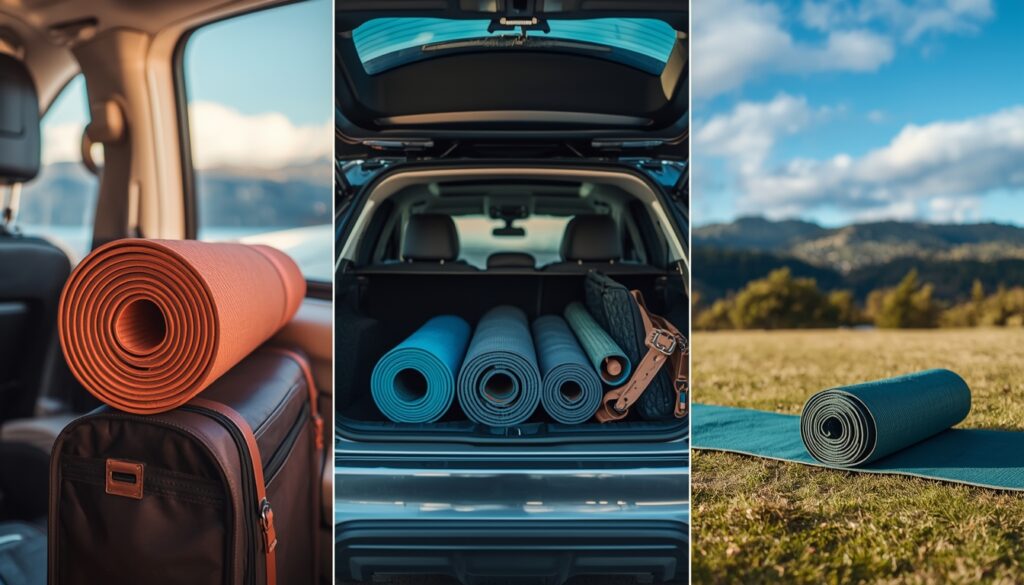
Best for Road Trips
In a car or van, there’s usually more room, so you can balance portability with comfort:
- Mats with more cushioning work well for longer sessions between stops.
- Extras like carrying straps or cases help keep the mat secure in the vehicle.
- A mat that handles outdoor surfaces—grass, gravel, pavement—lets you practice almost anywhere.
Durability and easy cleaning matter here too, since roadside practice spots can be unpredictable.
Best for Yoga Retreats
Retreats often involve multiple classes and varied environments, so versatility is key:
- Choose mats with good traction and comfort for long sessions.
- Materials that handle sweat and humidity help during hot classes.
- If group classes are held outdoors, a mat that performs well on different surfaces is ideal.
For retreats, investing in features like extra grip and cushioning pays off, as you’ll likely use the mat intensely over several days.
FAQs
1. What is the best material for a travel yoga mat?
TPE is generally the best all-around choice for travel because it’s lightweight, resistant to moisture, and easy to clean. If grip is your top priority and you don’t mind a bit more weight, natural rubber or cork are excellent alternatives — both perform especially well when your hands and feet get sweaty.
2. How thin should a travel yoga mat be?
Most travel-friendly mats fall between 1.5 mm and 3 mm, compared to the standard 4–6 mm studio mat. This range keeps the mat light and easy to fold or roll, though very thin mats offer less cushioning for knees and wrists — so if joint comfort matters more than pack size, look toward the thicker end of that range.
3. Are foldable yoga mats better than rollable ones for travel?
It depends on your luggage style. Foldable mats compress flat, making them easier to slide into a backpack or suitcase alongside clothing. Rollable mats keep the traditional mat feel and usually come with a strap or pouch, but take up slightly more space once packed.
4. Can I bring a yoga mat as a carry-on?
Yes — most travel yoga mats are designed to be compact and lightweight enough to fit in a carry-on bag or attach to the outside of a backpack. Foldable mats in particular tend to slide easily into overhead bins or under the seat without adding noticeable weight.
5. How do I clean my travel yoga mat on the go?
Wipe it down with a damp cloth and a small amount of mild soap or a travel-size mat spray after each use. For absorbent materials like natural rubber or cork, allow a few extra minutes of air-drying before rolling or folding it back up to prevent lingering moisture and odor.
Conclusion
Choosing the right travel yoga mat comes down to balancing portability, comfort, and durability with your practice needs. Lightweight materials like TPE, natural rubber, or cork provide the grip and support you need on the go, while thickness, size, and eco-friendliness round out the decision.
Want more cushioning? Check our best wide yoga mats guide, or browse our top-rated black yoga mats for grip-focused options.